
Last updated October 16, 2026
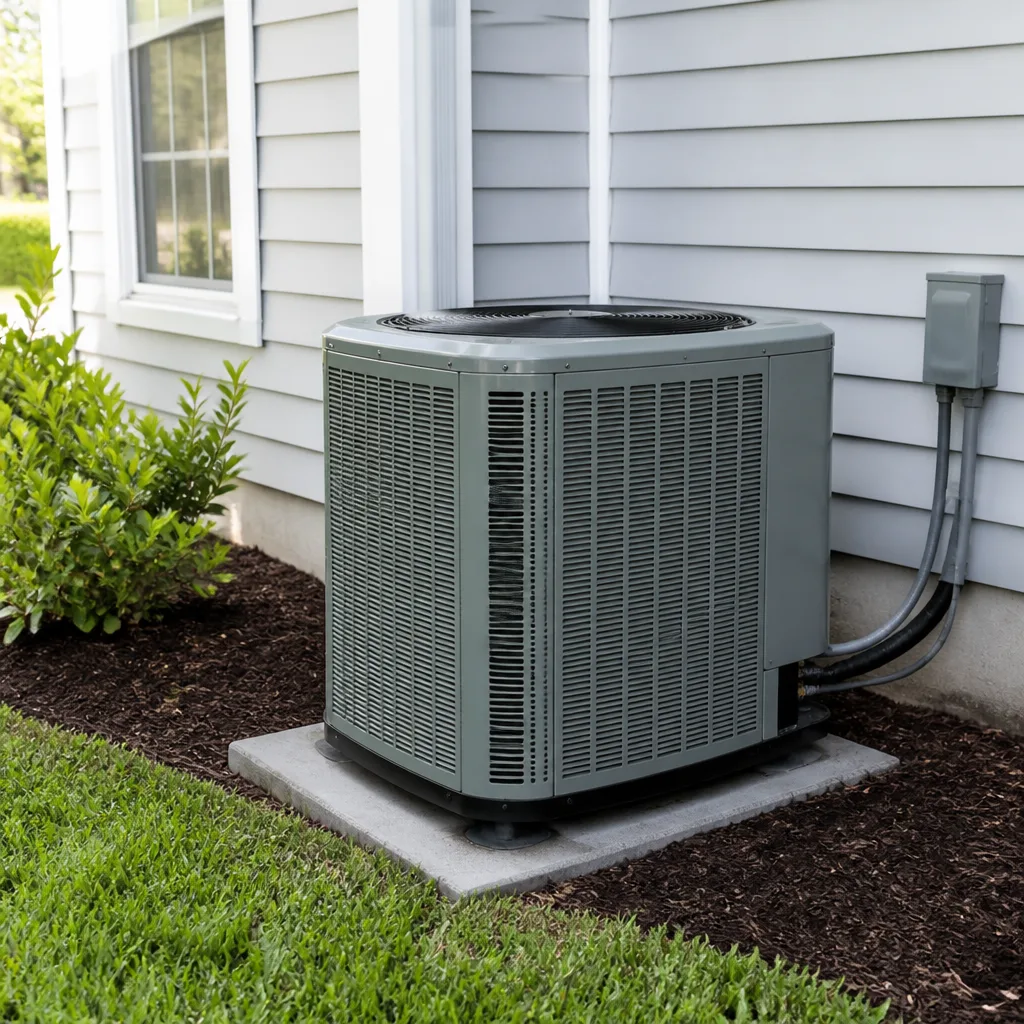 AC repair
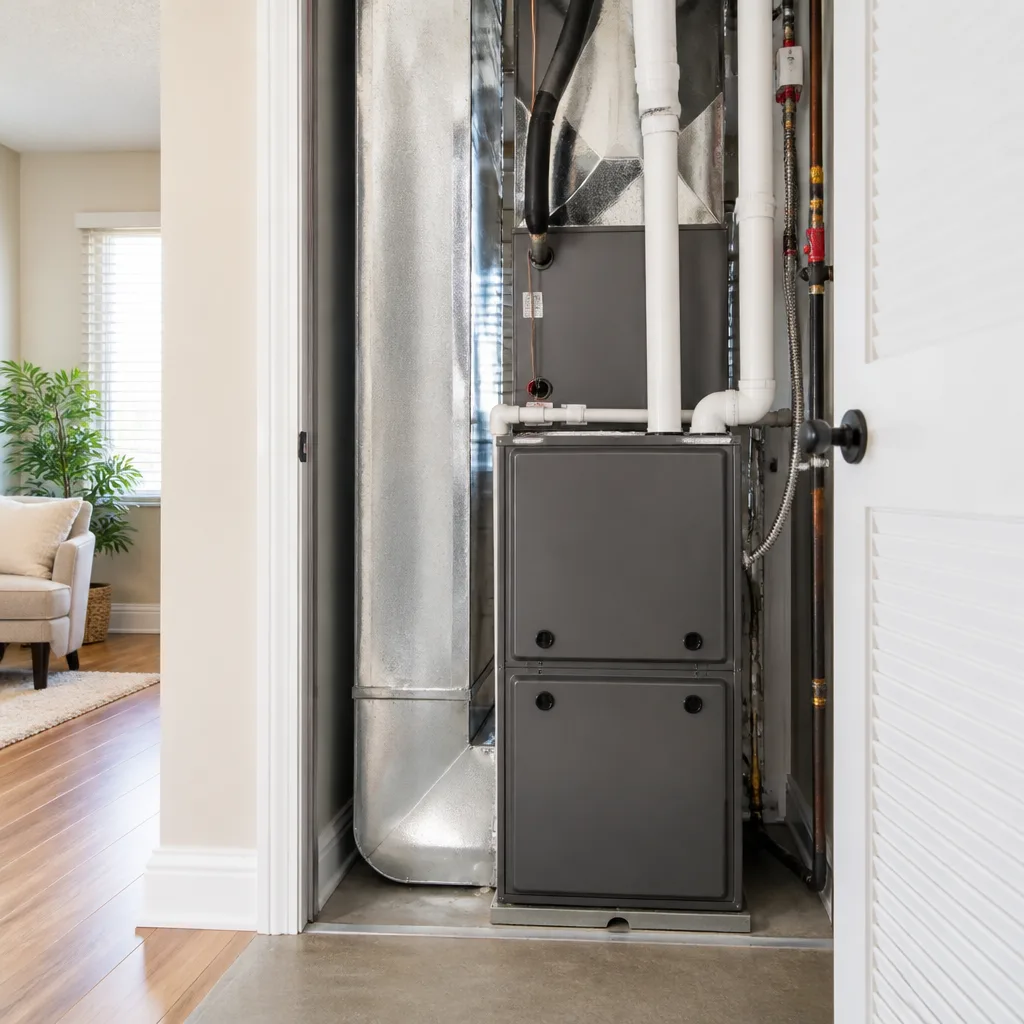 Furnace & heating
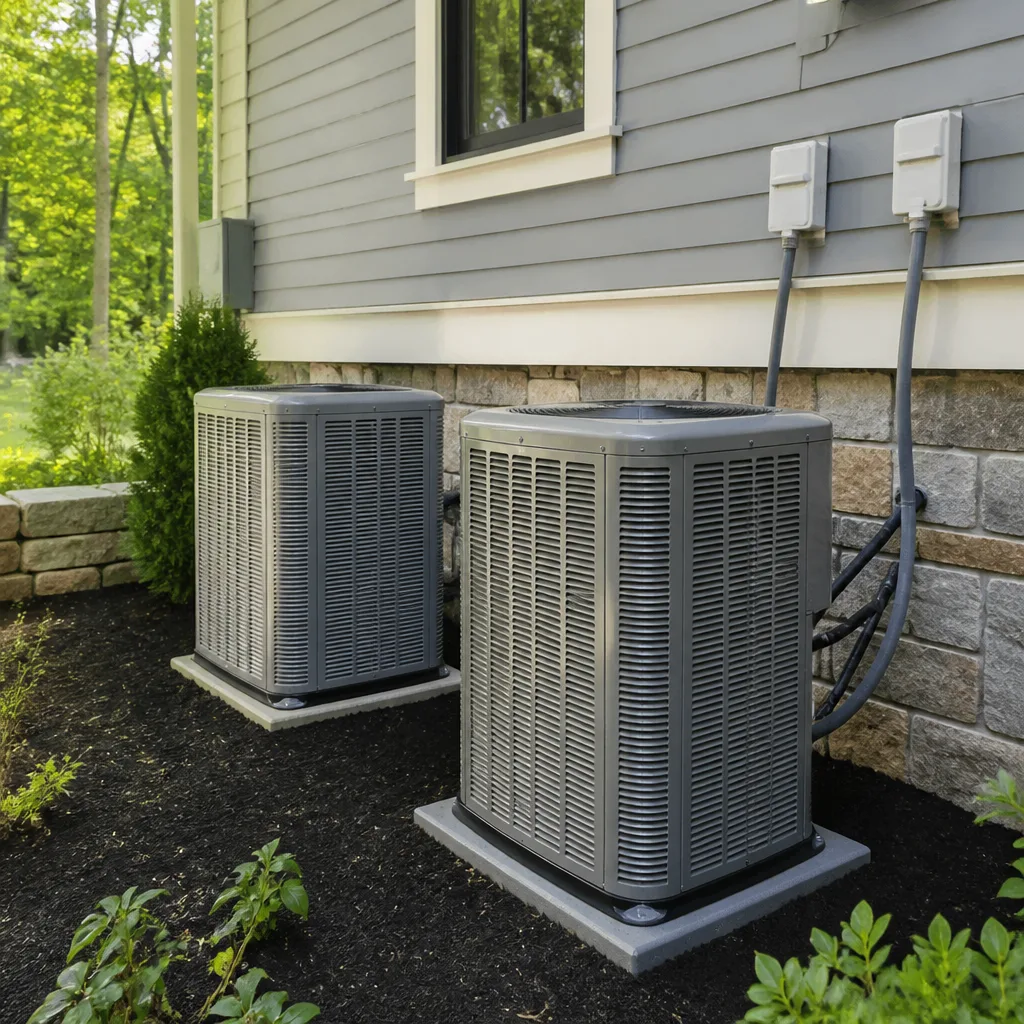 Heat pumps
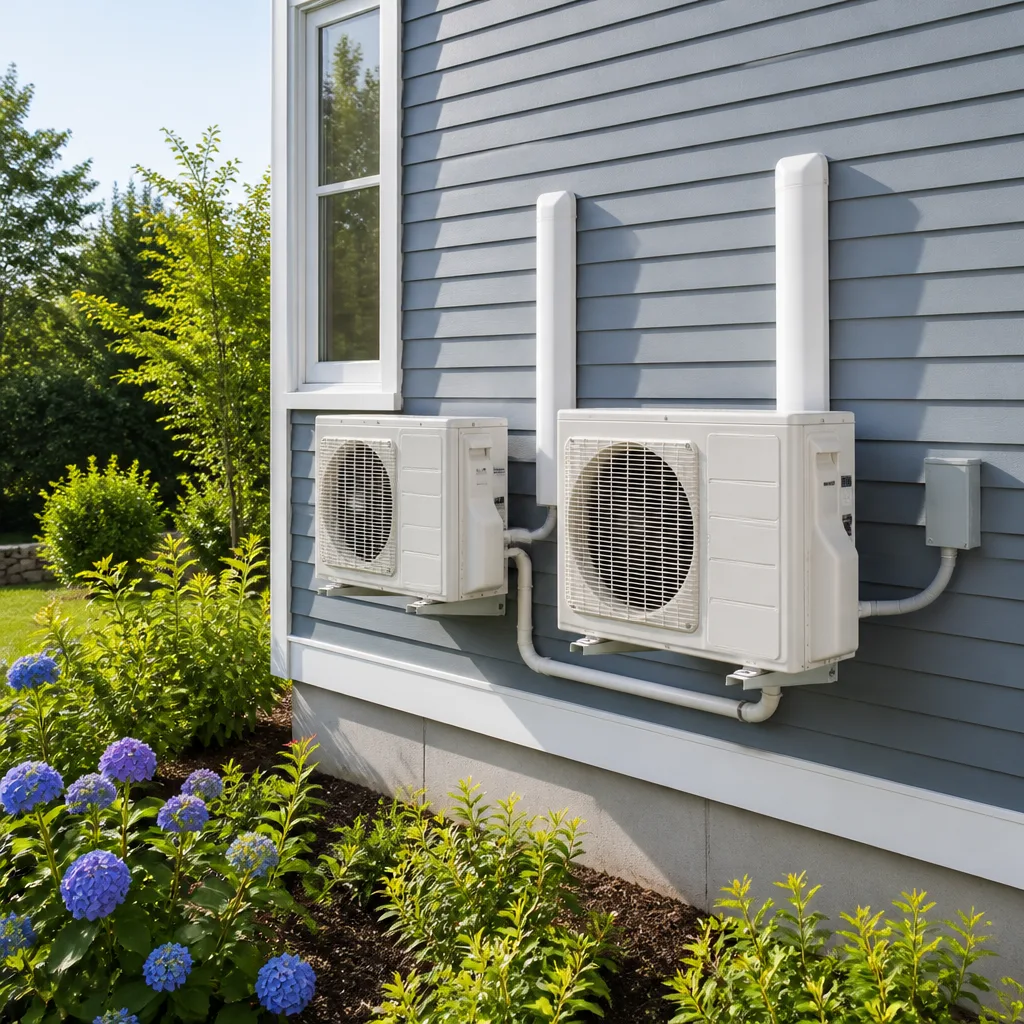 Ductless mini splits
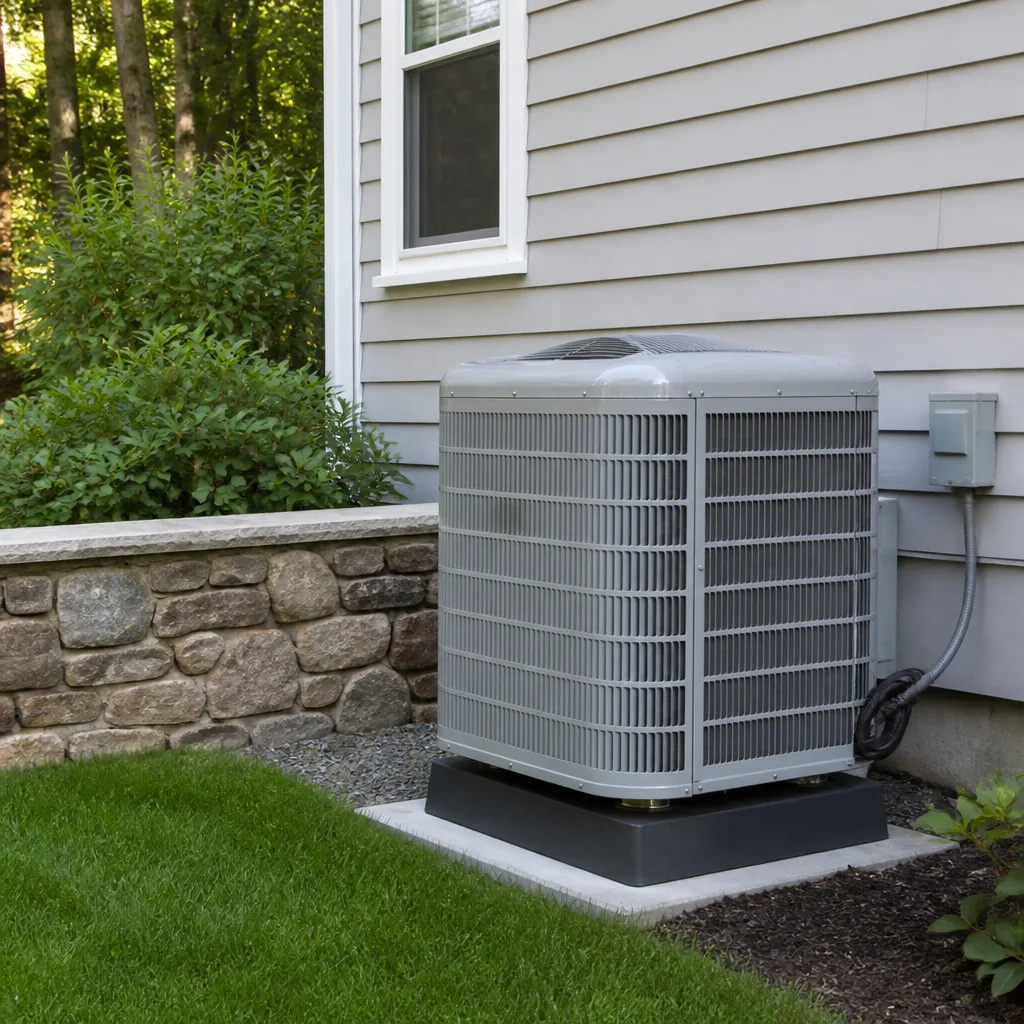 Carrier
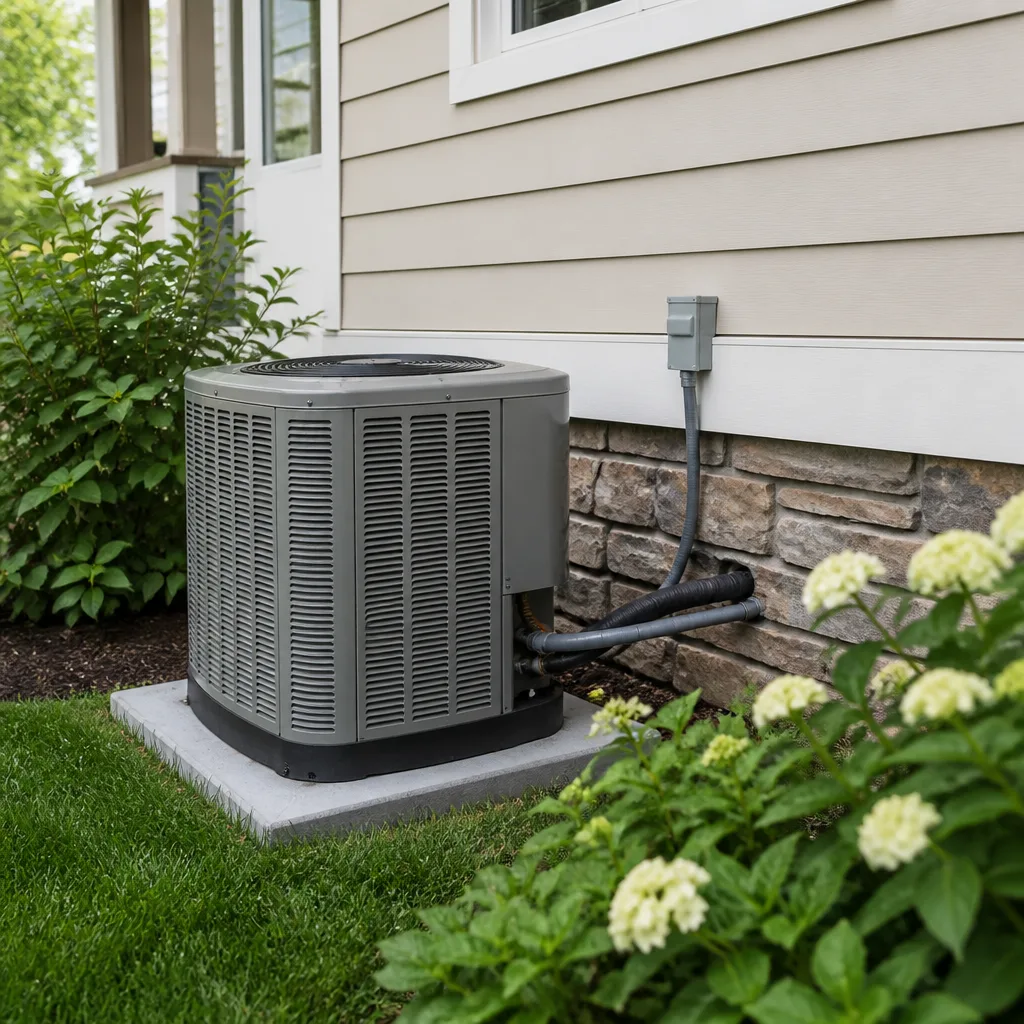 Trane
Trane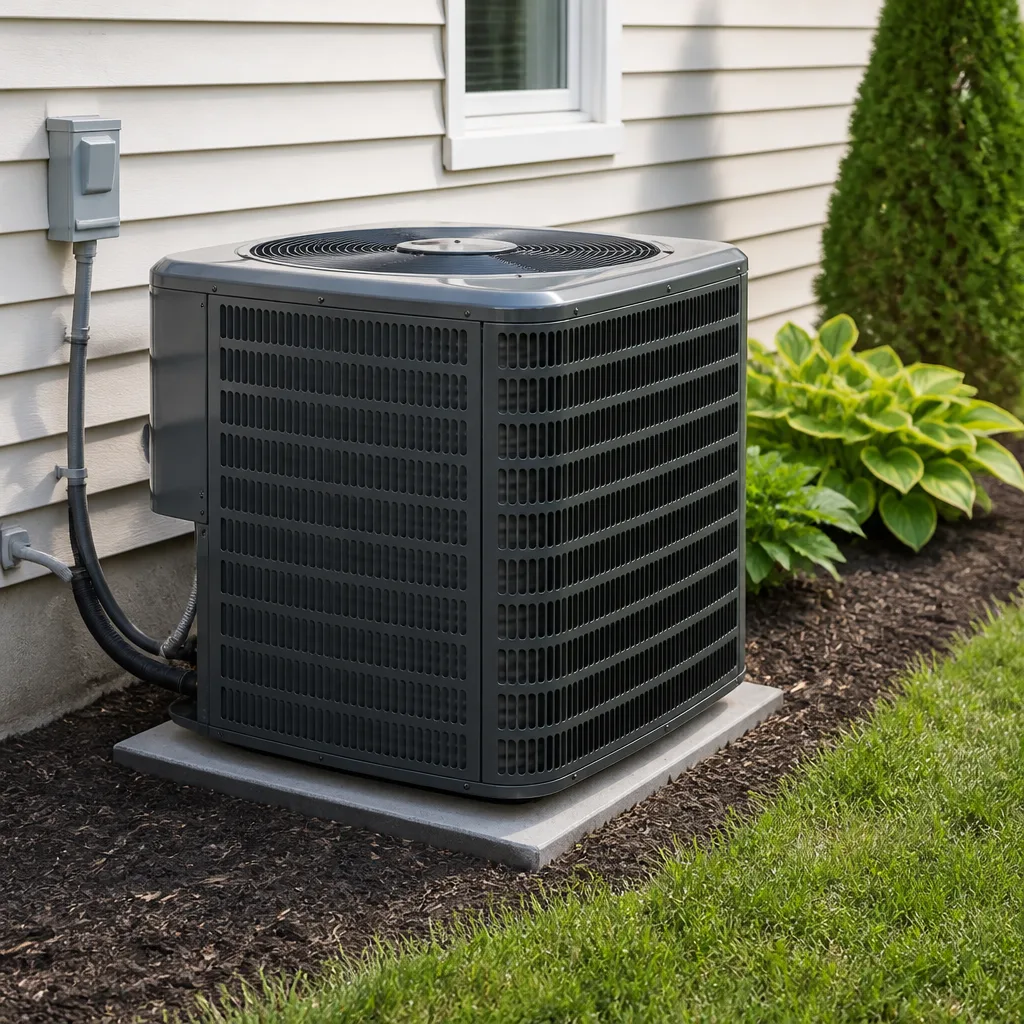 Goodman
Seasonal tune-up and full diagnostic on your Carrier, Trane, or Goodman system - readings shown to you before any repair is proposed
Diagnosis first, numbers second - you approve the repair price before a single part goes in.
Get your free estimateDIY vs Professional HVAC: The Houston Homeowner’s Decision Guide
Every summer, when the Houston humidity turns a house into a sauna and the AC quits, some homeowner starts researching capacitor swaps on YouTube. The DIY-versus-pro debate usually gets framed as a question of money – can you save a few hundred doing it yourself? The more useful frame for a Houston homeowner is legal authority. Texas statute draws a precise line between what you as the owner can do to your own system and what requires a license, and crossing it creates problems with insurance, resale, and the EPA – problems that can dwarf the cost of a service call. This guide walks the real line between DIY and professional HVAC work in Houston, task by task, with the numbers to back it up.
Quick Answer
For homeowners in Houston, five HVAC tasks are genuinely safe and legal to do yourself – filter replacement, drain line clearing, thermostat swapping, condenser coil cleaning, and contactor inspection. Everything that touches refrigerant, electrical disconnects, gas lines, or heat exchangers requires a Texas-licensed technician, and the attempt to DIY it can cost far more than a service call from Dalton Heating & Air Houston home.
Styles & brands we work with
Table of Contents
- The Texas Line: What Section 1302 Actually Says
- Five DIY Tasks That Are Safe and Legal in Houston
- The Refrigerant Trap: EPA Fines That Dwarf the Repair Cost
- Why Houston’s Climate Makes DIY Electrical Work Riskier Here
- How DIY Repairs Void Manufacturer Warranties
- The Real Breakeven: When DIY Costs More Than a Pro
- Common Mistakes to Avoid
- When to Call a Professional
The Texas Line: What Section 1302 Actually Says
Texas law answers the DIY question directly. Section 1302 of the Texas Occupations Code governs air conditioning and refrigeration contracting, and it carves out a specific allowance for homeowners. The statute says a person is not required to hold a Texas Air Conditioning and Refrigeration Contractor (TACL) license if they are working on “a building or facility that is owned or leased by that person” – and that work is not “performed for the public.” In plain terms: you can legally perform HVAC work on your own primary residence without a license. That’s the permission side.
But the rest of Section 1302 cuts hard the other way. Any work performed on someone else’s home – even a family member’s – requires a TACL license. Any work on a rental property you own technically requires the license if you’re not living there. Any work for compensation, which includes bartering that “help me with my AC and I’ll fix your sprinklers” arrangement, crosses the line. And critically, the homeowner allowance does not override separate federal laws governing refrigerants, which we’ll get to, or HVAC Permits, Codes & Inspections in TX: What You Need to Know. What this means in practice: you can change parts on your own unit, but you cannot add, remove, or recover refrigerant – that act is regulated by the EPA under Section 608 of the Clean Air Act, and Texas cannot waive that for you no matter what Section 1302 says.
In Houston specifically, many homes have multiple AC systems – an upstairs unit and a downstairs unit, or a main system plus a garage mini-split. The homeowner allowance covers all of them if you own the house. If you rent out a garage apartment to a tenant, you’ve just crossed into licensed territory for any work on that tenant’s system.
Five DIY Tasks That Are Safe and Legal in Houston
Some HVAC maintenance is designed for homeowner hands. Here are five legitimate jobs you can do this weekend in Houston without a license, without violating any federal rule, and without endangering yourself or your equipment.
1. Change the Filter (Monthly in Houston, Not Quarterly)
Houston’s air is heavy with pollen in spring, dust from construction year-round, and humidity that feeds microbial growth on filters. A 1-inch pleated filter catches more than the cheap fiberglass kind but restricts airflow faster. Write the date on the filter frame with a Sharpie when you install it. Check it every 30 days. If you can’t see light through it when held up to a window, it’s done. This task takes three minutes and costs $4 to $18 per filter. A dirty filter is the number one cause of frozen evaporator coils in Houston summers, and it’s the easiest cause to eliminate.
2. Clear the Condensate Drain Line with a Wet-Vac
Every Houston AC produces gallons of condensate daily from May through October. That water flows through a white PVC pipe that exits near the outside unit or into a bathroom sink drain. Algae and mold grow in that line because it’s wet and dark. When it clogs, water backs up and trips the float switch, which shuts the system down to prevent ceiling damage. Clear it yourself in 10 minutes: locate the exit pipe, attach a wet-vac to it, wrap a rag around the connection to seal the gap, and run the vacuum for two minutes. Then pour a cup of white vinegar down the vent tee inside the attic to keep the line clean. Follow with a condensate tablet (available at any Houston hardware store for under $10) every time you change the filter.
3. Swap a Thermostat (Basic Models Only)
Replacing a conventional 24-volt thermostat with a new conventional thermostat is legal, safe, and takes 20 minutes with a screwdriver. Turn off the breaker to the air handler first, photograph the old wiring before removing anything, and match the wire colors to the new terminal labels. If you’re installing a smart thermostat, verify you have a C-wire (common wire) before buying – many older Houston homes in neighborhoods like Meyerland, Oak Forest, and Timbergrove don’t have one, and the result is a thermostat that drains its battery and resets itself. If the job involves running new wire, you’re now in electrical territory that calls for a professional.
4. Clean the Condenser Coil (Gently)
The outside unit in Houston gets coated with dust, grass clippings, and cottonwood debris. A gentle rinse with a garden hose on spray setting – not a pressure washer – removes it. Kill the power at the disconnect box first. Spray from the top down with the nozzle at a 30-degree angle so you don’t bend the aluminum fins. Bent fins reduce airflow and increase head pressure, which shortens compressor life. Do this twice a year: once after the spring oak pollen clears and once in late September as the summer grime settles.
5. Inspect the Contactor Visually
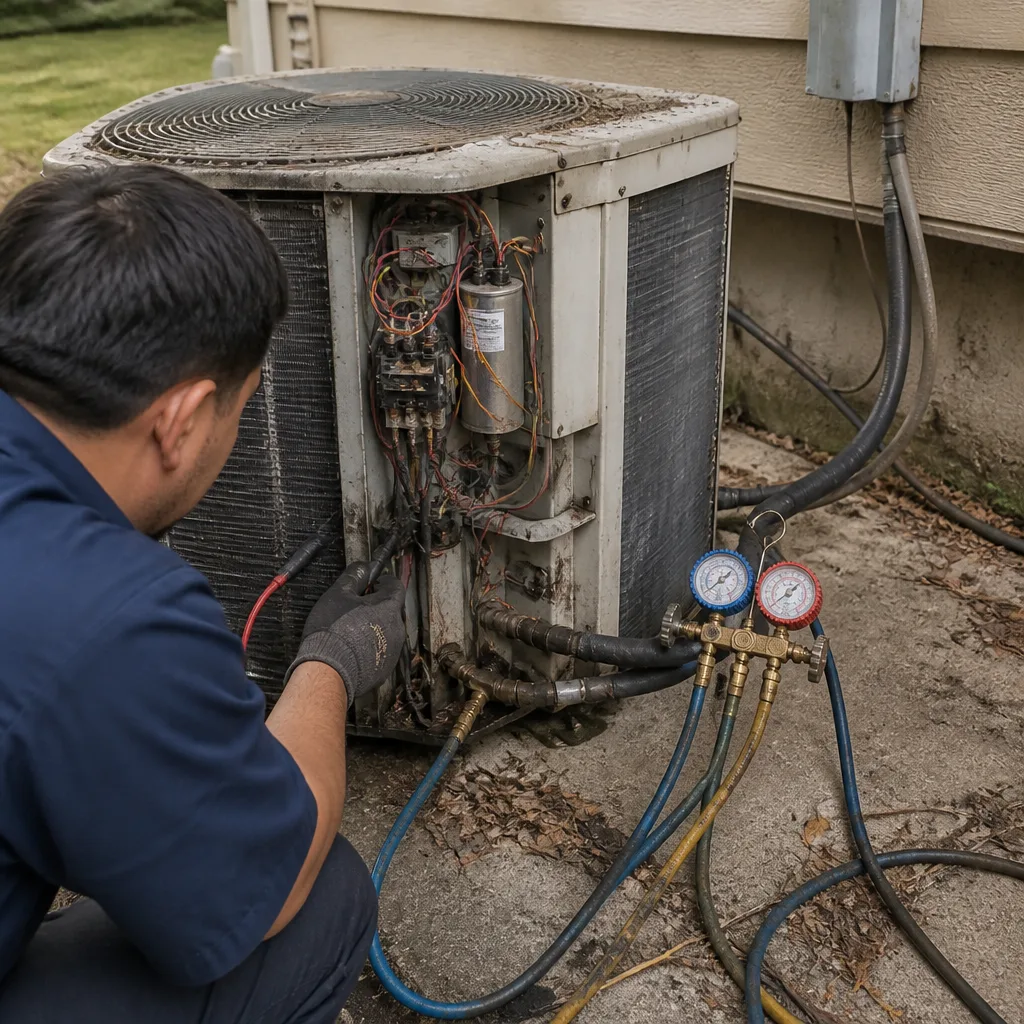
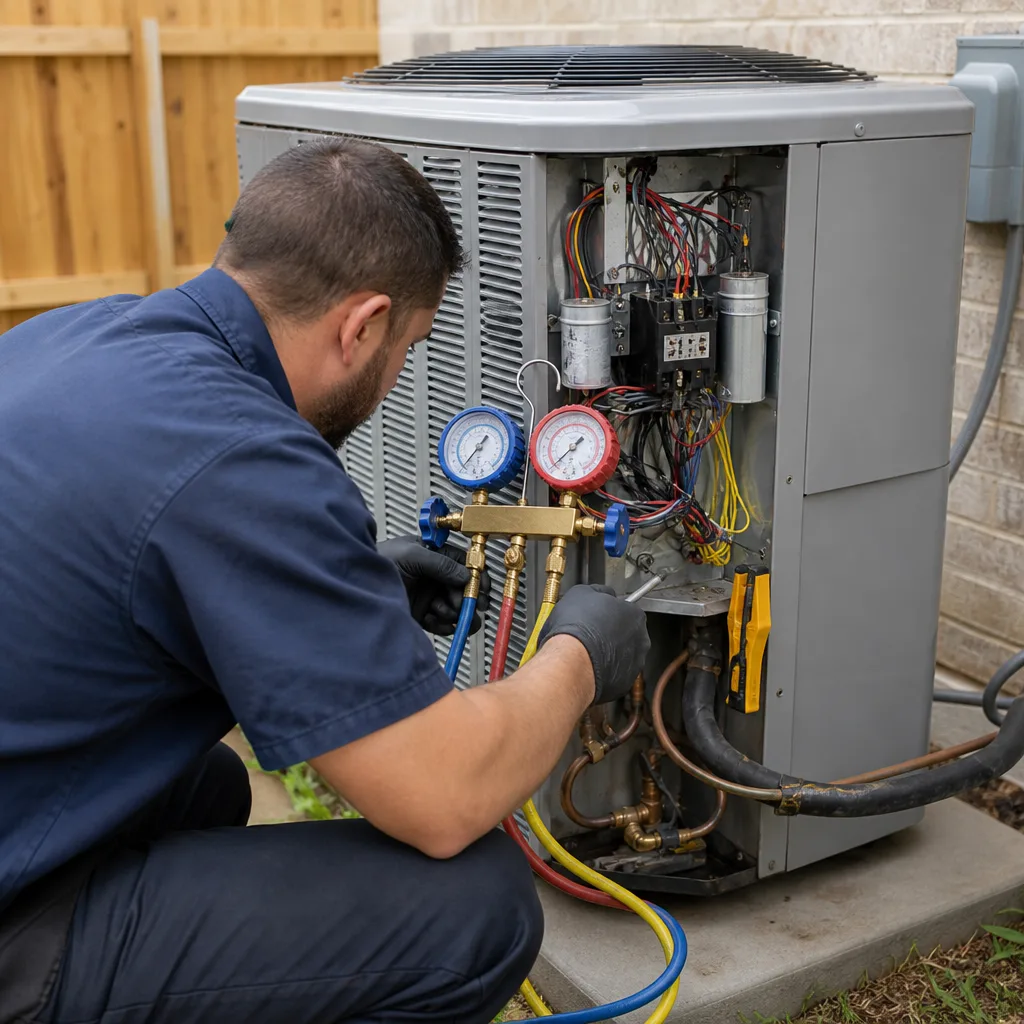
The contactor is the relay switch inside the outside unit that connects power to the compressor and fan motor when the thermostat calls. You can see it by removing the service panel after shutting off the disconnect. Look for pitted or blackened contacts, melted plastic around the terminals, or ants – Houston is ant country, and ants are drawn to the magnetic field of the contactor and will crawl into the contacts, causing the switch to stick. If contacts are pitted or ants are present, replacement of the contactor is a $40 part and a 30-minute job for a licensed tech. Don’t attempt this yourself: the contactor carries line voltage even when the system is off unless the disconnect is pulled.
The Refrigerant Trap: EPA Fines That Dwarf the Repair Cost
Here’s the number nobody puts in a YouTube caption: Section 608 of the Clean Air Act makes it a federal violation for any person to knowingly release refrigerant into the atmosphere, and the EPA’s administrative penalty authority allows fines of up to $44,539 per day per violation. That means if a Houston homeowner buys a can of refrigerant from an online seller (the EPA restricted the sale of these small cans precisely because DIY use was common) and vents even a portion of it during a DIY recharge, the fine is not a hypothetical. The EPA does not need to prove you intended to vent – the regulation applies to any release that occurs outside of approved recovery equipment.
Two other points make this particularly relevant in Houston. First, the city’s heat load means refrigerant leaks are common – coils degrade, connections vibrate loose, and systems run hard from April to October. When a system is low on charge, the temptation to “just top it off” is strong, especially when companies online market stop-leak and recharge kits. Second, refrigerant work is not a one-and-done fix. A system that’s low on charge has a leak somewhere. Adding refrigerant without finding and repairing the leak is like putting air in a tire with a nail in it: it works for a week and fails again. A licensed technician has the tools to find the leak, the training to repair it, and the recovery machine to handle refrigerant legally. The DIY approach on refrigerant is the single worst trade of risk-to-reward in residential HVAC, full stop.
Why Houston’s Climate Makes DIY Electrical Work Riskier Here
Every HVAC system runs on electricity – 240 volts at the outside disconnect, 24 volts at the thermostat control circuit. Working on a live disconnect or a capacitor carries inherent danger anywhere, but Houston’s climate raises the stakes in three specific ways.
First, high ambient temperature. Houston regularly sees 95-plus-degree days from June through September, and attic temperatures climb past 130 degrees. Heat increases electrical resistance in conductors, which raises current draw and increases the failure rate of capacitors, contactors, and wiring connections. More failures mean more homeowners tempted to open the panel on a blistering day, and that’s exactly when mistakes happen – sweat on tools, fatigue, rush to get back inside.
Second, capacitors hold a charge even after power is removed. The run capacitor in your outside unit stores enough energy to stop a heart even when the disconnect is pulled. Discharging it safely requires a proper bleed resistor and an understanding of where the terminals sit. On a Houston rooftop or attic deck at 130 degrees, with sweat running into your eyes, the margin for error shrinks to nothing.
Third, Houston’s electrical grid is stressed during heat waves, and voltage sags are common in older neighborhoods with undersized distribution lines. A sagging power supply causes motors to draw more current, which overheats wiring connections and makes the system behave unpredictably. A technician sees this pattern: scorched terminals in the disconnect box, charred wire nuts in the air handler, bulging capacitors. Homeowners who open a disconnect and find charred wiring are now looking at fire damage risk inside their own walls – a place no homeowner should be conducting amateur electrical repair.
How DIY Repairs Void Manufacturer Warranties
Every major HVAC brand that Dalton Heating & Air services – Carrier, Trane, Lennox, American Standard, and others – writes its warranty with the same assumption: the equipment will be installed and serviced by a licensed contractor. The specific language varies, but the substance is consistent, and it’s worth quoting in plain terms.
Trane and American Standard (same parent company) warranty documents state that coverage applies only if the equipment is “installed and serviced by a licensed HVAC contractor” and that failure to maintain the equipment voids the compressor and heat exchanger coverage. Carrier’s warranty exclusions include “damage resulting from unauthorized repairs.” Lennox states outright that “parts damaged due to improper servicing are not eligible for warranty replacement.”
The key word to understand here is the difference between a warranty denial and a warranty void. A manufacturer can’t automatically void your full warranty because you changed your own filter. But if you replace a capacitor yourself and the compressor fails three months later, that manufacturer will likely attribute the compressor failure to improper servicing – and they can deny that claim specifically. The burden of proof falls on you: you’d need to show the capacitor change didn’t cause the compressor failure, which is nearly impossible without an independent engineering report that costs more than the compressor.
Our technicians see this pattern regularly in Houston. A homeowner replaces a contactor (the $40 relay switch) because the old one was arcing, installs the wrong replacement part, and the compressor then fails from voltage imbalance. The maker’s rep inspects, sees evidence of non-licensed work, marks the claim “customer-caused failure,” and the compressor – a $1,500 part plus labor – is now out of pocket.
The Real Breakeven: When DIY Costs More Than a Pro
Let’s run actual Houston numbers for the most common DIY HVAC jobs. For each one, add up the tool cost, time, permit exposure, and risk tolerance, then compare to a professional service call.
Capacitor Replacement
- DIY cost: $25 for a replacement part, $15 for a multimeter capable of testing microfarads, plus time to identify the correct spec, kill the power properly, discharge the capacitor, wire it, and test. Total: $40 plus 90 minutes. Risk: electrical shock if done wrong; compressor damage if the wrong capacitor is installed.
- Professional cost: $150 to $300 depending on location and system age, including a diagnostic check of why the capacitor failed (often a sign of a deeper issue).
- Breakeven verdict: The professional comes out ahead when the capacitor failure is a symptom rather than a standalone part failure. Which, in Houston, is most of the time.
Condensate Drain Clearing
- DIY cost: $0 if you own a wet-vac already, $50 if you have to buy one. Time: 10 minutes.
- Professional cost: $150 to $250 for a drain line flush and float switch check.
- Breakeven verdict: This one leans DIY. Buy the wet-vac once, and this task pays for itself in two uses.
Refrigerant Leak Repair
- DIY cost: Not legal. Not safe. Not worth the EPA fine (up to $44,539 per day).
- Professional cost: Leak search runs $150 to $400 depending on the method (electronic sniffer, UV dye, or nitrogen pressure test). Repair of the leak location varies by part. A full AC repair in Houston for a leaking coil is typically $800 to $1,800 depending on system type.
- Breakeven verdict: There is no DIY option here. The breakeven is not a calculation – it’s a regulation.
Thermostat Swap
- DIY cost: $30 to $150 for the thermostat, zero tools beyond a screwdriver, 30 minutes of time.
- Professional cost: $150 to $350 including the thermostat, setup, and wiring verification.
- Breakeven verdict: DIY makes sense for a basic swap. If the install involves new wire pulls, breaking into sheetrock, or running lines through finished ceilings, you’re better with a pro – and heat pump installation in Houston always falls on the pro side of this line.
Full System Replacement
- DIY cost: Not a real option. System sizing requires Manual J load calculation, duct pressure testing, and refrigerant charge verification. One wrong connection and you void warranty, burn out a compressor, or both.
- Professional cost: A full HVAC system replacement in Houston runs $7,000 to $14,000 depending on size, efficiency, and brand. This figure includes the labor, permitting, city inspection where required, refrigerant handling, and disposal of the old unit.
- Breakeven verdict: There is no breakeven. A system replacement is the single worst DIY candidate in the entire home.
Common Mistakes to Avoid
- Buying refrigerant online without a license. The EPA now restricts small-can refrigerant sales to licensed technicians for a reason. Buying from a gray-market seller creates documentary evidence that you intended to handle refrigerant, which is exactly what the EPA’s enforcement branch looks for.
- Replacing the capacitor without discharging it. The run capacitor stores enough charge to stop a heart even after the power is off. We’ve heard homeowners say “it bit me but I was fine” – which is survivorship bias talking. The next one doesn’t get lucky.
- Using a pressure washer on the condenser coil. High-pressure water folds the aluminum fins flat like a deck of cards, cuts airflow in half, and sends the head pressure high enough to trip the compressor thermal overload. Garden hose only, gentle spray, angled from above.
- Ignoring the drain line blowout whole-house shutdown. The float switch that kills your system when the condensate line clogs is doing its job. Bypassing the float switch to force the system back on means condensation backs up into your ceiling or drywall. That’s a $4,000 sheetrock and mold remediation bill from the same system that needed a $10 condensate tablet.
- Calling a handyman instead of a licensed HVAC tech. A handyman with no TACL license can’t legally touch your HVAC system, and if something goes wrong, your homeowner’s insurance may have grounds to deny the claim. The handyman will charge less, fix less, and leave you with less recourse.
- Installing a too-big or too-small system from Facebook Marketplace. Houston’s humidity demands proper load sizing. An oversized system cools fast but doesn’t run long enough to remove moisture – the result is a cold, clammy house. A too-small system runs constantly and freezes its own coil. A Manual J calculation is the only way to size a Houston system properly.
When to Call a Professional
Any task touching refrigerant, gas lines, heat exchangers, or line-voltage electrical work belongs in professional hands, no exceptions. If you smell gas near the furnace, turn off the gas valve if you know where it is and leave the house – then call your utility first and a licensed tech second. If the breaker to the outside unit keeps tripping, stop resetting it; the trip is protective, and overriding it repeatedly can start a fire. If your system is between 12 and 20 years old and the compressor or heat exchanger fails, you’re making a replace-versus-repair choice, not a DIY repair. For any of these, Dalton Heating & Air Houston offers free estimates in Houston – call (903) 494-7686, or read How to Hire a HVAC Contractor in Houston: A Step-by-Step Guide to know what to ask. The price you’re quoted is the price in writing before any work starts, with no exceptions.
See the difference
 Before
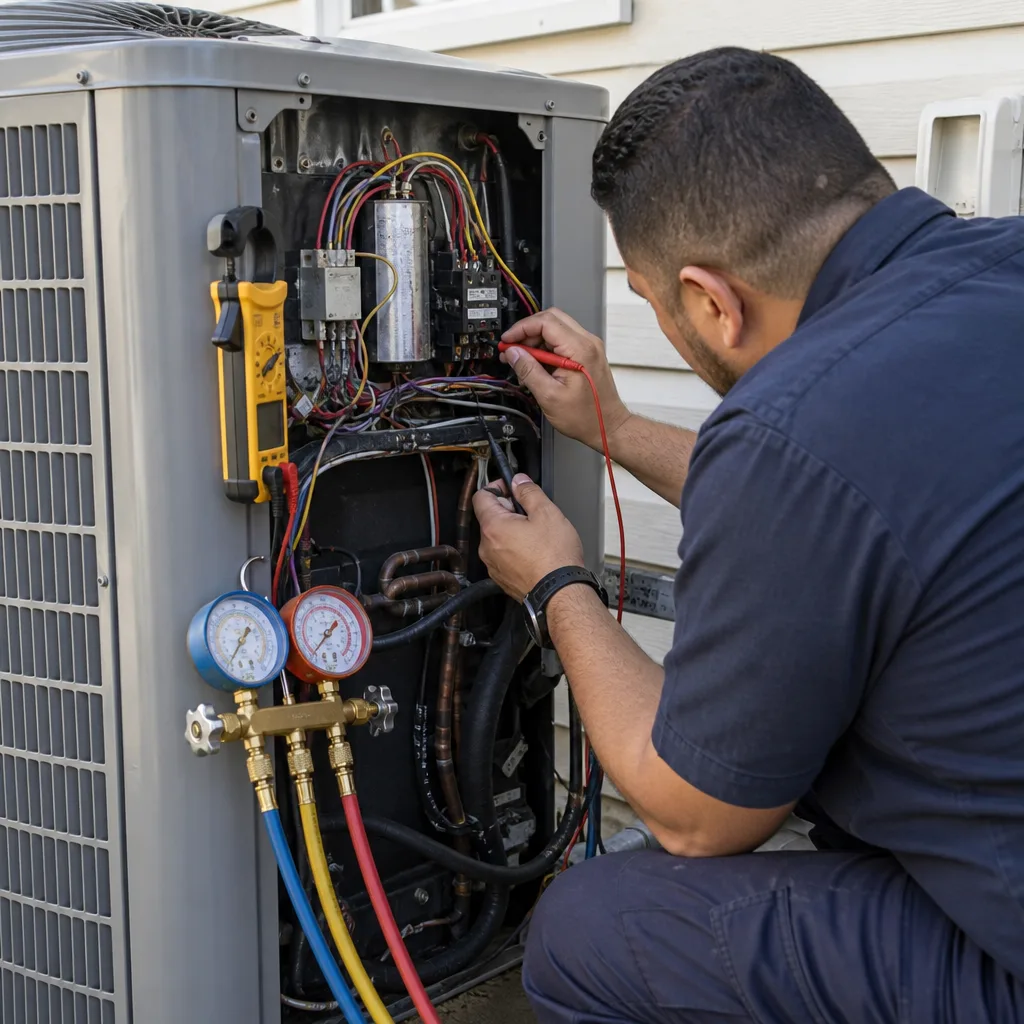 After
After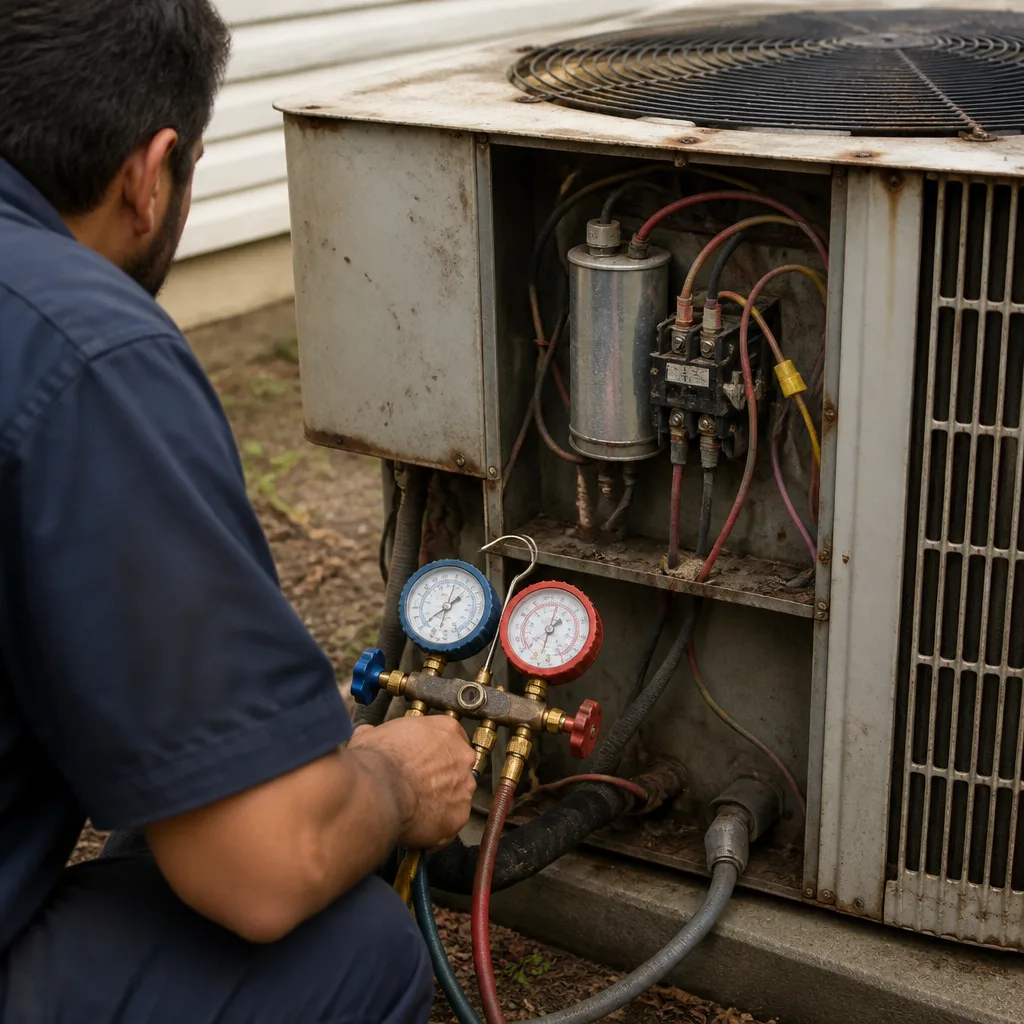 Before
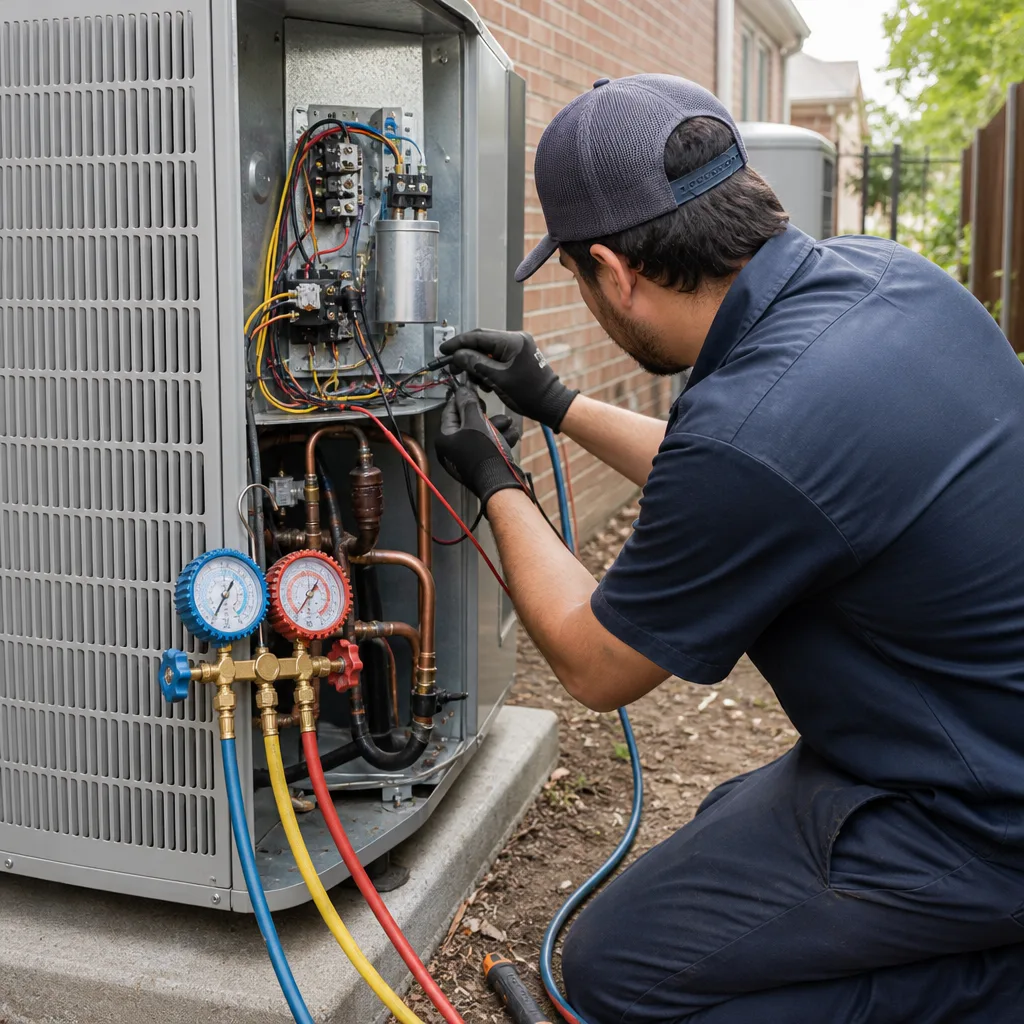 After
After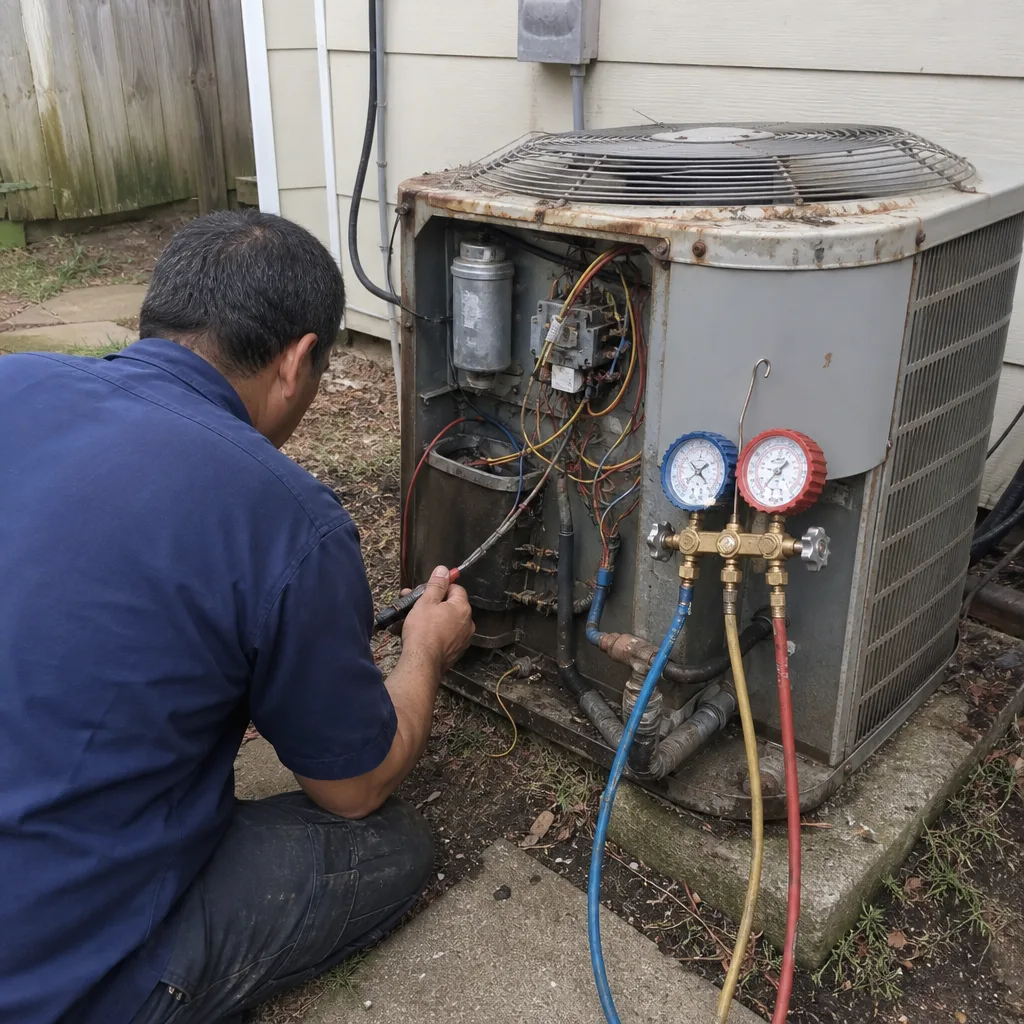 Before
 After
AfterFrequently Asked Questions
Yes, with limits. Section 1302 of the Texas Occupations Code permits a homeowner to perform HVAC work on their own primary residence without a TACL license, but federal law prohibits adding, removing, or recovering refrigerant without EPA certification. The practical divide: you can change filters, clear drains, and swap basic components, but refrigerant and line-voltage work require a licensed technician.
You’ve committed a federal violation under Section 608 of the Clean Air Act, regardless of whether any refrigerant was released into the atmosphere. The EPA’s statutory maximum is $44,539 per day per violation, and selling or possessing refrigerant without proper certification creates a paper trail. The practical risk may be lower than the theoretical maximum, but the risk-to-savings ratio makes this the worst single DIY HVAC decision a homeowner can make.
Most AC repairs in Houston run $150 to $450 depending on the part and the system. Simple capacitor and contactor replacements run $150 to $300, condenser fan motors run $350 to $600 installed, evaporator coil replacements run $800 to $1,800, and compressor replacements run $1,800 to $3,500. A full AC repair in Houston that involves multiple parts can exceed $2,000 before replacement becomes the better call. For an exact price on your system, call (903) 494-7686 – the quote is free and written.
It can. The major brands (Carrier, Trane, Lennox, American Standard) write warranty language that excludes failure caused by “unauthorized repairs” or “improper servicing.” If your compressor fails after a DIY capacitor replacement and the manufacturer attributes the compressor failure to that work, the claim gets denied – and proving otherwise is on you. That risk disappears when a licensed tech performs the work.
Not legally if the system involves refrigerant. A pre-charged line-set system avoids handling refrigerant at installation, but the EPA’s interpretation applies to connecting pre-charged lines as well, and any mistake that releases refrigerant still falls under Section 608. Texas also requires a TACL license for any HVAC work performed for compensation, and city permitting requirements in Houston often apply to electrical and structural components. Heat pump installation in Houston is a licensed trade – we wouldn’t try it as a homeowner, and we’d advise you not to either.
Ignoring the condensate line until the float switch kills the system, then bypassing the float instead of clearing the line. Houston humidity produces so much condensate that clogged lines are the number one cause of summer shutdowns we see. The fix is a wet-vac and a $10 condensate tablet, not a wiring bypass.
The Bottom Line
The DIY-versus-professional HVAC question in Houston has a cleaner answer than most homeowners expect, and you can find more guides & resources on our blog. Five tasks – filters, drain lines, thermostats, coil cleaning, and visual contactor inspection – are safe, legal, and worth doing yourself. Everything past that line involves either federal law (refrigerant), electrical danger (line voltage), warranty exposure (parts replacement), or engineering judgment (system sizing), and in those zones the professional call is cheaper than the risk. The point isn’t that you shouldn’t touch your own system. The point is that Houston’s climate, Texas law, and the equipment manufacturers all draw the same line: hands-on for maintenance, licensed hands for repair. When the repair call comes, call (903) 494-7686 – Dalton Heating & Air Houston gives you a written price before any work starts and a full-year guarantee in writing after. That’s the standard, and it applies to every job, every time.
Written by Marco Benitez, Owner at Dalton Heating & Air Houston, serving Houston since 2003.