
 Furnace & heating
 AC repair
 Heat pumps
 Ductless mini splits
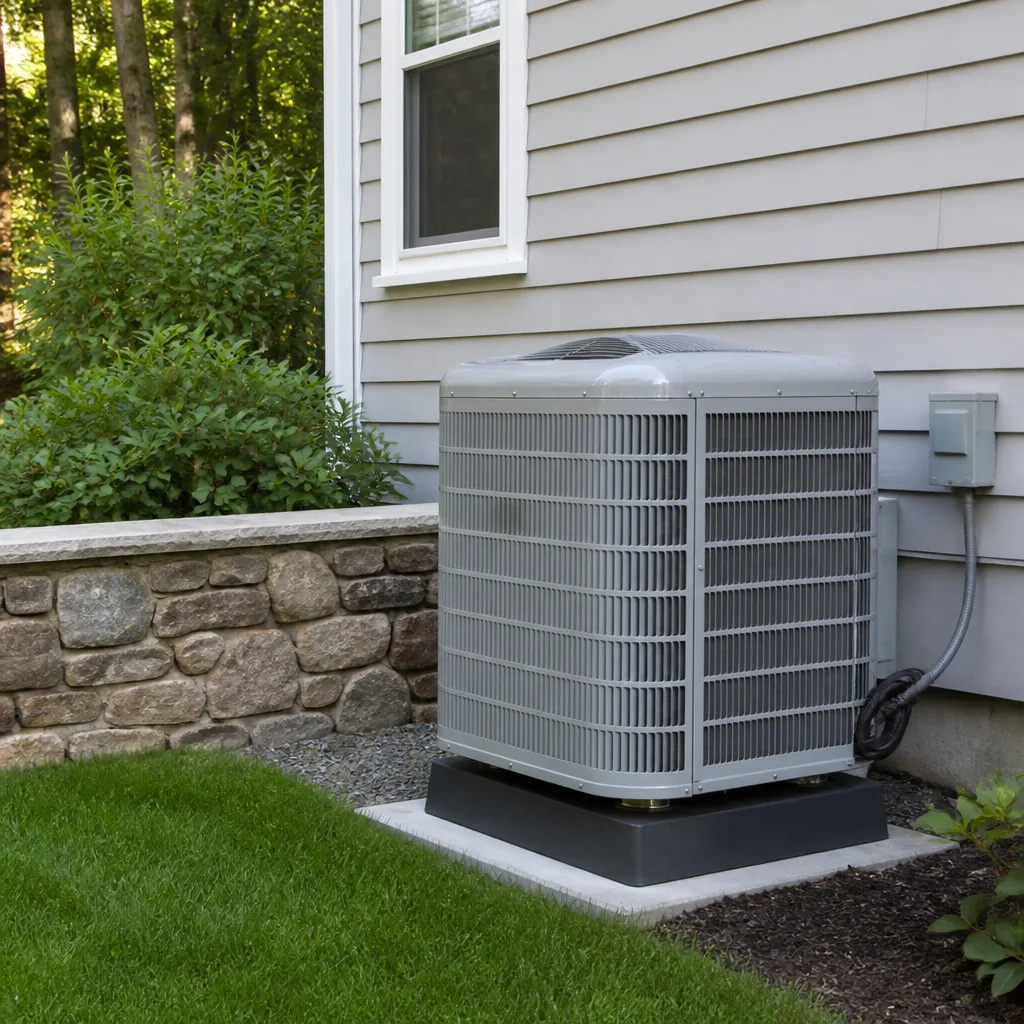 Carrier
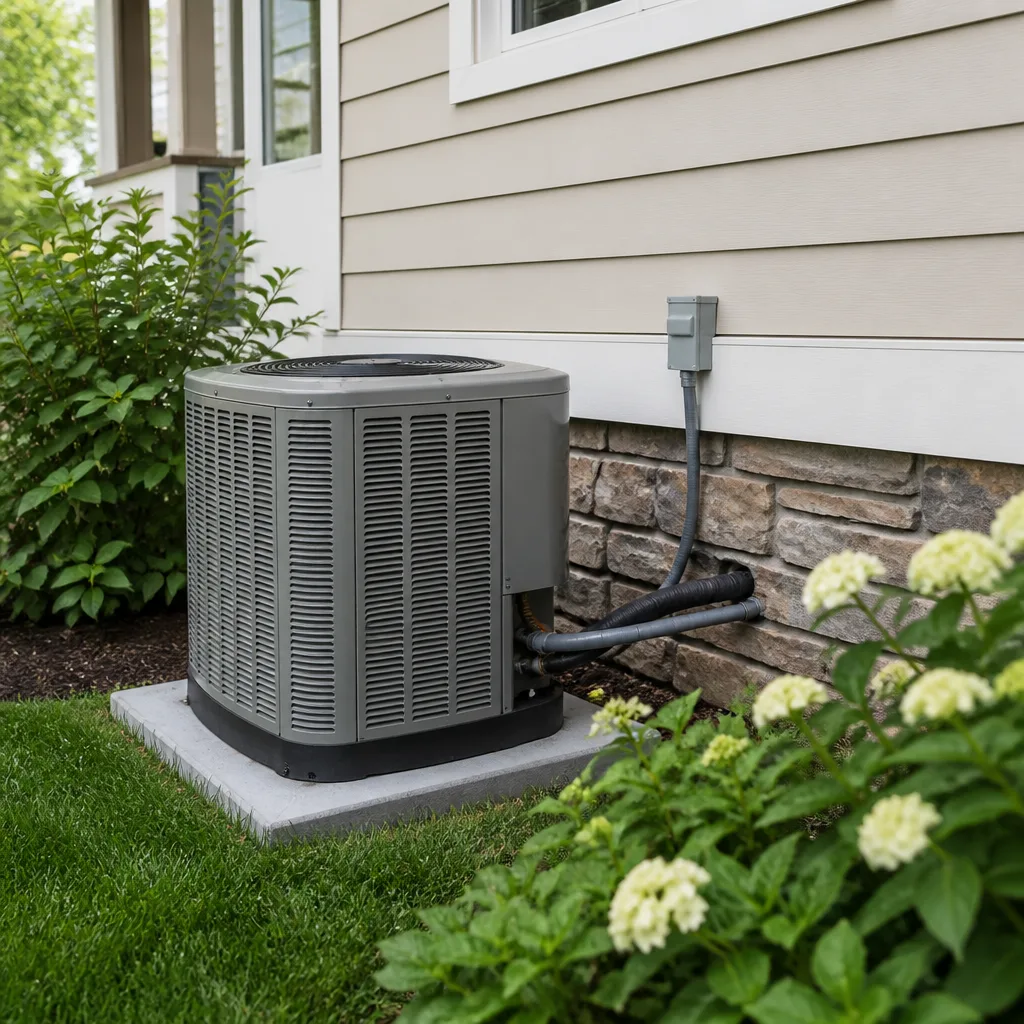 Trane
Trane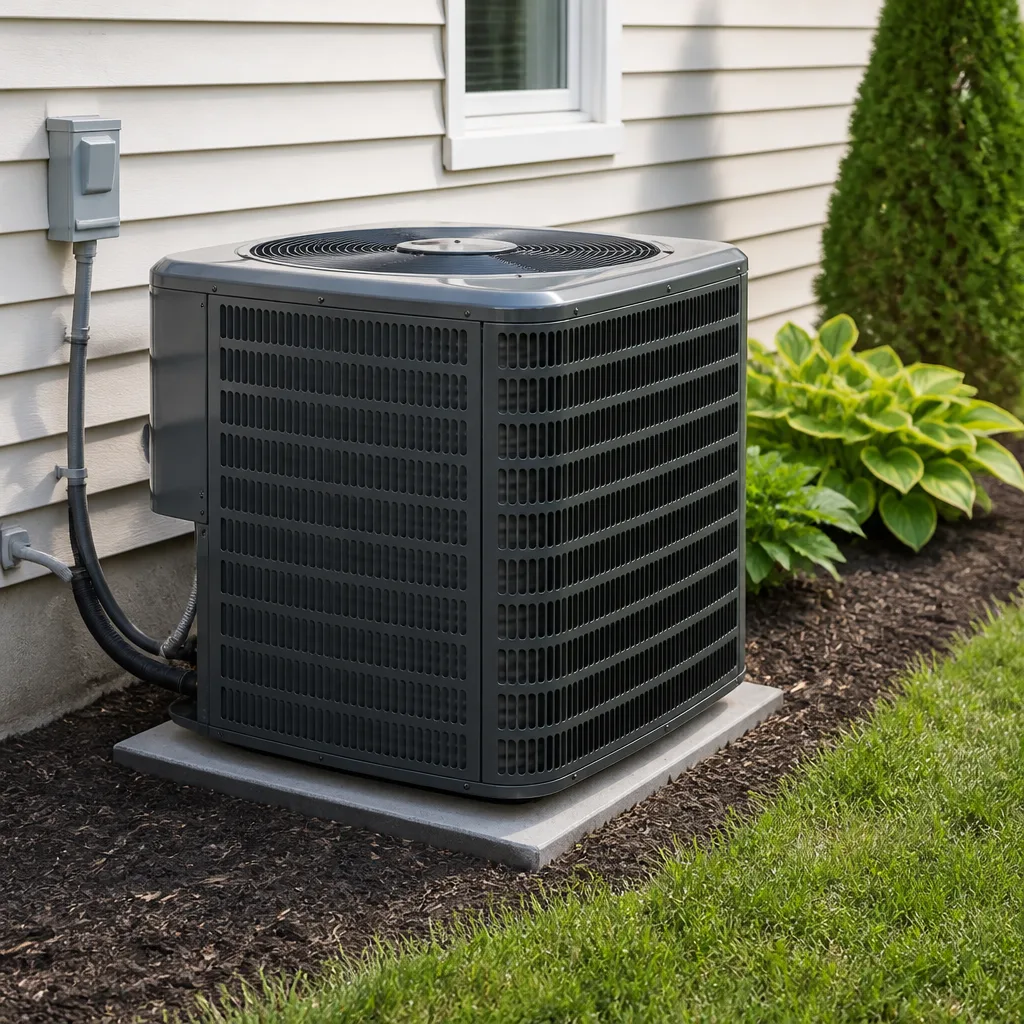 Goodman
Seasonal tune-up and full diagnostic on your Carrier, Trane, or Goodman system - readings shown to you before any repair is proposed
Diagnosis first, numbers second - you approve the repair price before a single part goes in.
Get your free estimateCarrier Capacitor Replacement: The Houston Owner’s Guide
A Carrier capacitor replacement in Houston typically runs $180 – $340 installed, including the part, labor, and a written one-year guarantee on the work. Most Carrier units we see in the field need this done same-day because when the capacitor goes, the compressor or fan simply won’t start. We stock Carrier-compatible capacitors on our trucks for the most common residential models, so a technician can often have your system running again inside a couple of hours.
Most Houston homeowners discover a failed capacitor the hard way: the thermostat clicks, the indoor blower hums, but the outdoor unit just sits there. Or the condenser fan isn’t spinning while the compressor is hot and buzzing. A capacitor is a small cylinder that stores and releases the electrical jolt your compressor and fan motors need to get moving. When it weakens, your Carrier unit struggles to start. When it fails completely, nothing happens. In Houston’s heat, that failure usually shows up on the hottest afternoon of the year because heat weakens the capacitor’s internal dielectric material faster.
Which Carrier Models This Applies To
This applies to nearly every residential Carrier system built in the last 25 years. That includes the Comfort series, Performance series, and Infinity series condensers and heat pumps. The capacitor itself is not model-specific in most cases. What matters is the microfarad rating (µF) and voltage rating printed on the side of the old capacitor. A typical Carrier condenser uses a dual-run capacitor rated somewhere between 35/5 µF and 80/10 µF at 370 or 440 volts. The first number drives the compressor, the second drives the fan.
The compatibility gotcha Houston owners should know: Carrier units built after 2018 increasingly use 440-volt capacitors even though the system runs on 240-volt service. Installing the older 370-volt spec on those units works briefly, then fails again within a season. We match the exact voltage and microfarad rating every time. We install OEM Carrier capacitors when a unit is still under parts warranty and quality aftermarket equivalents from American factories like Titan HD when it isn’t. Functionally identical, but the aftermarket ones often outlast the OEM part in Houston’s heat.
Dalton Heating & Air Houston is an independent service provider. We’re not affiliated with Carrier Corporation, which means we’re free to install whichever capacitor is actually the best match for your unit rather than whichever part a factory program tells us to sell.
Styles & brands we work with
Signs Your Carrier Capacitor Is Failing
- The outdoor unit hums but won’t start. That hum is the compressor trying to turn over without enough stored electrical charge to actually get moving. If you hear it for more than a few seconds, shut the system off at the breaker to avoid overheating the compressor. This is the classic capacitor failure sound.
- The fan isn’t spinning but the compressor is running. The fan side of a dual capacitor can fail independently of the compressor side. You’ll feel the compressor running hot, but no air moving across the coil. The system will overheat and shut down within 20 minutes.
- The unit starts only with a push. If you can spin the fan manually and the system kicks on, the fan-side capacitor section is dead. This is why old-timers used to poke a stick through the grille to start their unit. We don’t recommend the stick trick. It works until it doesn’t, and it never fixes the compressor side.
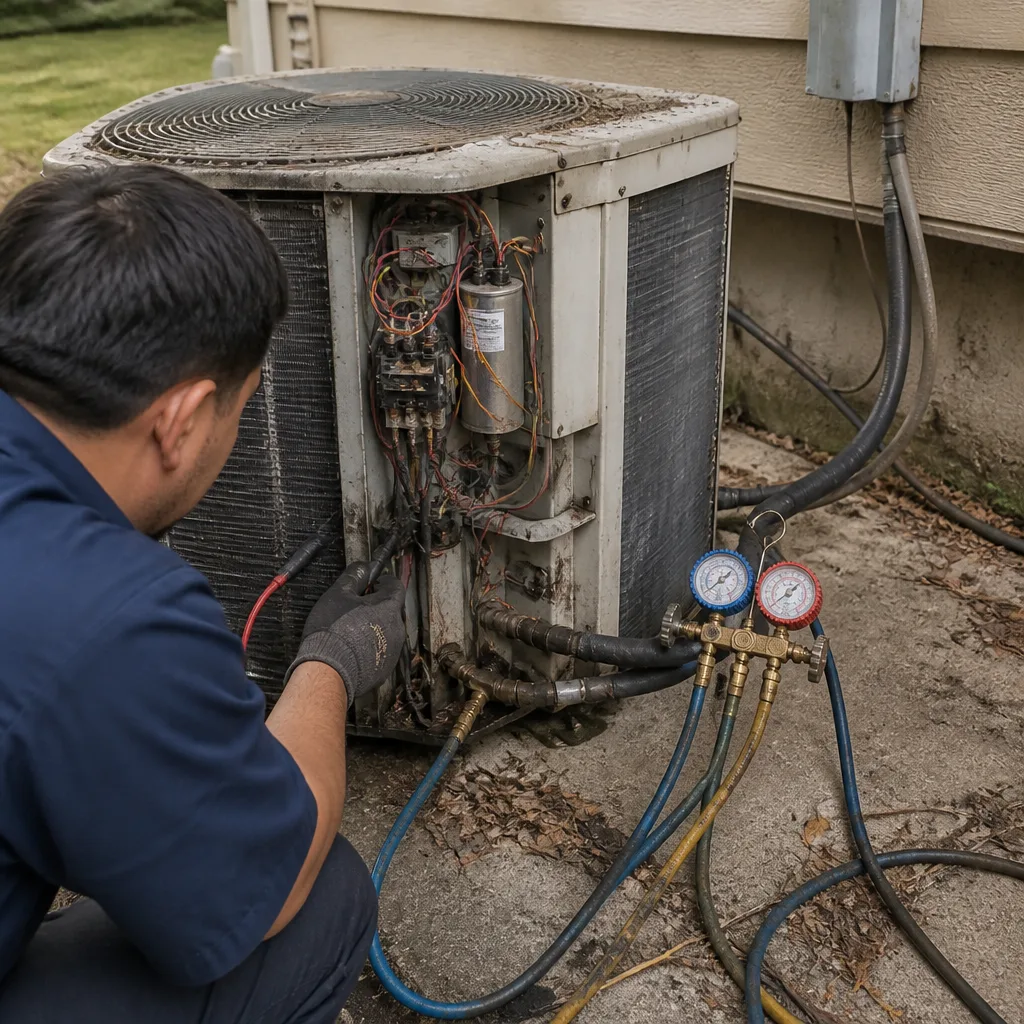
- The capacitor looks swollen or is leaking oil. A healthy capacitor has flat top and bottom surfaces. When the internal dielectric breaks down, pressure builds and the top bulges or the capacitor splits at the seam. A small amount of clear or amber oil may be visible around the base.
- The system starts fine in the morning but struggles by 4 p.m. Heat increases electrical resistance and weakens the capacitor further. A capacitor that’s marginal at 8 a.m. is dead by the time Houston hits 98 degrees in the afternoon. The failure looks intermittent, but the root cause is the same.
See the difference
 Before
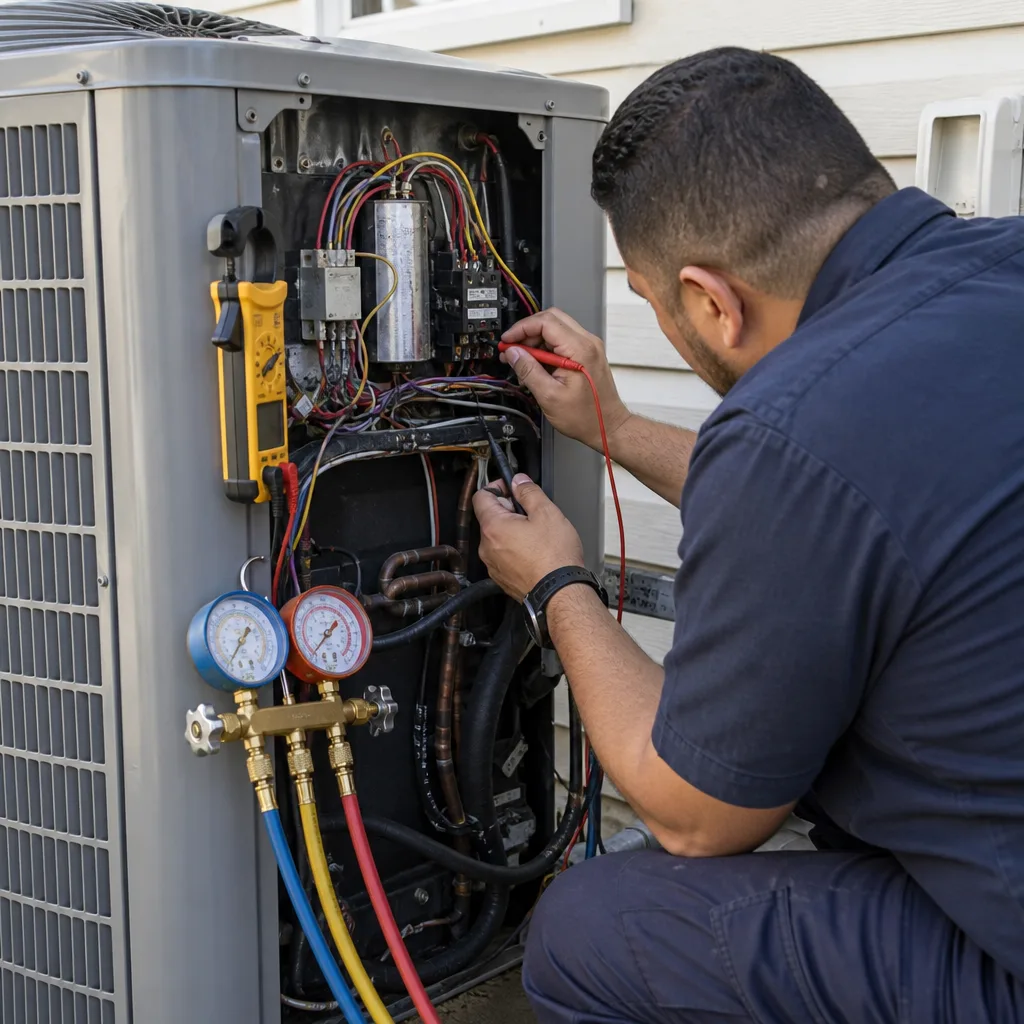 After
After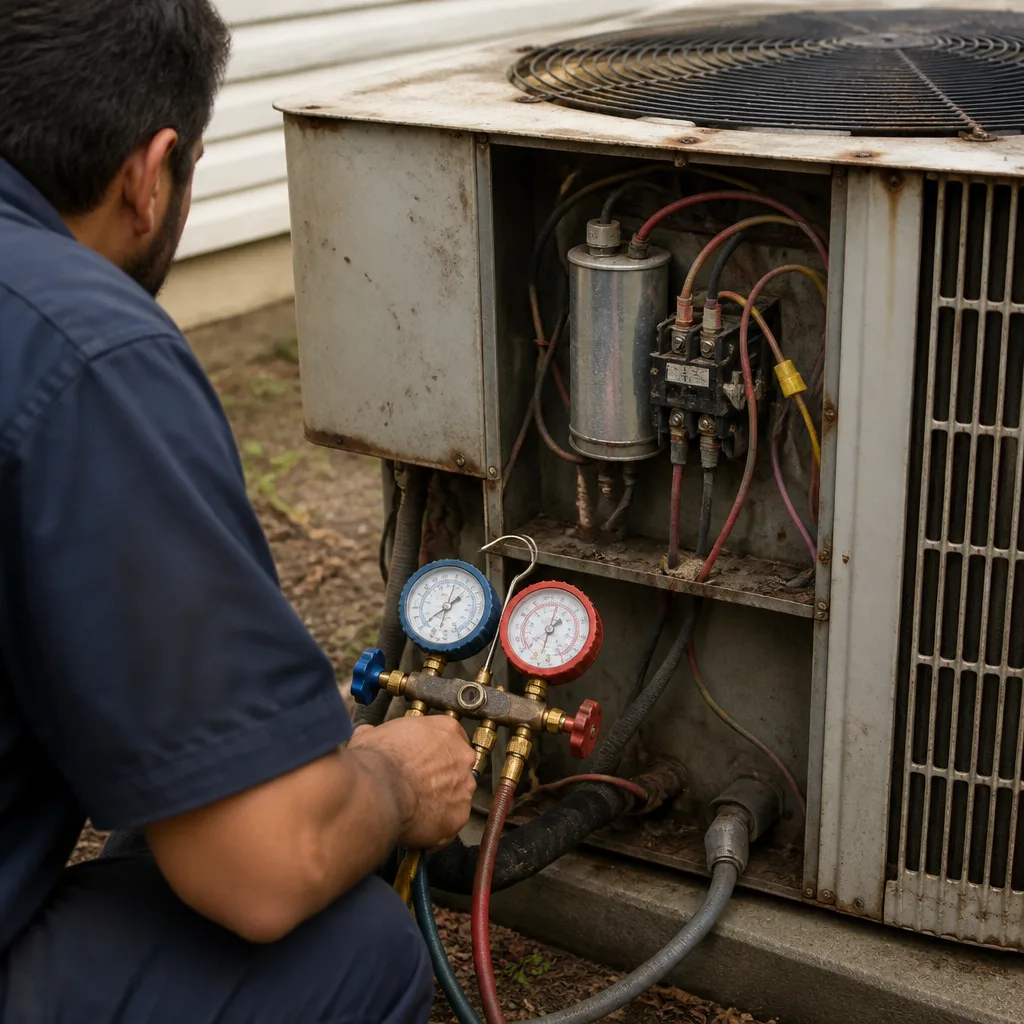 Before
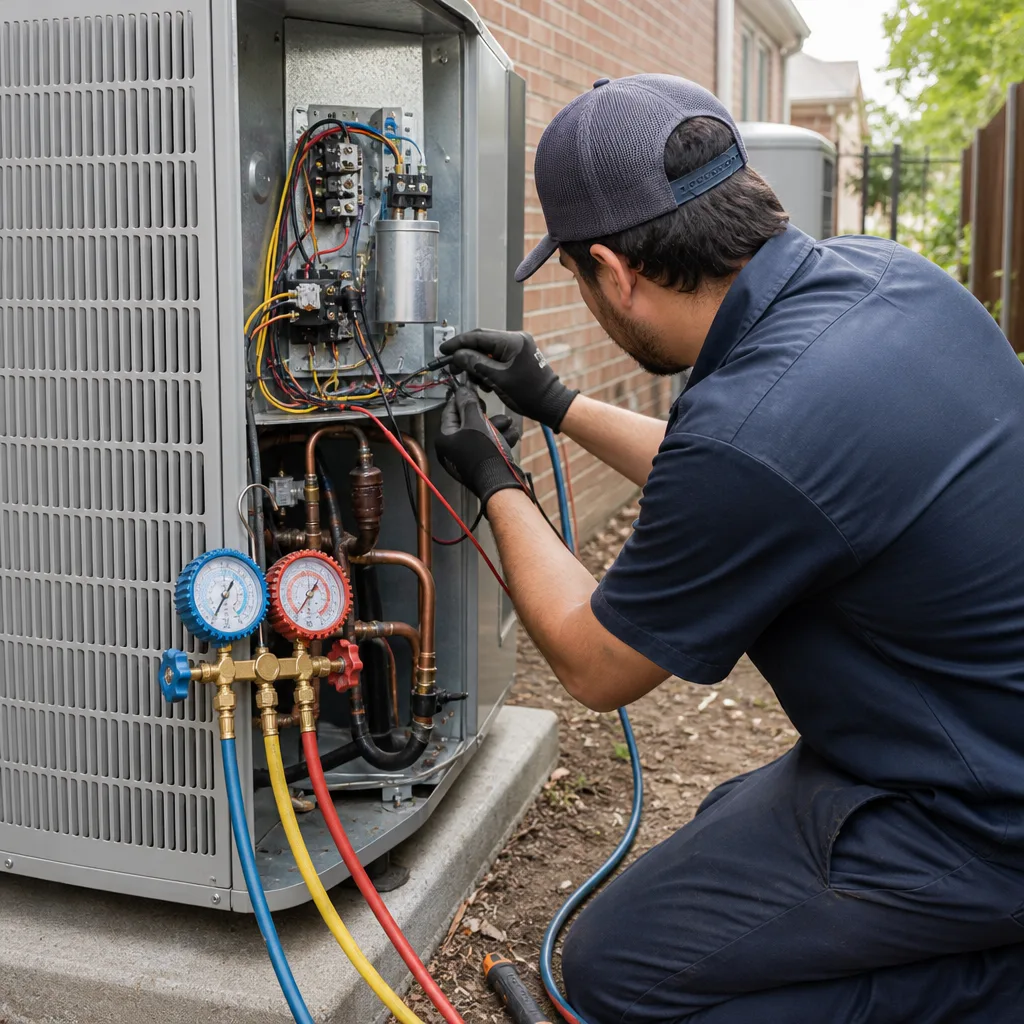 After
After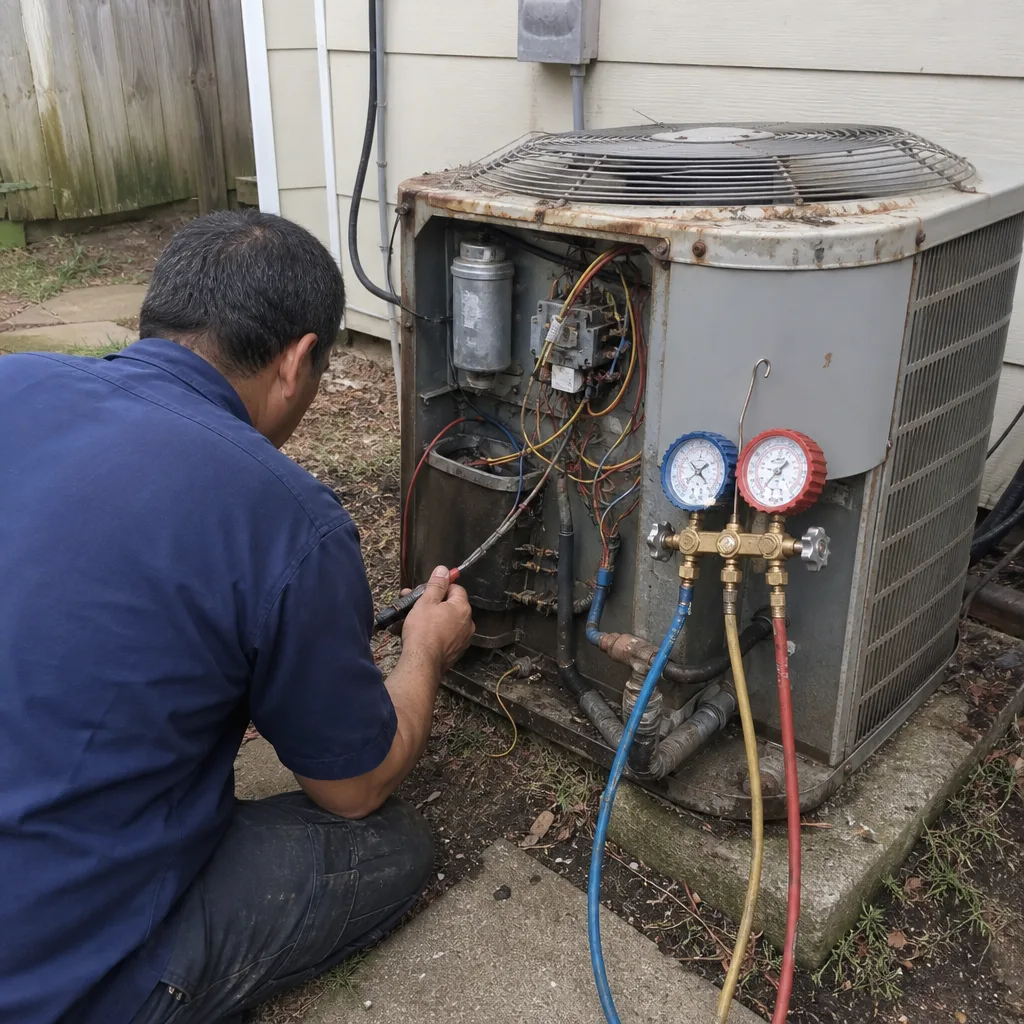 Before
 After
AfterReplacement Cost & What’s Included
For a Carrier system in Houston, a capacitor replacement runs $180 – $340 installed. Most jobs land in the $200 – $260 range. The split is roughly $35 – $90 for the capacitor itself and the remainder for the diagnostic visit, installation, and system testing. Dual-run capacitors for larger systems cost more than single-run units for smaller ones.
If your capacitor has failed, that’s an AC repair call, and Houston pricing for AC repair work runs $150 – $650 depending on what the technician actually finds. Some jobs are a straightforward capacitor swap. Others reveal a capacitor that failed because the unit is short-cycling, or a compressor drawing too many amps on startup. We’ll tell you the difference in plain language before any work starts.
Every repair from Dalton Heating & Air Houston includes the written price before any work begins, the replacement part, professional installation, a full system test after the swap, and the 365-Day Done Right Promise in writing. If that capacitor fails inside a year, we replace it again at no charge.
DIY or Call Us?
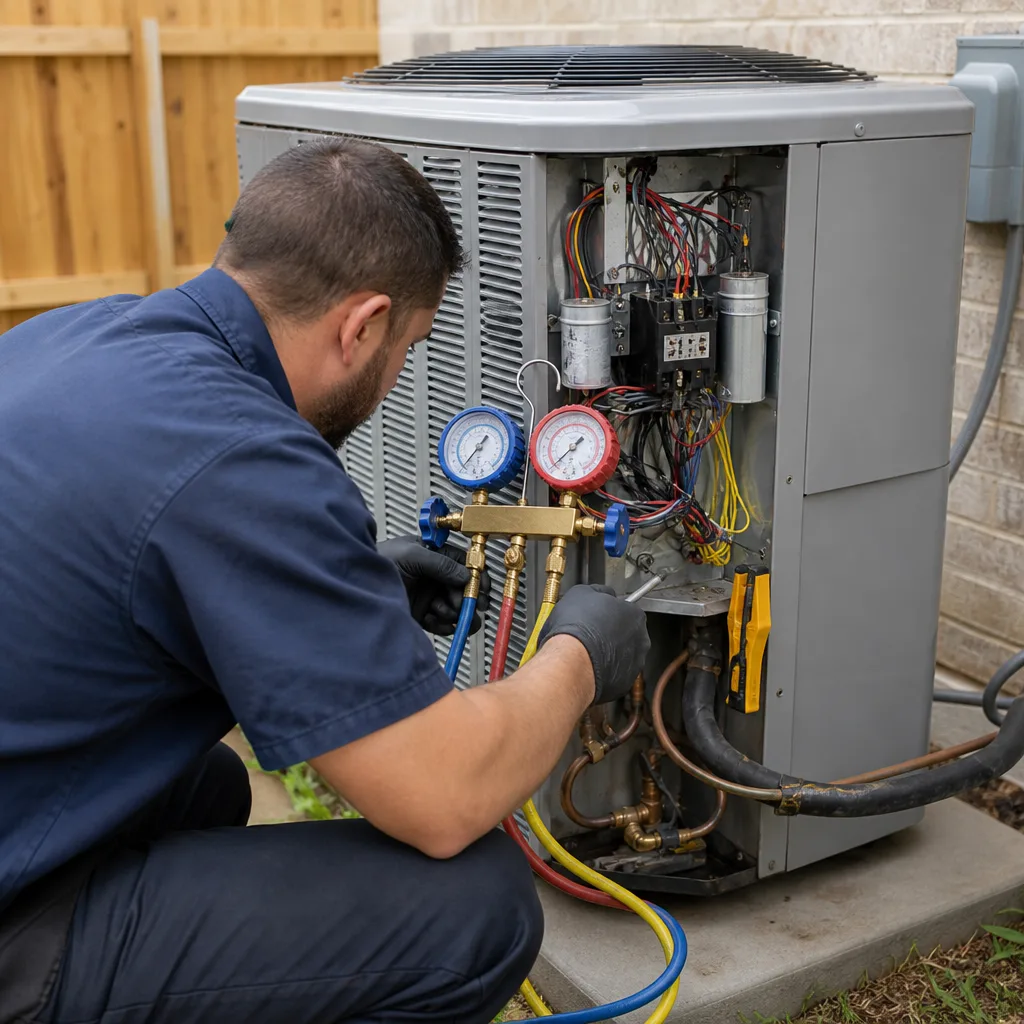
Here’s the honest split. You can safely do the visual inspection. Open the disconnect box next to your condenser, confirm power is off, remove the access panel, and look at the capacitor. Is the top bulging? Is there oil residue? If yes, you’ve likely found the problem. What you should not do is attempt the swap yourself. A capacitor stores a charge even with the power off, and if you touch the terminals you can take a serious shock regardless of whether the system is disconnected. The charge is real, and it doesn’t care how handy you are.
Also, the capacitor spec matters. Install a 35/5 µF when the system calls for a 45/5, and you haven’t fixed anything. You’ve created a different problem that kills the compressor slowly. We carry the right spec on the truck, test the old capacitor under load to confirm the diagnosis, and check the contactor and wiring while we’re in there. What takes a determined DIYer a Saturday afternoon takes our technician 45 minutes. If you’re unsure, call (903) 494-7686 and we’ll have a uniformed, background-checked tech at your door inside our stated window.
FAQs
In Houston’s climate, expect 5 to 8 years from a factory carrier capacitor. The heat and humidity age the internal dielectric faster than cooler climates. Aftermarket capacitors built with metallized polypropylene film can stretch that closer to 10 years. If your capacitor has been in place since the Obama administration, you’re on borrowed time.
No. Capacitors are sealed units and cannot be rebuilt or repaired. The failure is internal, and no amount of cleaning or rewiring brings one back. Replacement is the only fix that solves the problem for longer than a couple of weeks. The good news is the part is inexpensive, and the swap is one of the fastest repairs we do.
The actual capacitor swap takes 20 to 45 minutes once the tech is on site. Add about 30 minutes for diagnosis and system testing, and most Houston capacitor replacement visits are done in under 90 minutes from arrival to a running system. We test the new capacitor under load and confirm the compressor amp draw is normal before we pack up.
Yes. Our trucks carry the most common Carrier dual-run capacitor specs, from 35/5 through 80/10 µF in both 370V and 440V ratings. If your unit requires an uncommon spec, we can usually have it in hand the same day from a local Houston supply house. We also stock parts for Trane and Lennox systems for the same reason.
If your Carrier system is acting up, call (903) 494-7686 and describe what the system is doing. Tell me what the system is doing, and I’ll tell you what it needs – not what sells. We’ll put the price in writing before any work begins, and the repair is covered for a full year. Marco Benitez and the Dalton Heating & Air Houston crew serve homes across Houston and nearby areas, including a lot of calls out near the Energy Corridor where summer loads push older Carrier equipment hard.
Written by Marco Benitez, Owner, Dalton Heating & Air Houston at Dalton Heating & Air Houston, serving Houston and nearby areas.