
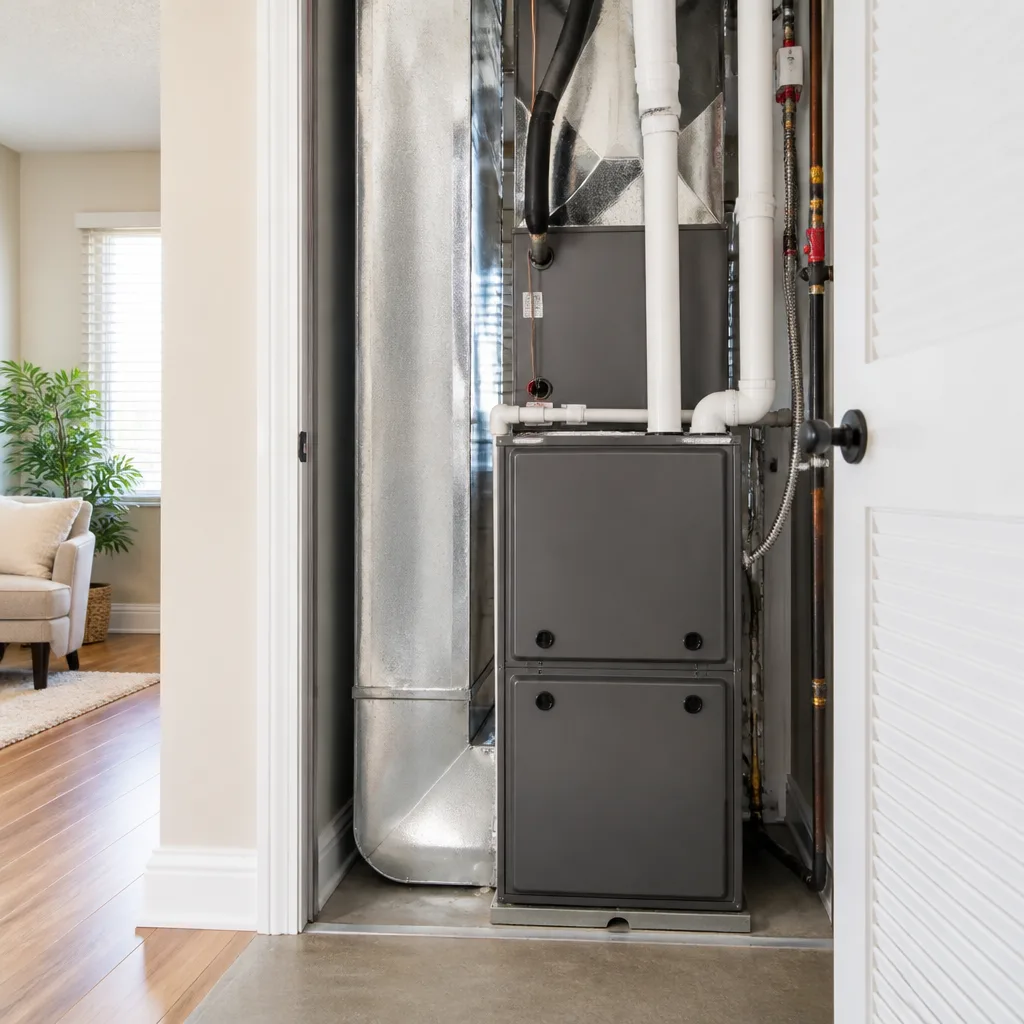
 Furnace & heating
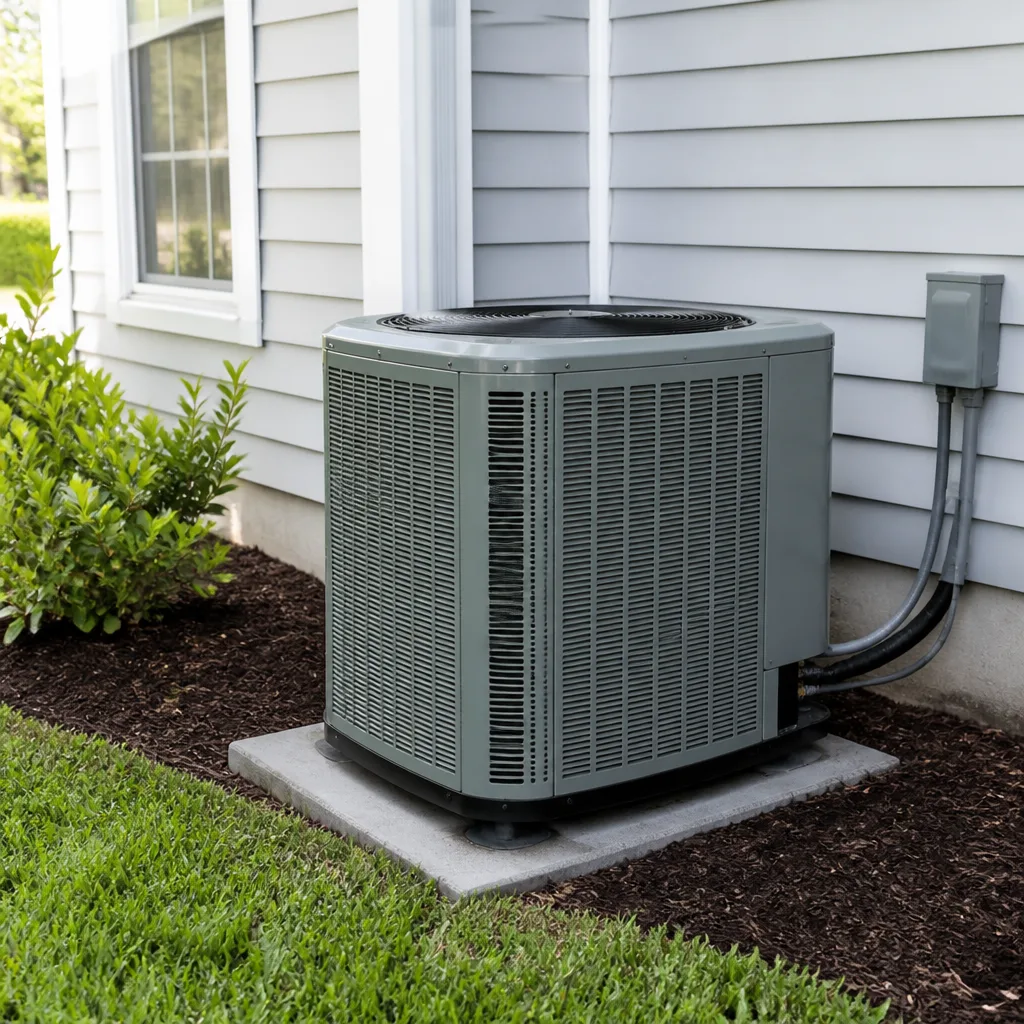 AC repair
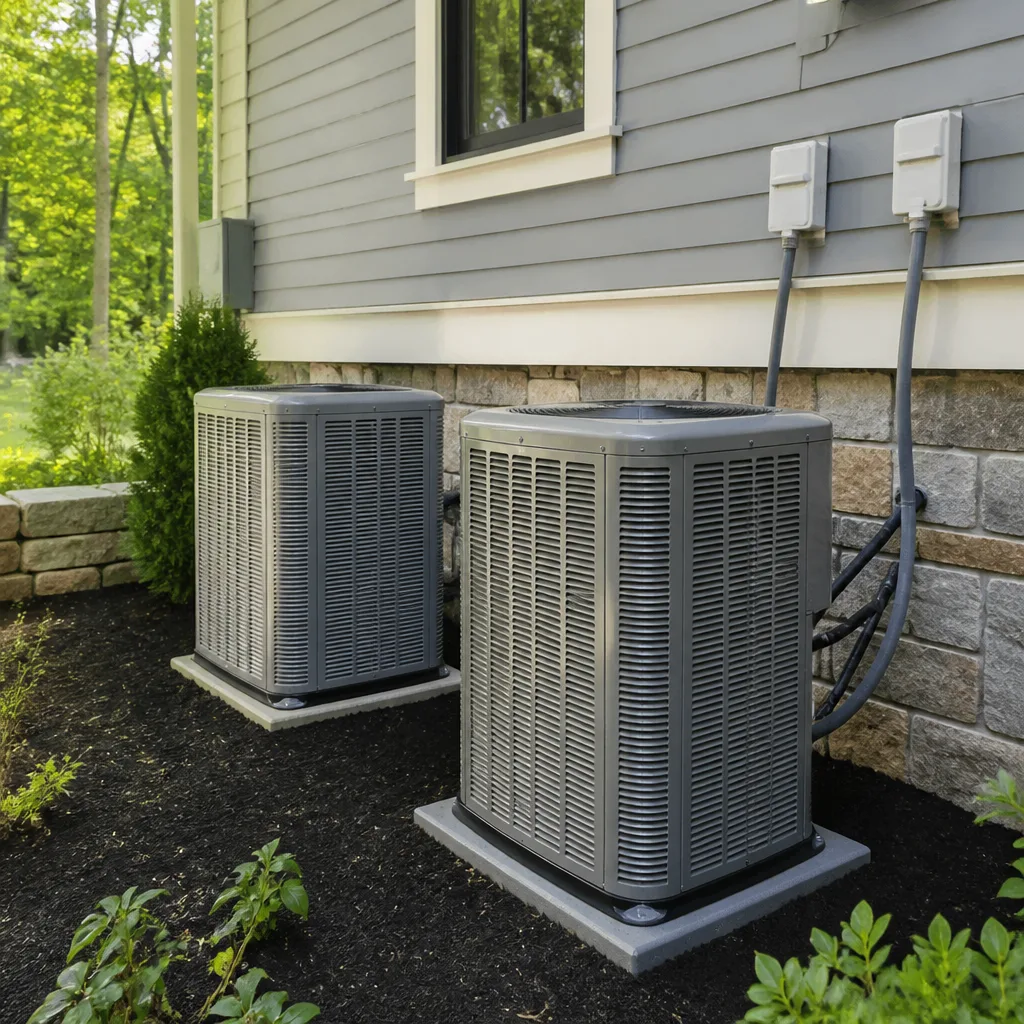 Heat pumps
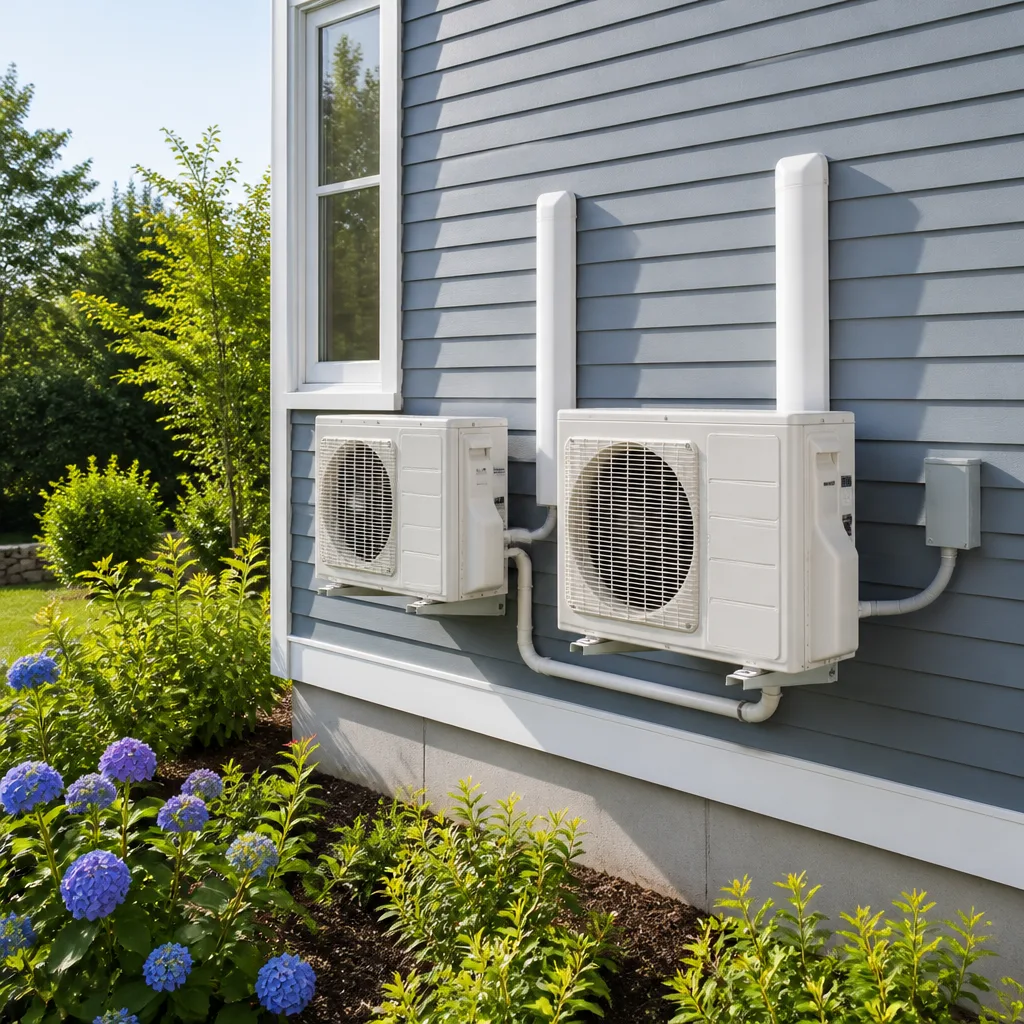 Ductless mini splits
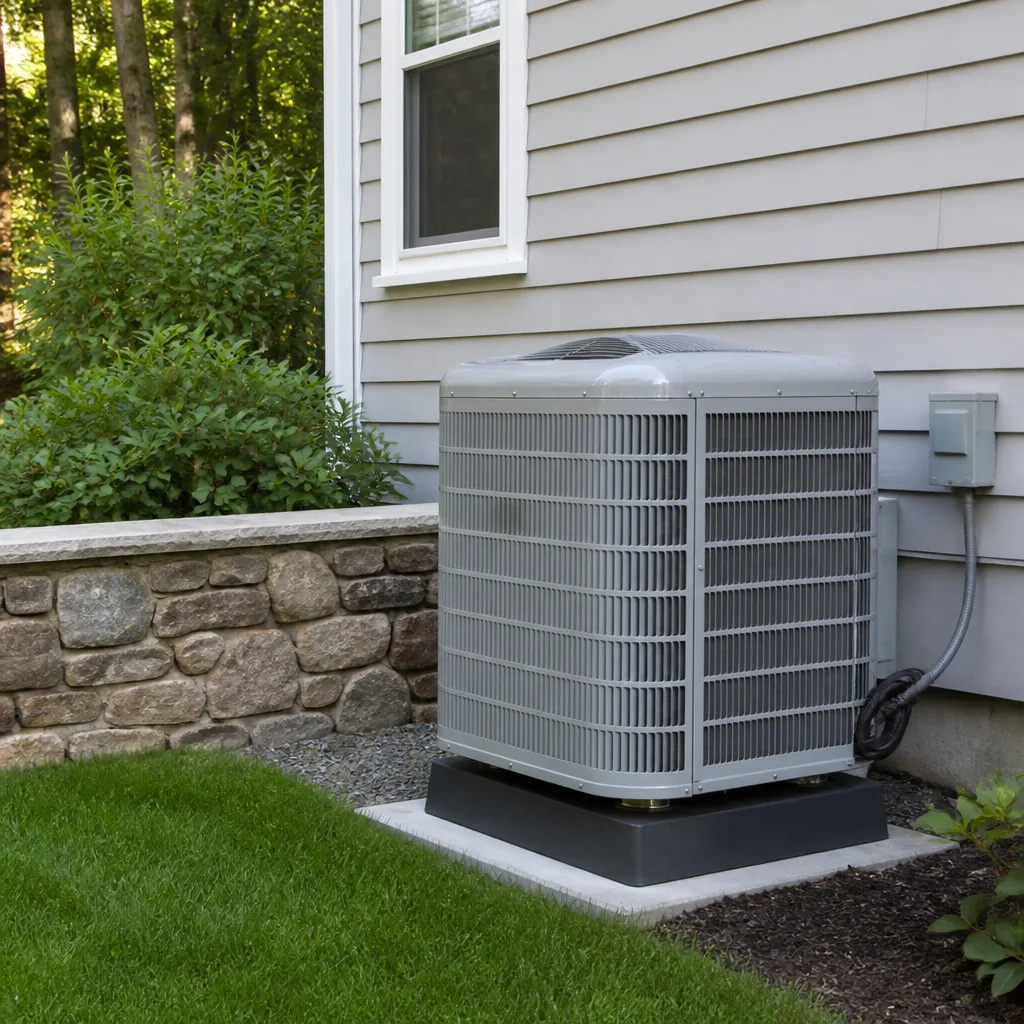 Carrier
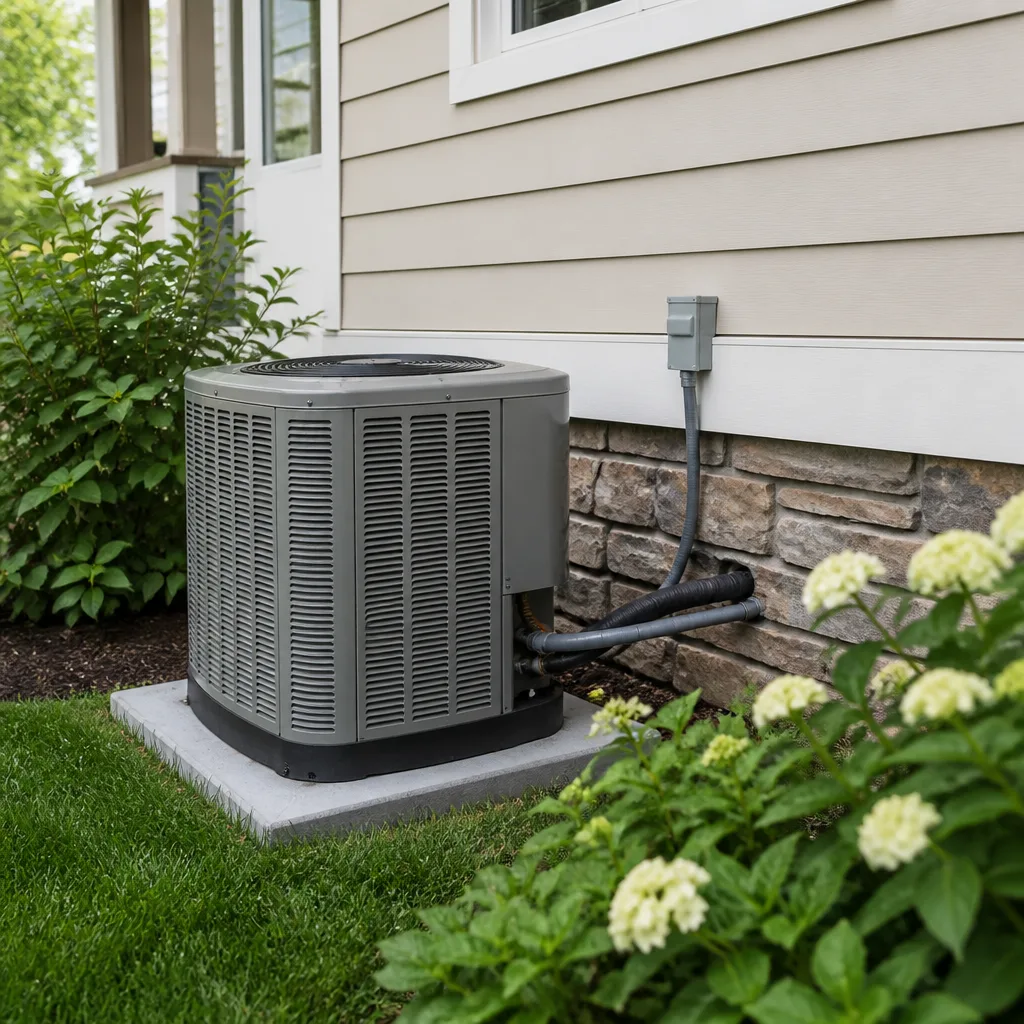 Trane
Trane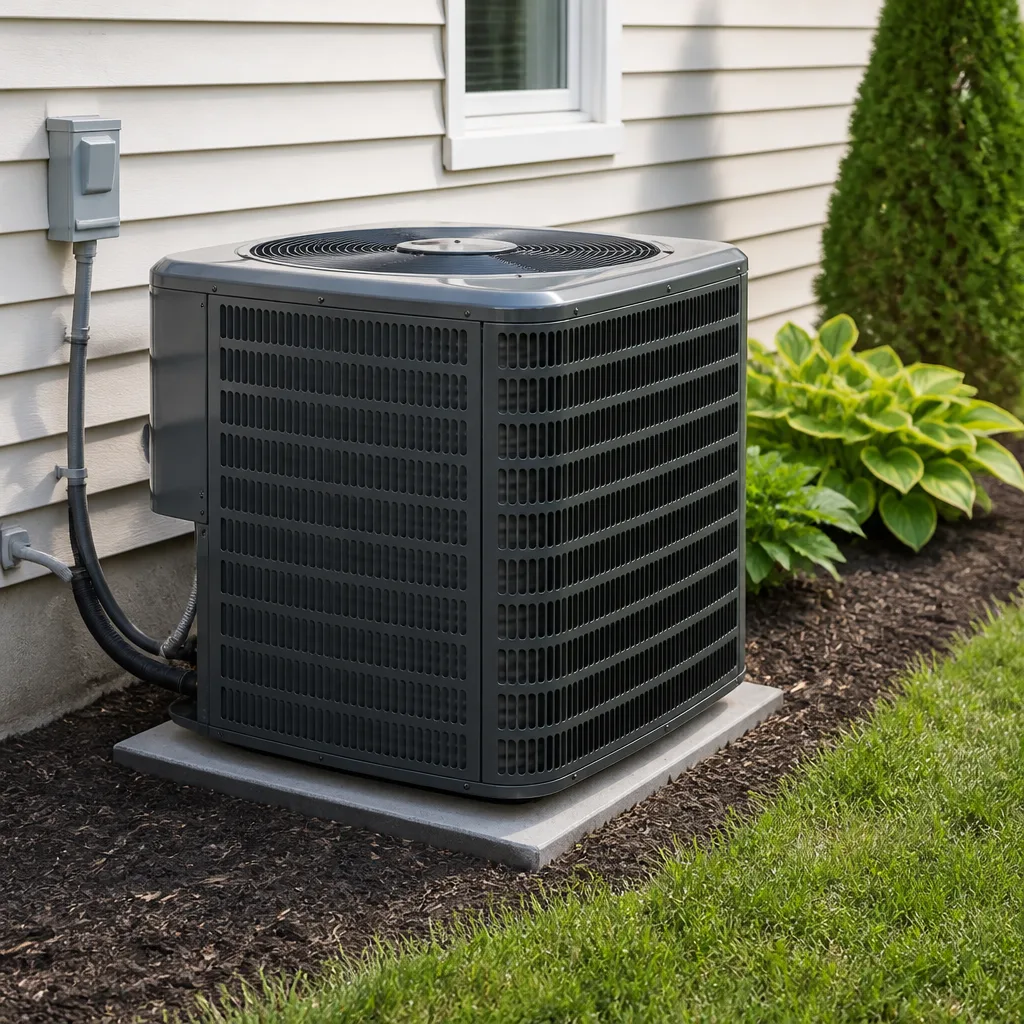 Goodman
Seasonal tune-up and full diagnostic on your Carrier, Trane, or Goodman system - readings shown to you before any repair is proposed
Diagnosis first, numbers second - you approve the repair price before a single part goes in.
Get your free estimateAmerican Standard Heat Pump Service: The Houston Owner’s Guide
American Standard heat pump service in Houston typically runs between $150 and $650 depending on which part failed, with most common repairs like capacitors, contactors, and defrost sensors landing in the $150 to $350 range installed. Dalton Heating & Air Houston stocks American Standard-compatible parts on our trucks for same-day service across most of the metro. You’ll usually know something’s wrong before the system quits entirely: your heat pump runs but doesn’t cool in August, short-cycles at 2 a.m., or makes a sound you’ve never heard in seven years of ownership.
We’re an independent service provider, not affiliated with American Standard directly. That matters because we’re not tied to one brand’s pricing structure or parts channel. We match the part to your exact outdoor unit model, explain what failed and why, and put the installed price in writing before we touch a screw.
Which American Standard Models This Applies To
We service the full American Standard heat pump lineup, including Silver, Gold, and Platinum series units. That covers the common residential models you’ll see around Houston: the Silver 14, Gold 16, Platinum 18, and Platinum 20, plus older Heritage and Allegiance lines that are still running in plenty of homes we visit.
The compatibility gotcha with American Standard is this: parts are paired to the outdoor unit’s model number, not just the brand name. A Gold 16 reversing valve won’t simply drop into a Silver 14, even if both say “American Standard” on the cabinet. When we arrive, the first thing we do is pull the model and serial from the data plate on the condenser. From there we match the spec: tonnage, voltage, refrigerant type, and the engineering revision of the control board. American Standard built many units with Trane’s engineering DNA (both brands share the same parent company), so some parts cross-reference cleanly, but we never assume. We verify against the specific model.
On OEM versus aftermarket: for control boards, defrost controls, and thermistors, we recommend the American Standard-sourced part. These electronics are calibrated to the unit’s factory tolerances, and in Houston’s humidity and heat, a board that’s slightly out of spec drifts faster. For mechanical parts like capacitors and contactors, a quality aftermarket equivalent from a supplier like Amrad or Packard performs just as well and often carries a better manufacturer warranty than the OEM part. We’ll tell you which route makes sense for your specific unit and budget.
Styles & brands we work with
Signs Your American Standard Heat Pump Service Is Failing
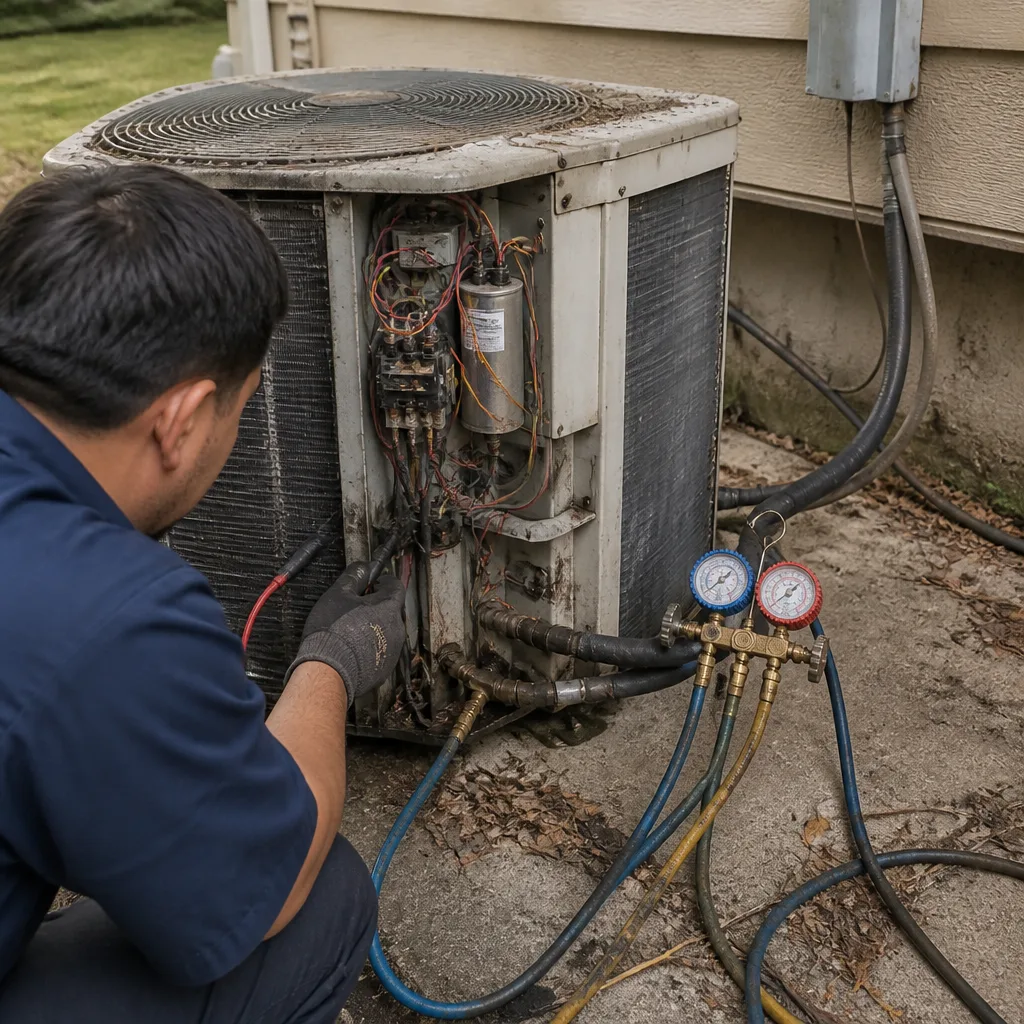
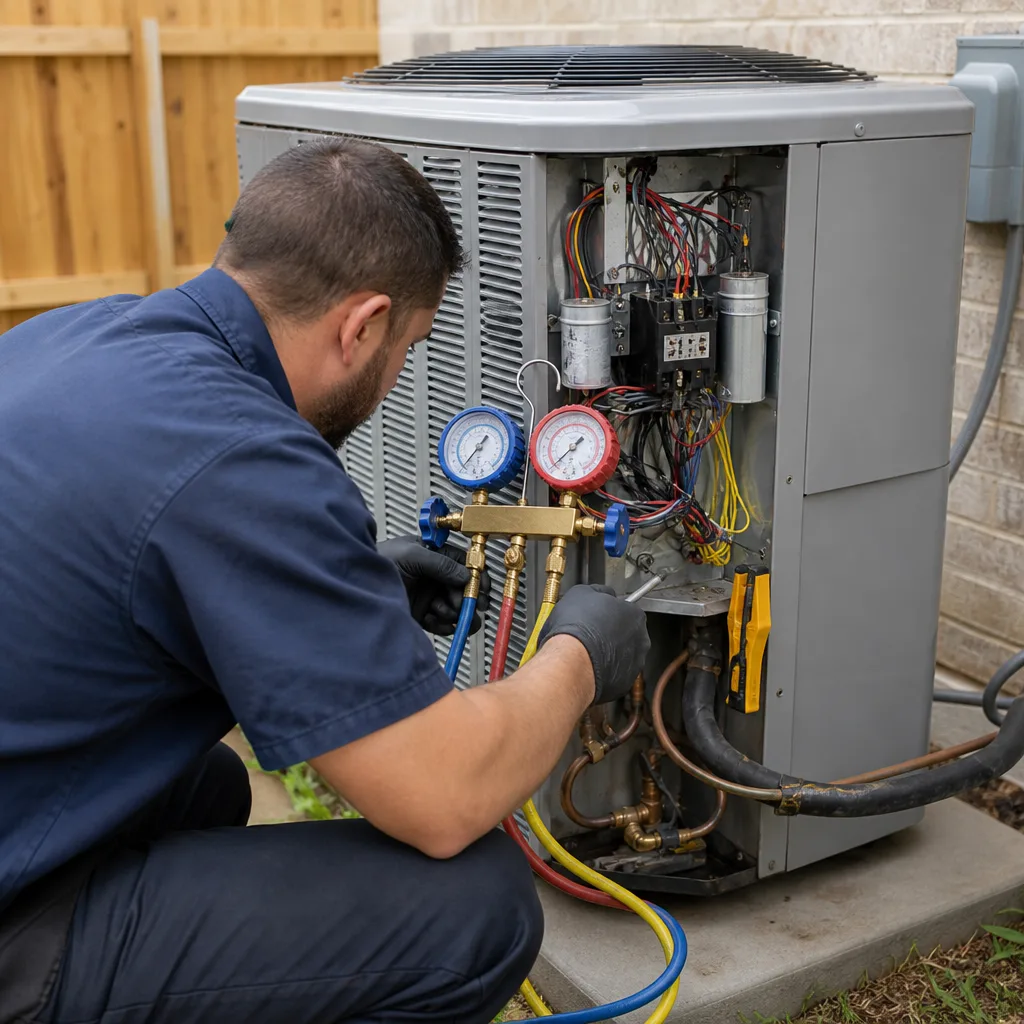
- Unit won’t start or trips the breaker repeatedly. This usually points to a failed capacitor or a shorted compressor contactor. The capacitor is the small cylinder that gives the fan and compressor their starting kick; when it weakens in Houston heat, the system pulls too many amps and the breaker lets go.
- Runs but blows room-temperature air. On a heat pump that’s trying to cool, this often means the reversing valve is stuck or a refrigerant leak has dropped the charge. The reversing valve is the brass-bodied valve that switches the system between heating and cooling; if it hangs mid-position, the refrigerant never moves heat where it should.
- Outdoor unit ices over in summer. That’s usually a defrost sensor or defrost control board failure. The sensor tells the system when the coil is freezing; when it stops reading correctly, the coil builds ice and airflow drops until the unit is nearly useless.
- Short-cycling: starts and stops every few minutes. This can be a failing thermistor, low refrigerant, or an oversized system. The thermistor is a small temperature sensor that tells the board when the coil is at target; when it misreads, the system shuts down early and starts up again minutes later, which murders efficiency.
- Loud buzzing, grinding, or chattering from the outdoor cabinet. Buzzing usually means the contactor (the relay switch that fires the compressor) is arcing and burned. Grinding is worse: the compressor itself may be failing, and that’s a conversation about whether repair still makes financial sense.
See the difference
 Before
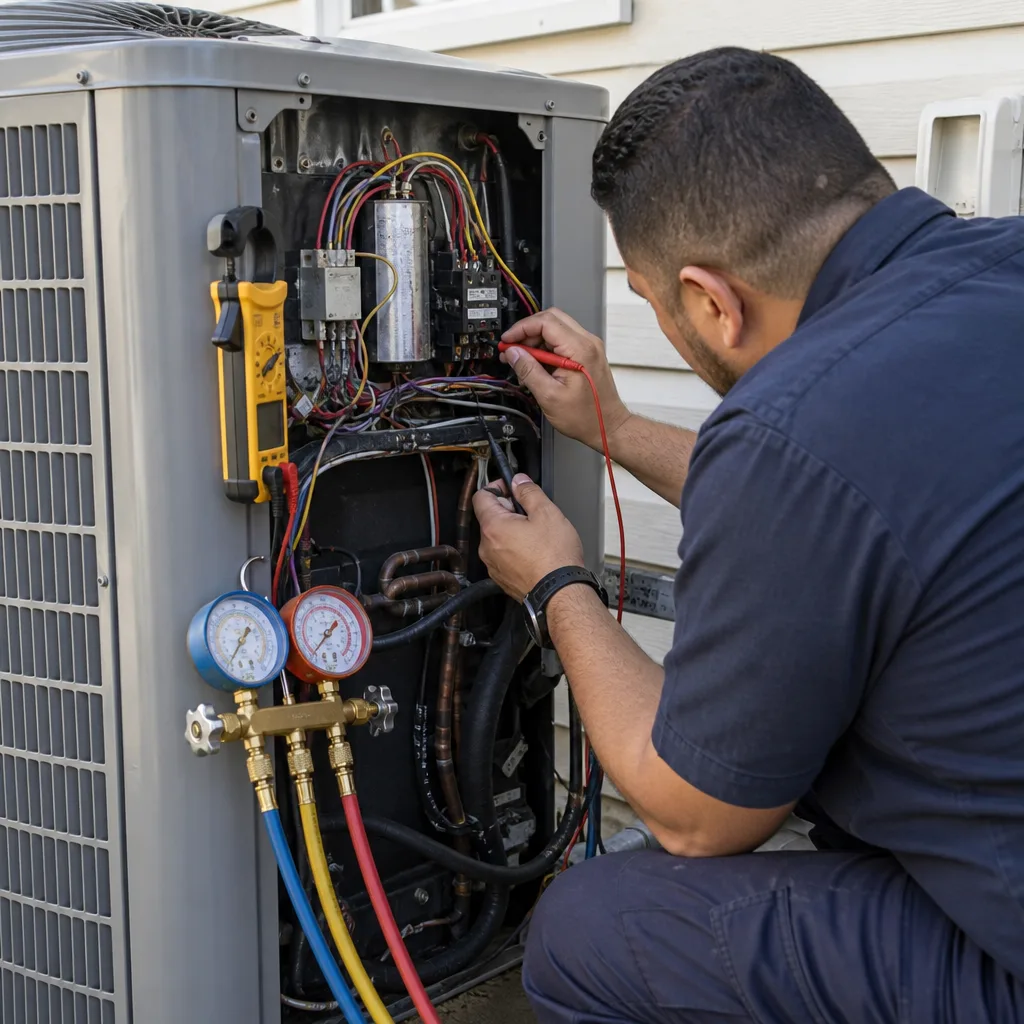 After
After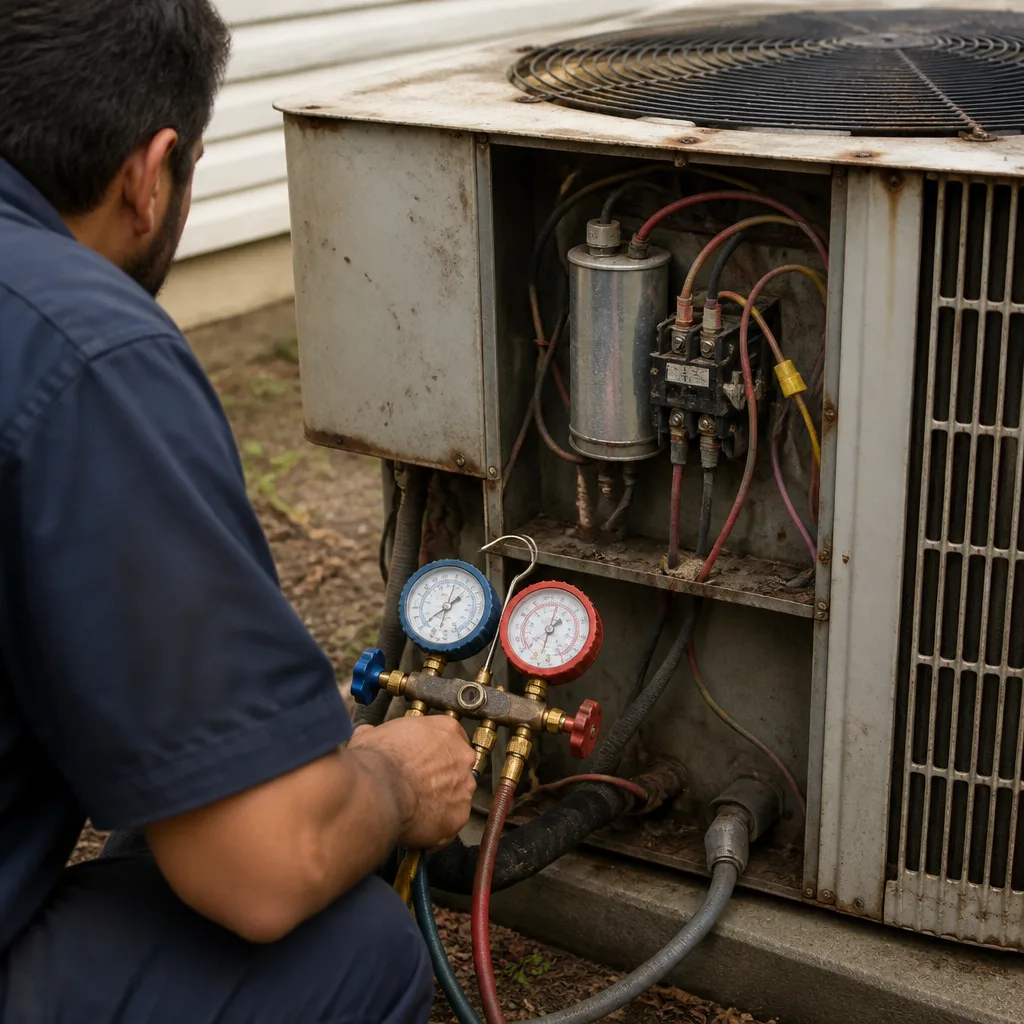 Before
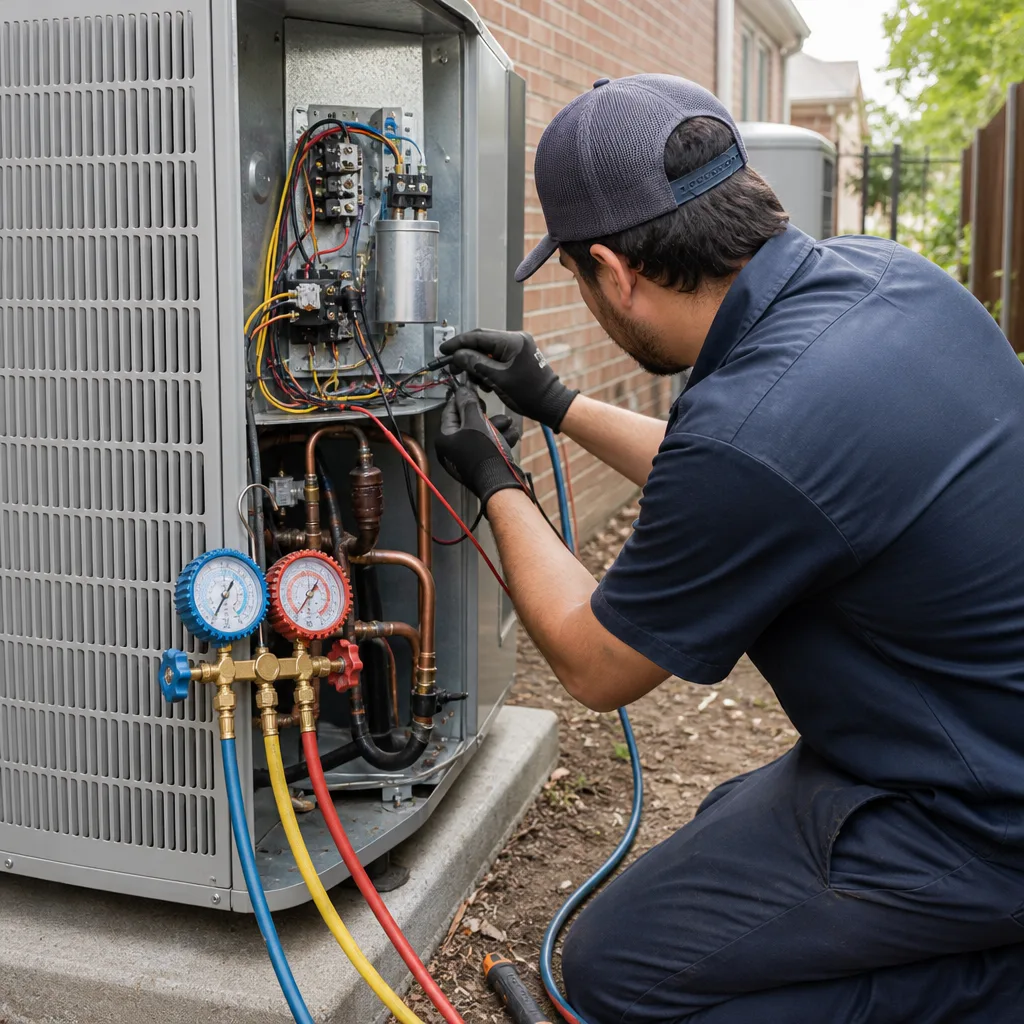 After
After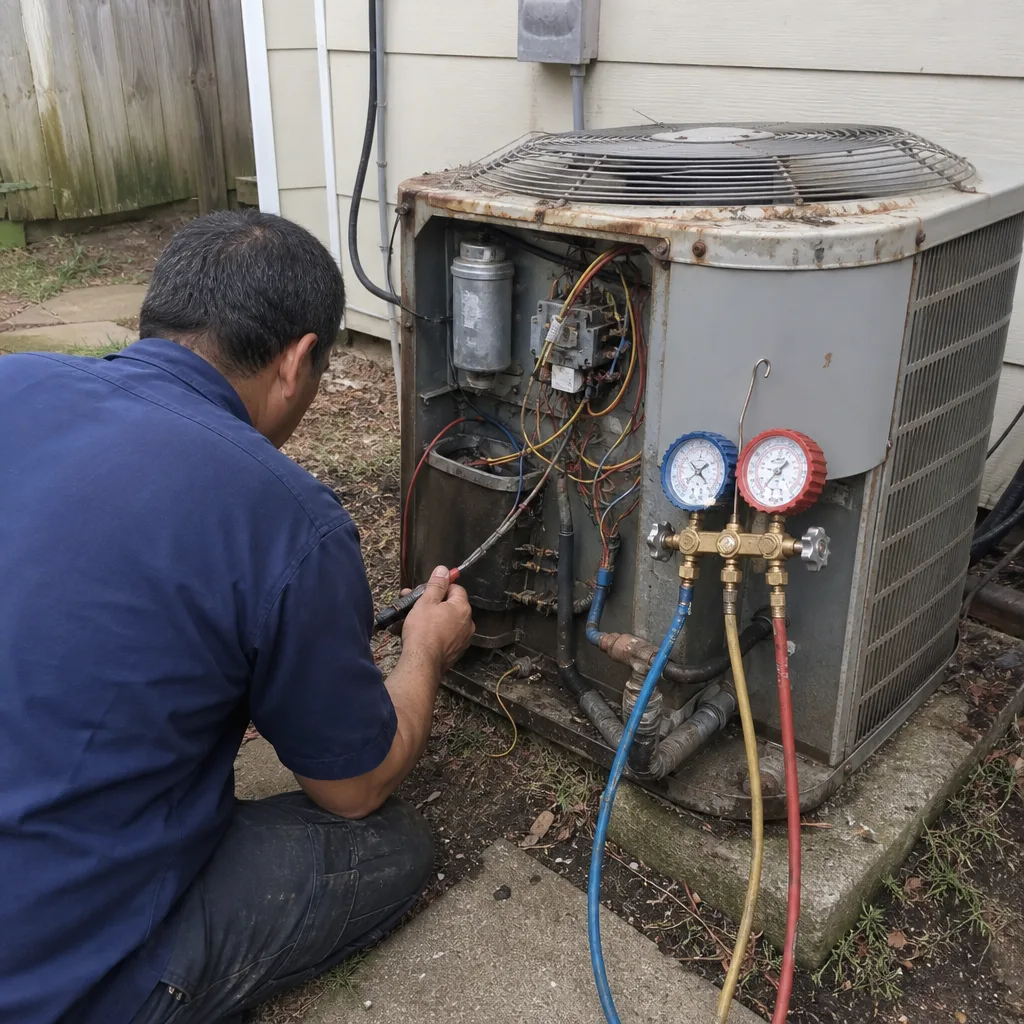 Before
 After
AfterReplacement Cost & What’s Included
Here’s what heat pump service actually costs in Houston, installed, with the Dalton written-price standard applied:
- Capacitor replacement: $150 – $300 installed depending on whether it’s a single or dual-run capacitor and whether we’re replacing one component or a matched pair.
- Contactor replacement: $150 – $350 installed. Single-pole and double-pole contactors differ in price, and some American Standard units run higher-amp contactors that cost more.
- Defrost sensor or thermistor replacement: $180 – $400 installed. The sensor itself isn’t expensive; the labor involves recovering and recharging refrigerant on some models, which drives the range.
- Reversing valve replacement: $450 – $650 installed. This is the heaviest repair on the list. It requires recovering the refrigerant, brazing in the new valve, pressure testing, pulling a vacuum, and recharging, which is half a day’s work done properly.
- Refrigerant leak repair plus recharge: $250 – $600 installed depending on where the leak is and how much refrigerant your system takes. American Standard heat pumps using R-410A cost more per pound to recharge than older R-22 systems still running around Houston.
Every figure above includes the part, labor, refrigerant handling where applicable, and our written 365-day guarantee on the repair itself. If the same part fails within that year, we come back and fix it at no charge. The price you see on paper before we start is the price you pay when we leave.
DIY or Call Us?
Let’s be straight: heat pumps carry 240 volts to the outdoor unit, and the capacitor inside holds a charge even with the power cut. That’s a shock hazard that can put you in the hospital. You should not open the electrical panel on your own. The safety risk is real, not theoretical.
What you can safely check: confirm the thermostat is set correctly and calling for cooling, confirm the breakers at the panel and the disconnect box near the outdoor unit are in the ON position, and check that the air filter isn’t so clogged that the system is starving for airflow. A filter matted with dust will cause icing and short-cycling that looks exactly like a failed part. If those checks don’t turn up the answer, the problem is almost certainly inside the unit, and that’s where you stop and we start. Call (903) 494-7686 and we’ll have someone out to diagnose it properly.
FAQs
Capacitors and contactors in the Houston market typically last 5 to 8 years. Our heat and humidity accelerate wear on electrical components, and we routinely replace capacitors on units that are only 5 or 6 years old. Control boards and defrost sensors generally run 8 to 12 years. Compressors on well-maintained American Standard units often hit 15 years or more, but only if the smaller parts that protect them get replaced when they weaken. Call (903) 494-7686 if your system is in that 5-to-8-year window and starting to act up; catching a failing capacitor early is a whole lot cheaper than a compressor replacement later.
For the parts we’re talking about here, replacement is the repair. A capacitor, contactor, defrost sensor, or thermistor is a sealed component; you don’t rebuild them. The good news is these are all straightforward swaps that we do in under an hour in most cases, and the part cost is reasonable. The only gray area is a refrigerant leak: sometimes a leak at a fitting can be repaired, while a leak in the evaporator or condenser coil is a bigger decision. We’ll tell you honestly if a coil replacement is approaching the point where a new system makes more sense.
Most single-part replacements (capacitor, contactor, sensor) take us 45 to 90 minutes on-site, and we carry the common American Standard parts on the truck when you call. A reversing valve is a different animal: that’s a 4-to-6-hour job because of the refrigerant recovery, brazing, and recharge involved. Marco Benitez will give you a straight time window before we start so you’re not guessing when your house cools back down.
Yes. We keep the common failure items stocked for American Standard heat pump service: capacitors in the standard microfarad ratings, single and double-pole contactors, defrost sensors, and thermistors. We also carry parts for Carrier, Trane, and Lennox since there’s plenty of overlap in what fails across brands. If your part is obscure, we source it same-day or next morning from a Houston supply house rather than making you wait a week.
Written by Marco Benitez, Owner, Dalton Heating & Air Houston at Dalton Heating & Air Houston, serving Houston and nearby areas.