
Last updated October 16, 2026
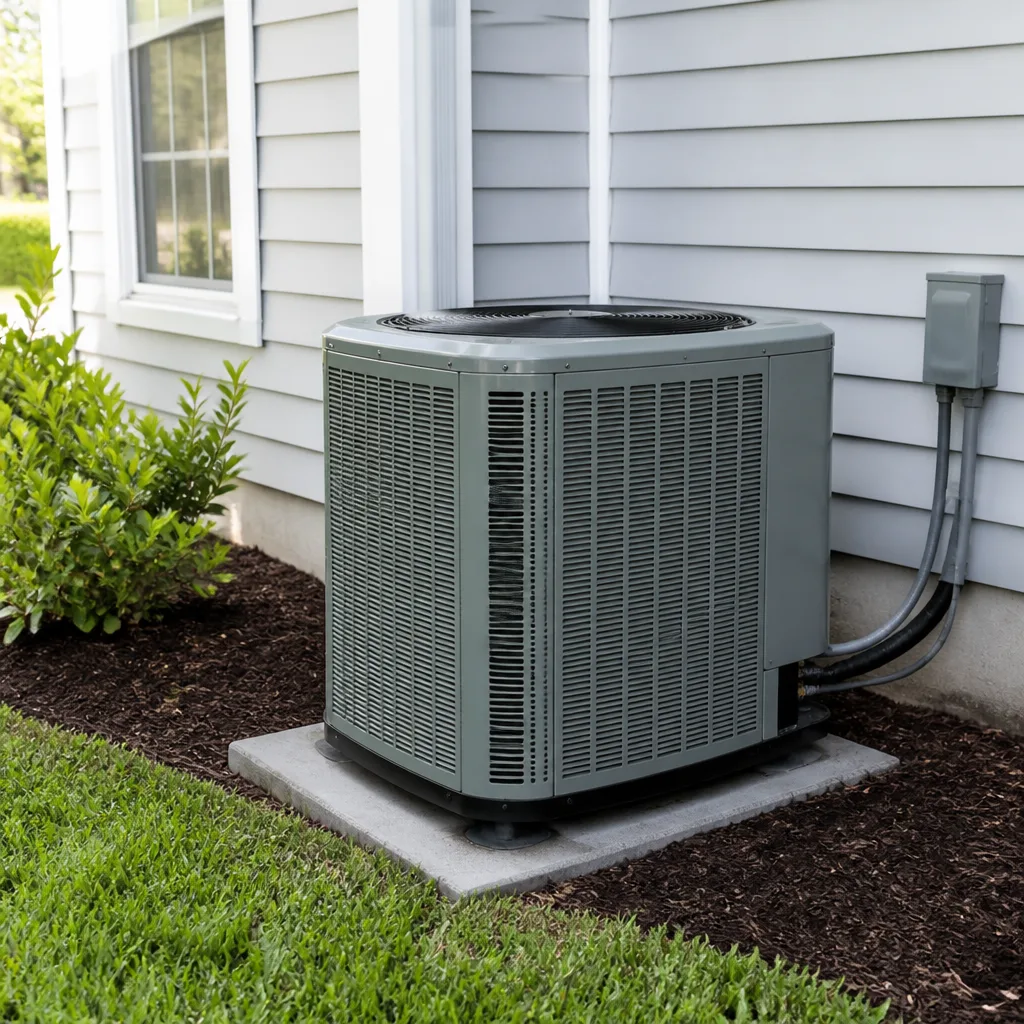 AC repair
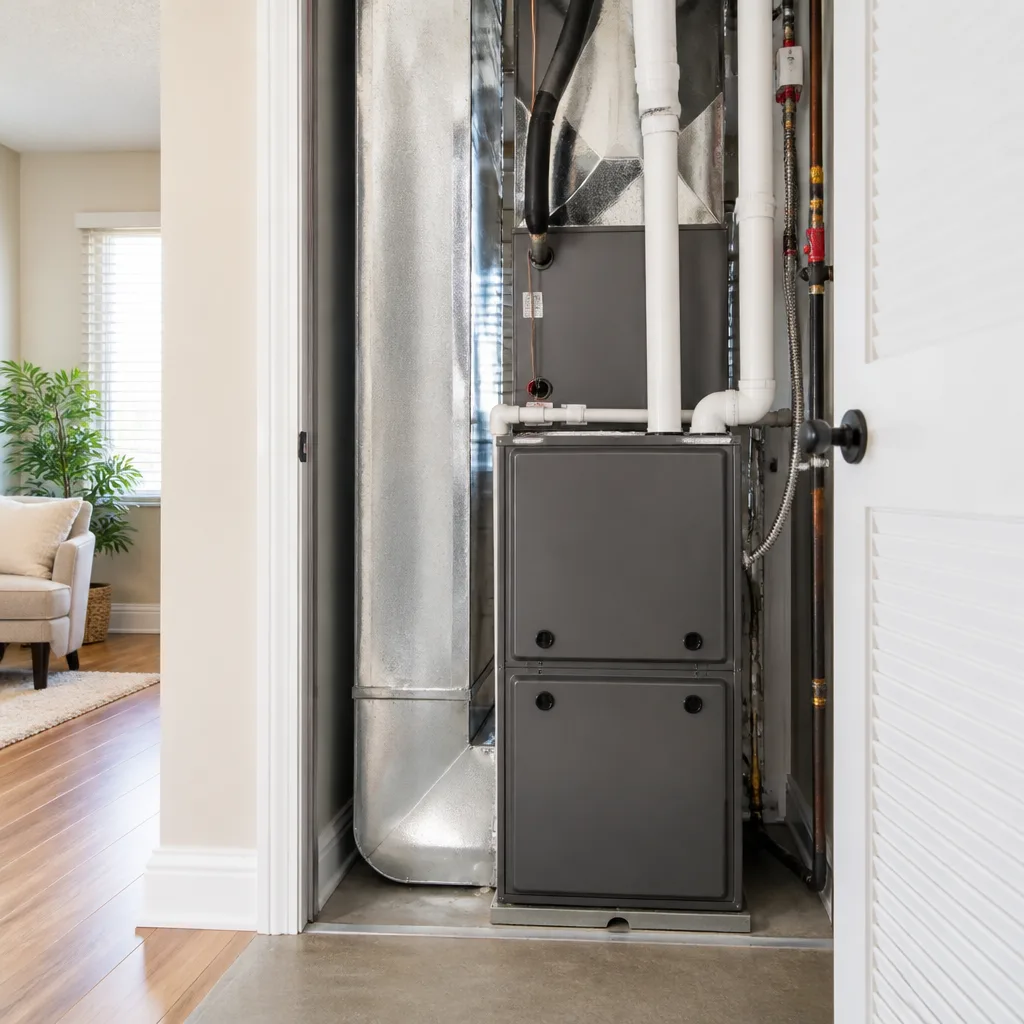 Furnace & heating
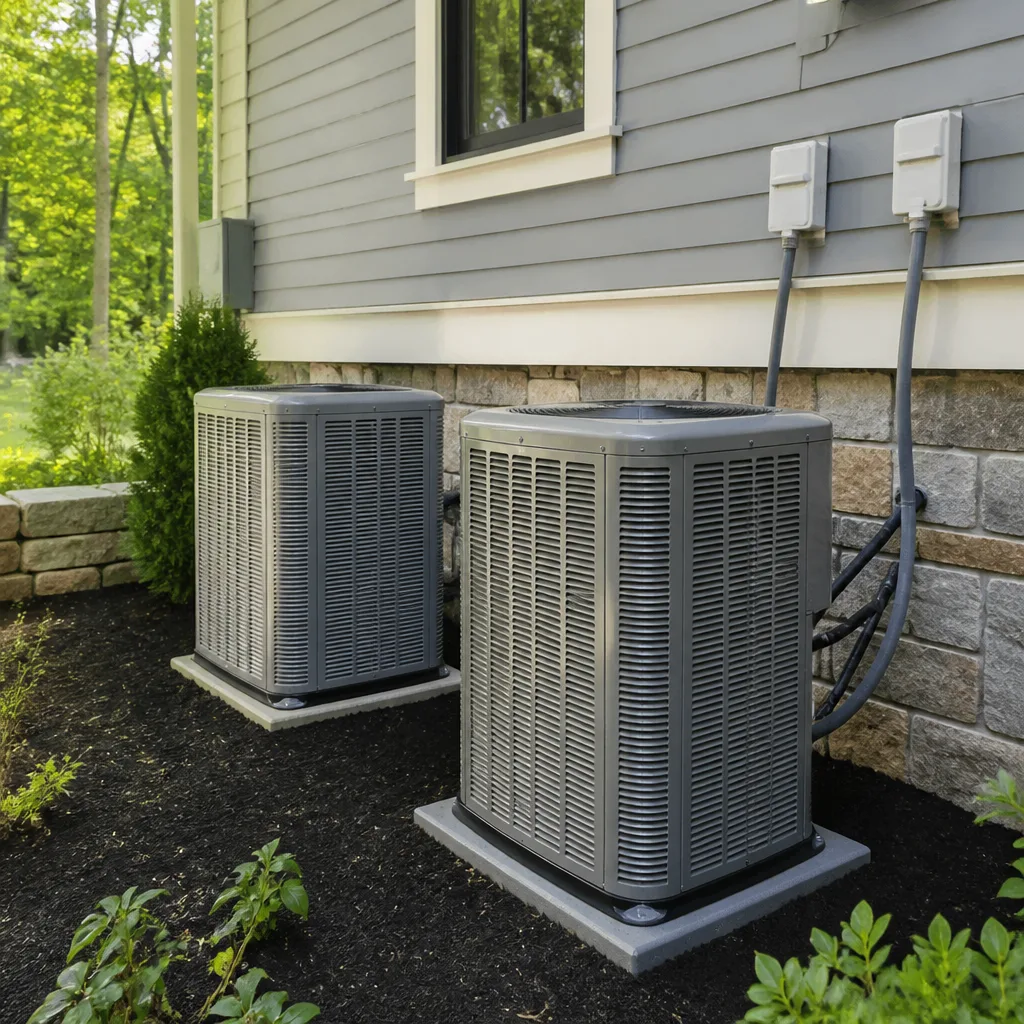 Heat pumps
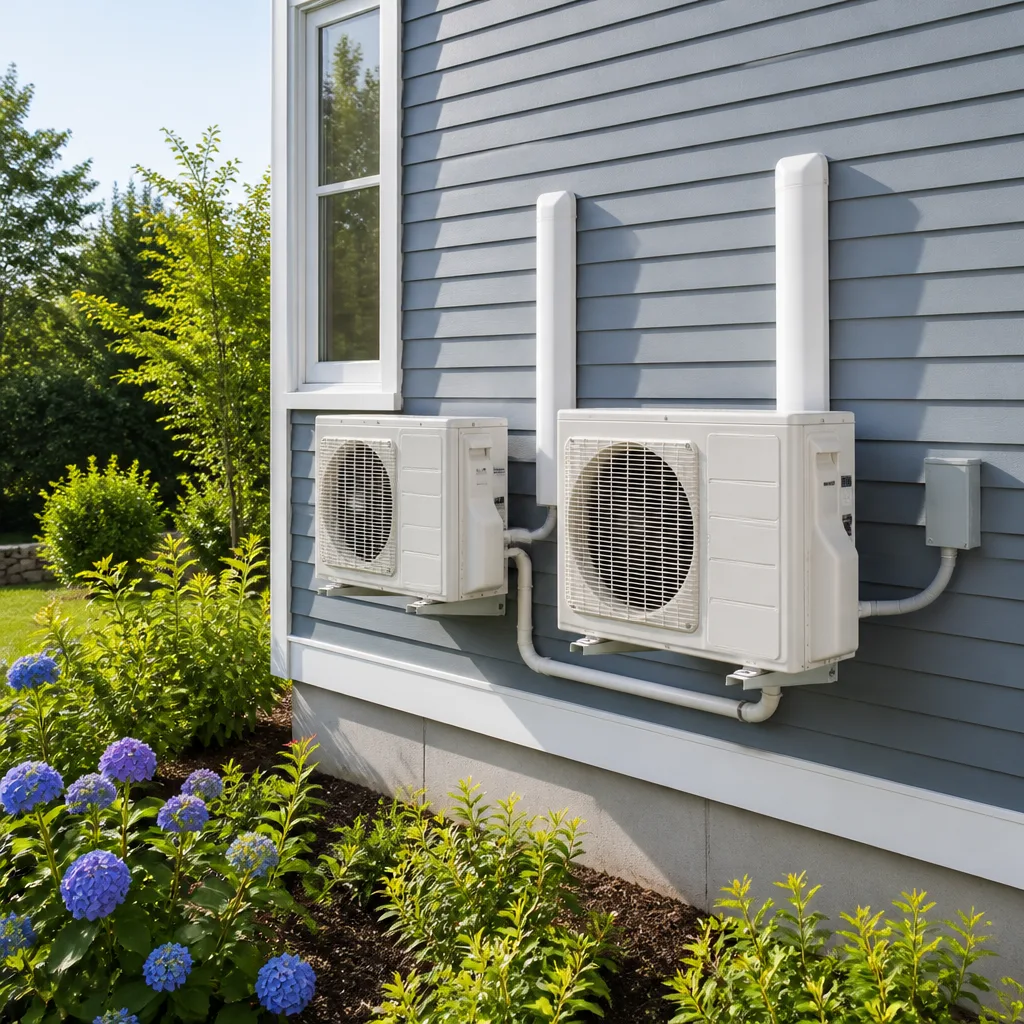 Ductless mini splits
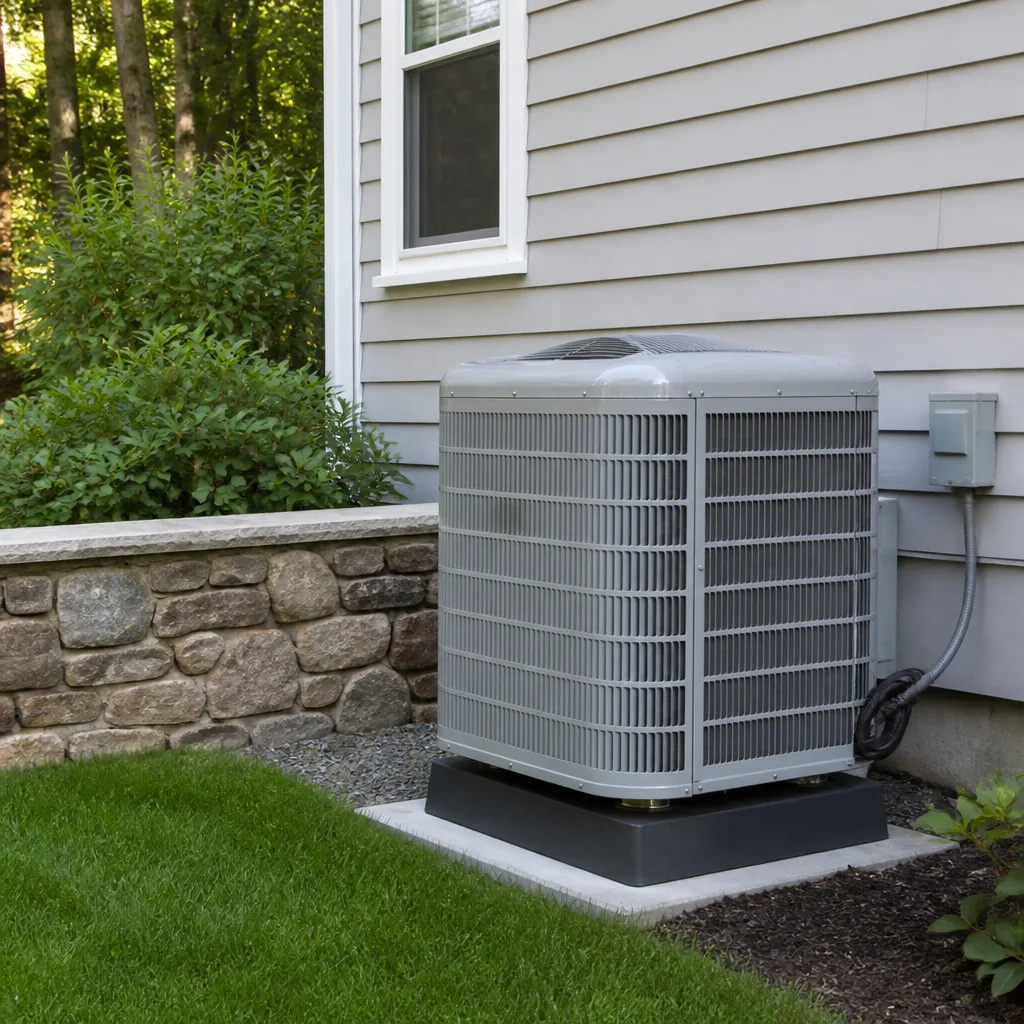 Carrier
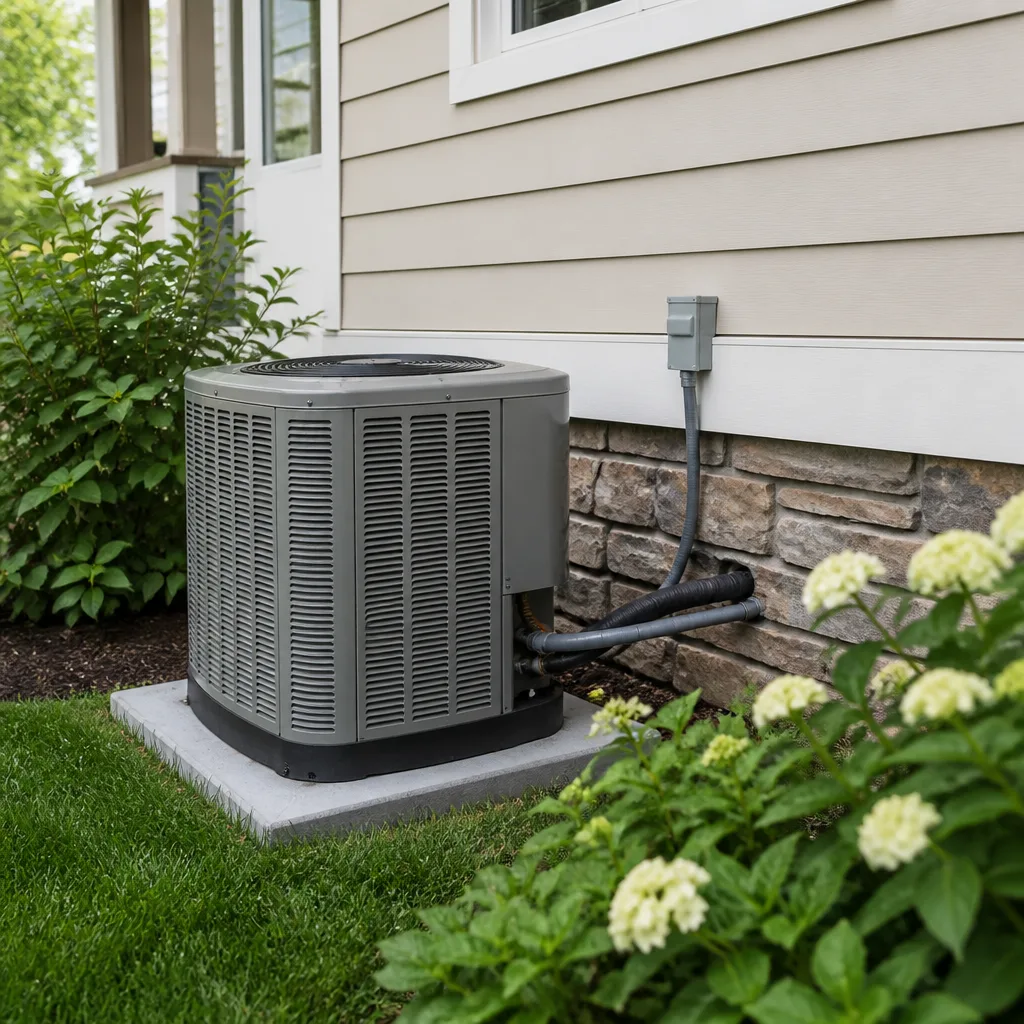 Trane
Trane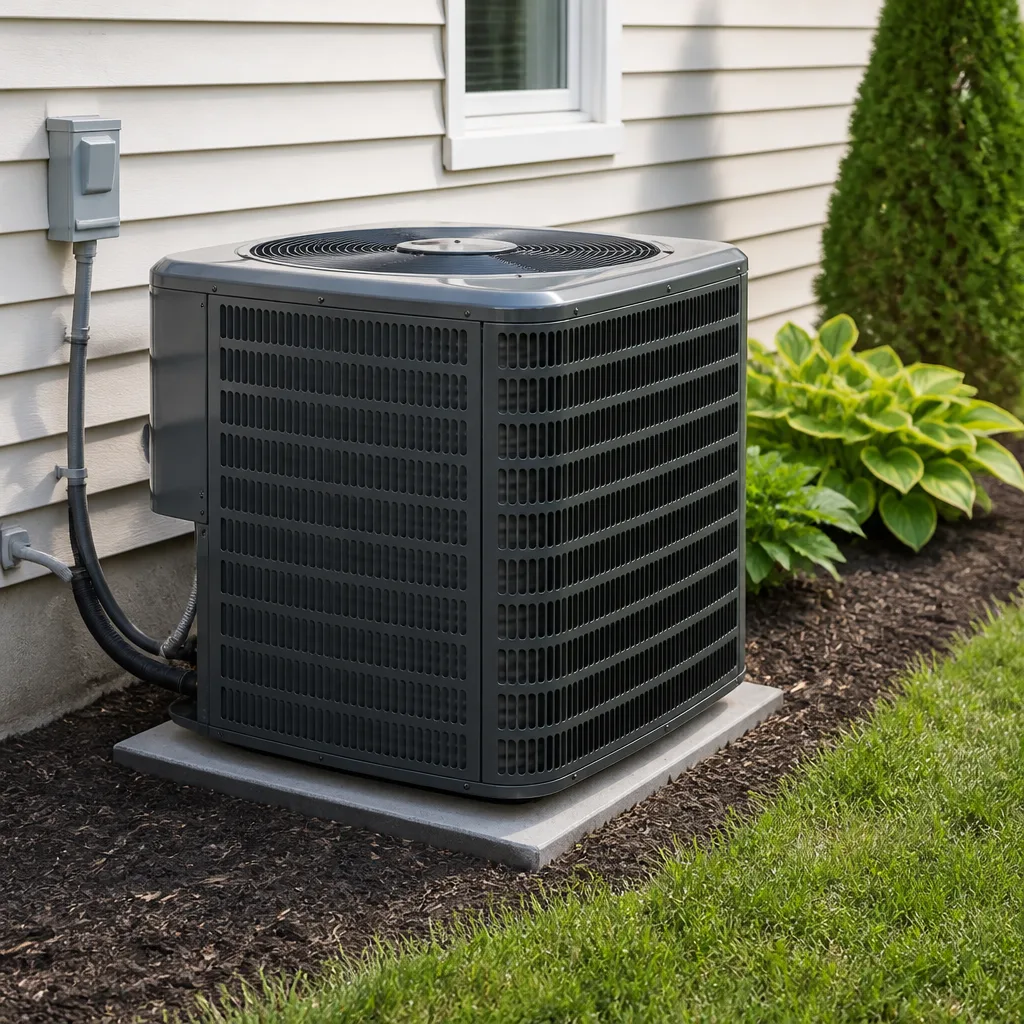 Goodman
Seasonal tune-up and full diagnostic on your Carrier, Trane, or Goodman system - readings shown to you before any repair is proposed
Diagnosis first, numbers second - you approve the repair price before a single part goes in.
Get your free estimateSeasonal HVAC Care for Houston: Year-Round Homeowner’s Guide
Houston homeowners who follow a standard “spring and fall tune-up” schedule are doing their pre-summer prep in March, when their system will run at 95% capacity starting in May. That’s a six-week gap where most preventable summer failures incubate in Houston. This guide gives you the actual seasonal calendar that works for the Gulf Coast climate, not a generic national template, and points you to The Complete Guide to HVAC in Houston for deeper system knowledge. You’ll learn exactly when to do each task, what you can handle yourself, and when a licensed tech needs to be involved.
Quick Answer
Seasonal HVAC care in Houston means prepping for two high-load seasons: a cooling season that effectively runs April through October and a brief but real heating season from December through February, with October – November and March serving as transition windows. The critical tasks are an early-April AC tune-up before temperatures hit 85°F, an October heat-pump or furnace check before first heating use, monthly filter changes year-round, and freeze-prep for the outdoor unit when a hard freeze is forecast. A thorough seasonal maintenance visit in Houston typically runs $89 – $150, and skipping it is how $150 of prevention becomes a $900 compressor replacement.
Styles & brands we work with
Table of Contents
- Why Early April Is the Real Pre-Summer Deadline in Houston
- What October and November Actually Mean for Houston Heating Systems
- Freeze Prep for Houston: Refrigerant Lines and Outdoor Units
- Attic and Duct Inspection: Why August Is Too Late
- What You Can Do Yourself vs. What Requires a Licensed Houston Technician
- The Monthly Rhythm That Keeps a Houston System Running
- What Seasonal HVAC Care Costs in Houston
Why Early April Is the Real Pre-Summer Deadline in Houston
Houston’s first 85°F day typically lands in mid-to-late April, and your air conditioner has been sitting idle since October or November. That’s five months of dust settling on condenser coils, drain pans drying out, and capacitors degrading in humidity. If you wait until May to schedule a tune-up, you’re running a system that hasn’t been inspected through the first two weeks of real load. We’ve seen capacitors fail in the first 72 hours of heavy use precisely because nobody checked them while the system was still sleeping.
Here’s what a pre-cooling-season check in early April should include, in order of importance:
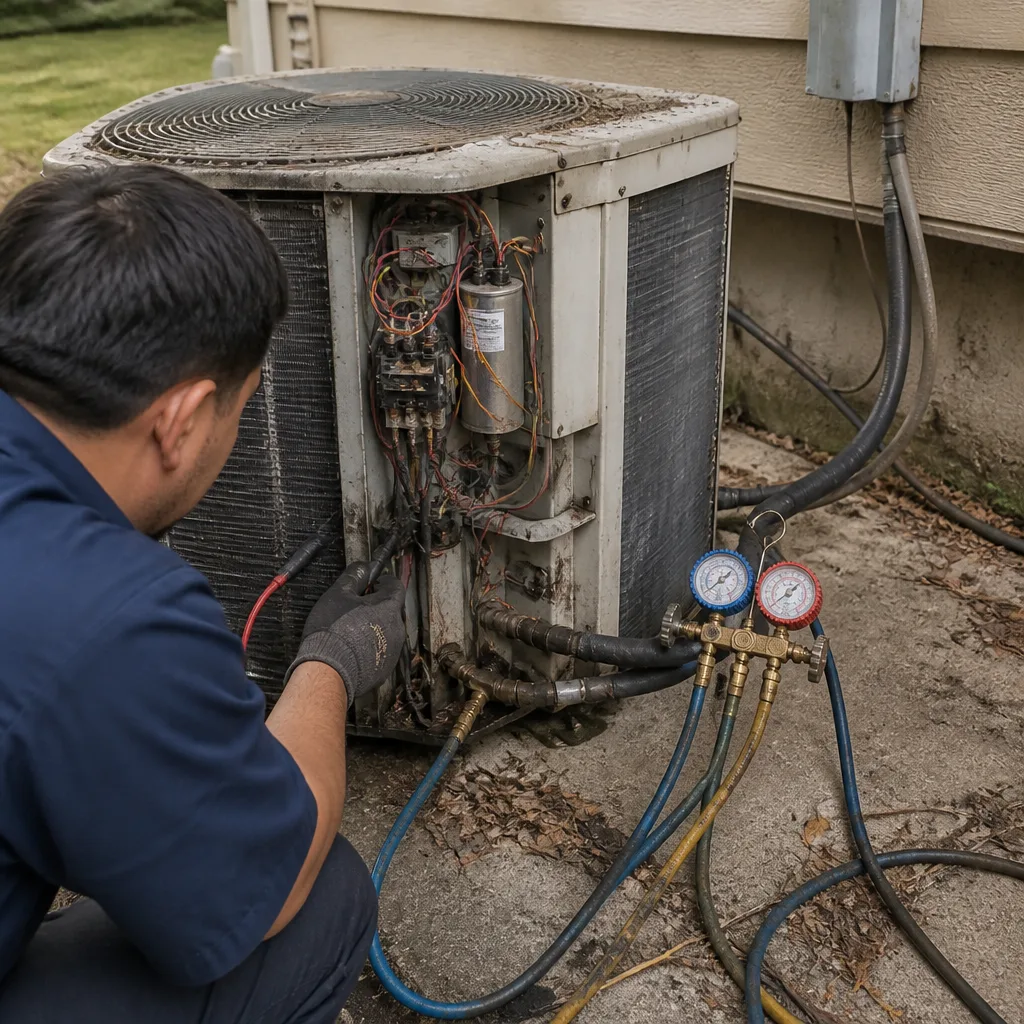
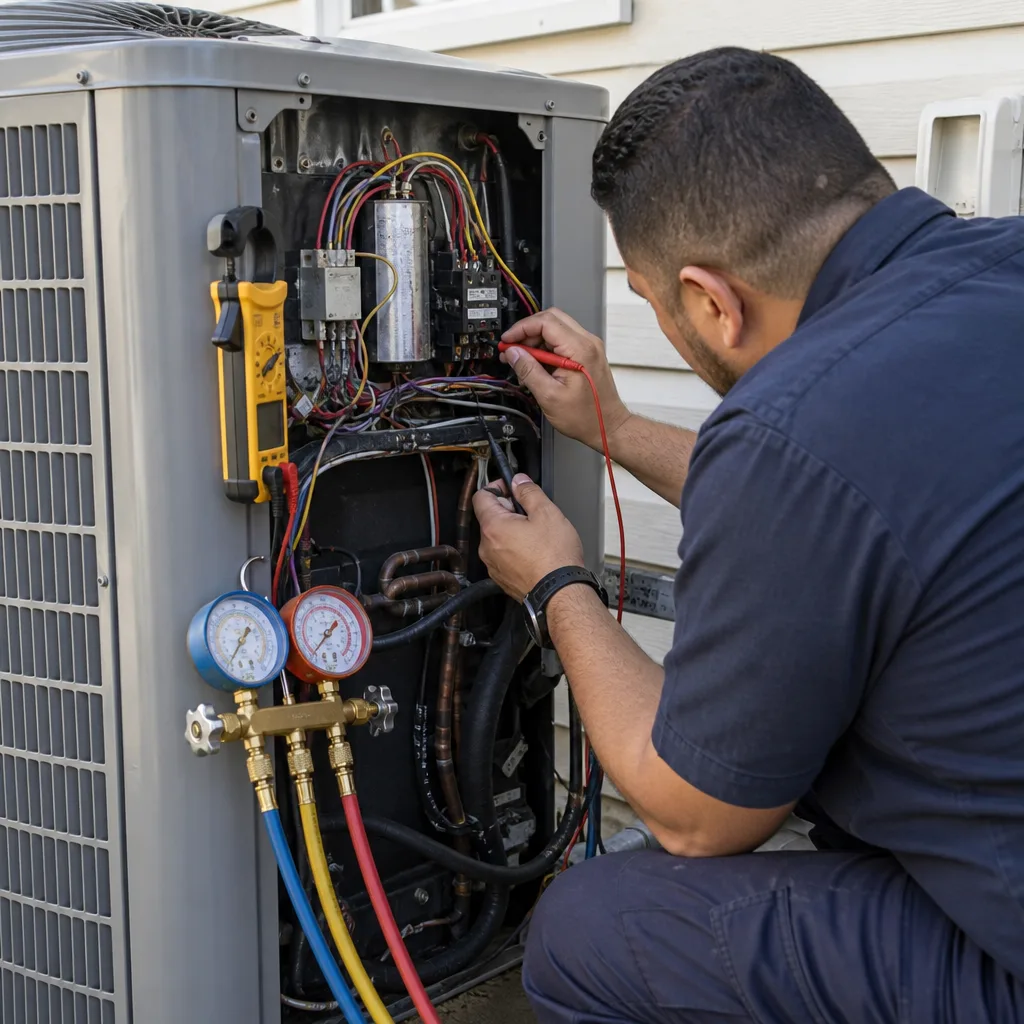
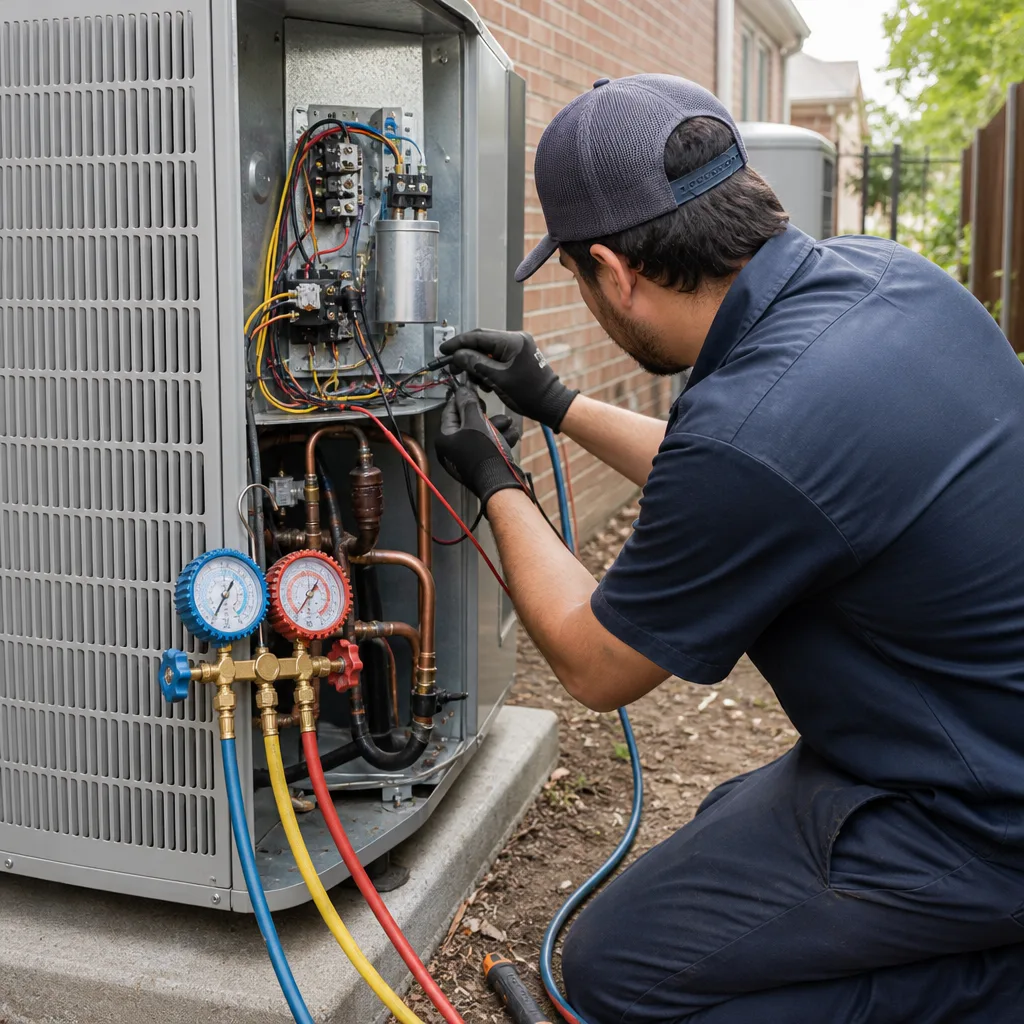
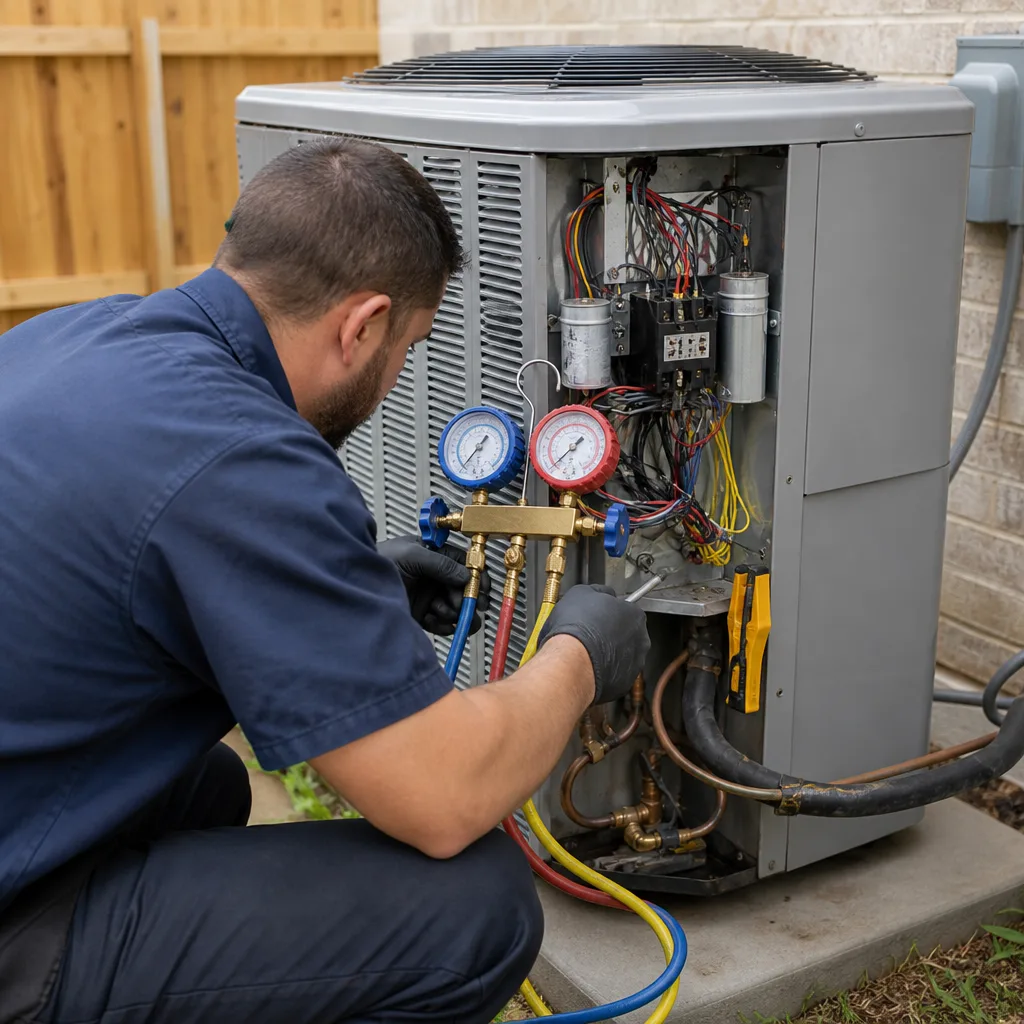
- Refrigerant level check – confirmed with manifold gauges against the manufacturer’s spec for your specific unit. A system that’s 10% low on refrigerant will run longer cycles, push the compressor harder, and add real dollars to every May – September electric bill.
- Capacitor and contactor inspection – these are the two most common electrical failure points on a Houston AC, and both degrade faster in high-humidity environments. Testing them in April means replacing $40-$60 parts on a schedule, not getting caught by a $350 service call on a 96°F Sunday.
- Condensate drain line flush – Houston’s humidity means algae and sludge build up in the drain line over winter, even when the system isn’t running. A clogged drain line trips the float switch and shuts down the system. Flushing it in April is a five-minute task; dealing with a backed-up drain pan in July is a water-damage call.
- Evaporator coil cleaning – the indoor coil is where cold air gets made, and it’s been collecting whatever your filter didn’t catch for half a year. A dirty coil reduces airflow, increases runtime, and shortens compressor life.
- Thermostat calibration and battery check – a thermostat reading two degrees wrong in a Houston summer costs real money every single month.
We put this in plain terms: the early-April check is not a luxury. It’s the single highest-leverage maintenance action of the entire Houston year. Our AC repair service in Houston handles a steady stream of failures every May and June that trace directly back to skipped spring maintenance.
One more Houston-specific point: April is also when pollen season peaks. Oak and pine pollen will coat your outdoor condenser coil whether you like it or not. A coil caked in pollen can’t reject heat efficiently, which forces the compressor to work hotter and fail sooner. Rinsing the outdoor coil with a garden hose in mid-April, after the pollen peak, is something any homeowner can do safely and is worth doing even if you skip everything else.
What October and November Actually Mean for Houston Heating Systems
Most national HVAC advice treats fall as a mirror image of spring: clean the system, check the heat exchanger, change the filter, done. But in Houston, October and November are mechanically different from what a homeowner in Chicago or Boston faces. Your heat pump or furnace has been idle for seven to eight months. The first cold snap in Houston often arrives fast, with temperatures dropping from 80°F to 45°F in a 36-hour window. A system that would fail on its third heating cycle in a northern climate fails on its first one here, because the failure had been sitting undetected since March.
For heat pump systems (which are becoming the dominant choice in new Houston construction, and for good reason given a mild heating season paired with brutal cooling), the shoulder-season check matters for one specific reason: the reversing valve. That’s the component that flips the system from cooling mode to heating mode, and if it sticks or fails, your heat pump will either blow cold air all winter or, worse, keep trying to cool your house when you’ve asked for heat. The reversing valve sits unused for the entire Houston cooling season and can seize in place. Cycling the system through a heating call in mid-October – before you actually need it – is the cheapest insurance you can buy.
For homeowners with a gas furnace (still common in older Houston homes, particularly in neighborhoods inside the Loop and inner-ring suburbs like Bellaire, Spring Branch, and Meyerland), the October check has two jobs:
- Confirm the burners ignite cleanly and the flame is blue, not yellow or orange. A yellow flame means incomplete combustion, which means carbon monoxide is being produced. This is not a maintenance nicety – it’s a health and safety issue for anyone sleeping in the house.
- Inspect the heat exchanger for cracks. A heat exchanger crack allows combustion gases to mix with the air circulating through your home. This is the single most dangerous failure a gas furnace can have, and it’s usually silent. A technician checks this with a visual inspection and combustion analysis. Do not skip it.
The October check for a dual-fuel system (heat pump plus gas furnace backup, increasingly popular in Houston’s northern suburbs like The Woodlands and Kingwood) needs to verify both. The heat pump handles the mild cold, and the furnace kicks in for the handful of nights below 35°F. If either half fails, you’re running the other one harder than designed, and the electric bill or gas bill tells the story in January.
If any of these checks turn up an issue, our furnace repair service in Houston handles gas furnaces and dual-fuel systems, with a written price before any work begins.
Freeze Prep for Houston: Refrigerant Lines and Outdoor Units
Other cold climates get days of warning before a hard freeze. Houston gets a front that drops the temperature 40 degrees between breakfast and dinner. That’s not hyperbole. The February 2021 freeze and the December 2022 cold snap both arrived inside 48 hours, and both caught Houstonians with systems that were never built or maintained for sustained cold. Here’s what actually matters for freeze prep in a Houston-specific context, and it’s not what most national guides say.
Refrigerant lines need to be checked, not wrapped. The copper line set runs from your outdoor condenser to your indoor evaporator coil, and it’s charged with refrigerant that behaves badly in cold temperatures. When the outdoor temperature drops below about 35°F, the refrigerant in the outside unit starts migrating toward the indoor coil and the compressor. This is called refrigerant migration, and it can dilute the compressor’s oil and cause a failure on startup. Modern systems have crankcase heaters to prevent this. If your outdoor unit is older than about 10 years and doesn’t have a crankcase heater, it needs one before a Houston freeze. This is a licensed-technician job.
The outdoor unit itself does not need to be covered. This is the single most common mistake we see in Houston before a freeze. Homeowners see a cold snap coming and wrap the condenser in a tarp or fitted cover, thinking they’re protecting it. They’re not. Condensers are designed to sit outside in rain, wind, and cold. Covering the unit traps moisture inside, promotes corrosion on the coil and electrical connections, and can actually void the manufacturer’s warranty. The only part of the outdoor unit that needs protection is the refrigerant line insulation (the black foam sleeve around the copper line), and that’s only if the insulation is already cracked or degraded.
What Houston actually needs before a hard freeze:
- Confirm the crankcase heater is functioning. This is a small electric heating element at the base of the compressor that keeps the oil warm enough to do its job. Test it in late November.
- Set the thermostat to “Emergency Heat” mode on a dual-fuel system. This locks out the heat pump and runs the gas furnace exclusively, which is what it’s for.
- Drip interior faucets. This is plumbing advice, but it matters for HVAC too: frozen condensate lines can back up and damage drain pans. Keep a trickle of water moving through indoor drains on the coldest nights.
- Clear debris around the outdoor unit. Falling leaves, pine needles, and Houston’s November oak-leaf dump can block airflow and trap moisture against the coil. Rake it clear before the first freeze.
If your outdoor unit is over about 12 years old and you’re not sure whether it has a crankcase heater, a service visit in early November costs a fraction of what a failed compressor costs in February. This is not the time for guesswork.
Attic and Duct Inspection: Why August Is Too Late
Here’s the counterintuitive part: most Houston homeowners check their attic and ductwork in August, when the attic is 140°F and the system is working its hardest. That’s exactly backwards. The damage you find in August accumulated all summer, and you’ve been paying for it since June.
Houston attics reach 130 – 150°F during summer afternoons. That heat is the enemy of three things: R-value in your insulation, the mastic seals on your duct connections, and the integrity of flexible ductwork itself. Flexible duct in a Houston attic starts degrading at the seams after about 10 years, and that degradation happens during the summer, not during the mild months when you might actually check it comfortably.
The right time to inspect Houston attic ductwork is late March or early October, when the attic is tolerable and the damage from the previous season is done accumulating. Here’s what a homeowner can look for themselves without specialized equipment:
- Visible disconnections at the plenum (the main distribution box) and at register boots. Walk the attic with a flashlight and run your hand along each duct run. If you feel air leaking at a seam, that’s conditioned air being pumped into a 140°F attic, and it’s costing you money every minute the system runs.
- Sagging or kinked duct runs. Flex duct should run fairly straight with minimal bends. A sagging duct restricts airflow, which forces the blower to work harder and increases static pressure, which shortens the life of the entire system.
- Black streaks or staining on insulation. This indicates an air leak somewhere upstream. Conditioned air escaping under positive pressure condenses moisture in the attic, and that moisture picks up dust and turns into black streaks. It’s a tell-tale sign you’re losing air.
- Evidence of pests. Houston’s attic wildlife (squirrels, rats, raccoons in some areas) will chew through flex duct to nest. This is more common than most homeowners want to think about, and the damage usually happens in fall and winter when animals move indoors.
Duct sealing and replacement are not DIY jobs, at least not for anything beyond a visible disconnection at an accessible boot. The work requires a blower-door test or pressure test to find all the leaks, not just the obvious ones. A properly sealed duct system typically saves 15 – 25% on cooling costs in a Houston summer, and that savings is permanent, not a one-time bump.
What You Can Do Yourself vs. What Requires a Licensed Houston Technician
Under Texas law, there’s a clear line. Anyone working on refrigerant, gas lines, or electrical components requires a state-issued HVAC license. Outside of that, there’s a set of tasks any Houston homeowner can handle safely and competently. Here’s the realistic breakdown, based on what we’ve seen actual homeowners do well and where they get into trouble.
Safe for homeowners
- Replace the air filter monthly. In Houston’s climate, once a month during cooling season, every two months otherwise. The filter’s job is protecting the equipment, not purifying your air, and a clogged filter is the single most common cause of premature compressor failure we see.
- Rinse the outdoor condenser coil. Garden hose, gentle spray, from the outside in. Do it in April after pollen season and again in October after leaf fall. Do not use a pressure washer, ever. The fins are delicate and a pressure washer will fold them flat.
- Keep the area around the outdoor unit clear. Two feet of clearance on all sides, nothing stored on top, nothing growing into the coil. This is pure airflow, and airflow is free efficiency.
- Check the condensate drain line. Pour a cup of white vinegar down the drain line every three months to keep algae from building up. This is a five-minute task that prevents a water-damage event.
- Listen. New rattles, bangs, hissing, or a system that runs longer than it used to for the same thermostat setting are early warning signs. Note them. Report them. Don’t ignore them.
Require a licensed technician
- Refrigerant anything. Adding refrigerant, recovering refrigerant, finding and repairing a leak. Under federal EPA rules, anyone handling refrigerant must be certified, and under Texas law, the license is specific to HVAC work. This isn’t a cost-saving opportunity – it’s a legal boundary.
- Electrical troubleshooting and replacement. Capacitors, contactors, control boards, wiring. A homeowner who opens the electrical panel on a condenser without knowing what they’re looking at is one wrong touch from a serious shock. High-voltage AC kills.
- Gas furnace combustion components. Burners, gas valves, heat exchangers, venting. Anything involving natural gas is a professional jurisdiction, and the consequence of a mistake is carbon monoxide in your home, not a higher electric bill.
- Heat pump reversing valve or compressor work. These are sealed-system components. They require proper evacuation, charging, and brazing procedures.
- Duct sealing beyond visible access points. A proper duct seal and test requires specialized equipment and training.
Dalton Heating & Air Houston employs background-checked, uniformed technicians who arrive inside the stated window and put the price in writing before any work starts. That’s The Garrison Standard, the operating code we’ve been held to since 2003. If a repair is needed, it’s guaranteed in writing for a full year. If it fails in that time, we return at no charge.
The Monthly Rhythm That Keeps a Houston System Running
The best way to think about Houston HVAC maintenance is not as two seasonal events but as a monthly rhythm layered on top of those two events, a topic we cover in AC Repair Maintenance Checklist for Houston Homeowners. Here’s the calendar that actually works for this climate:
January
- System is in heating mode, possibly running continuously during a cold snap. Check the filter every two weeks if a freeze is prolonged.
- Listen for the outdoor unit cycling on and off normally during heat pump operation. A heat pump running constantly is normal; short-cycling is not.
- Watch for ice buildup on the outdoor coil. A heat pump will defrost itself periodically – that’s the hissing and steam you see – but if ice persists for more than a couple of hours, it needs attention.
February
- Remaining freeze risk. Keep the freeze-prep checklist from above in mind.
- Change the filter.
- This is the month we see the highest concentration of heat-pump failures in Houston, because the system has run hard through the coldest weeks. If you hear unusual noise from the outdoor unit, schedule a check before spring.
March
- Transition month. System is likely cycling between mild heating and mild cooling.
- Start planning the early-April AC tune-up. This is the month to get on the schedule, not to wait.
- Check the outdoor coil for winter debris accumulation.
- Schedule the attic and duct inspection while the attic is still tolerable.
April
- The critical window. Complete the AC tune-up before the first 85°F day. Change the filter. Rinse the outdoor coil after pollen peak.
- Run the AC for one full cycle in early April to confirm it’s cooling properly before you actually need it.
May through September
- Monthly filter changes, no exceptions.
- Rinse the outdoor coil every six to eight weeks during peak cooling season.
- Keep an eye on the condensate drain line; pour vinegar quarterly.
- If the system is running longer than it did at the same thermostat setting this time last year, that’s a warning sign. Schedule a diagnostic before it becomes a failure.
October
- The heating shoulder-season check. Test the system in heating mode once, before you need it.
- Change the filter.
- Rake and clear debris around the outdoor unit after leaf fall.
- Check for pest activity in attic ductwork.
November
- Freeze prep, per the checklist above.
- Confirm the crankcase heater is functional if your unit has one.
- If a hard freeze is forecast, set the thermostat to Emergency Heat mode on a dual-fuel system.
December
- System heating continuously during cold fronts. Monthly filter change.
- If the heat pump is struggling to keep up and the strips (backup electric heat) are running constantly, that’s a sign of a refrigerant or reversing-valve issue, not normal cold weather behavior.
This rhythm is not complicated, and it’s not expensive. It’s a filter every month, a vinegar pour every quarter, and two professional checks a year timed to the transitions. That’s the whole system. Every HVAC manufacturer who sells equipment in Houston designs for this cadence, whether you’re running Carrier, Trane, Lennox, or Goodman equipment in your home. For more guides & resources on keeping any brand running strong, see our blog.
What Seasonal HVAC Care Costs in Houston
Here’s what a Houston homeowner should expect to pay for seasonal HVAC maintenance, with real numbers:
| Service | Typical Houston Cost | Frequency |
|---|---|---|
| AC tune-up (pre-summer) | $89 – $150 per visit | 1x per year, early April |
| Heating system check (pre-winter) | $89 – $150 per visit | 1x per year, October |
| Combined maintenance agreement (2 visits/year) | $160 – $250 per year | 2x visits, usually discounted vs. buying separately |
| Condensate drain flush | $75 – $120 standalone, usually included in tune-up | 1 – 2x per year, more if a clog is persistent |
| Duct inspection and assessment | Often free with a service visit | Every 2 – 3 years in Houston attics |
| Duct sealing (full system) | $800 – $2,500 depending on house size and accessibility | Once, typically only if the assessment finds significant leakage |
| Filter replacement (basic 1-inch filter) | $5 – $15 per filter, DIY | Monthly during cooling season |
These are Houston market rates, not national averages. Expect some variation by neighborhood and by the age and brand of your equipment. A Carrier or Trane system may have slightly higher parts costs if a component needs replacement during a tune-up, but the maintenance labor itself is generally flat across brands.
One thing to know about maintenance plans in Houston: the cheapest plan is not the goal. The goal is a plan that includes a written report of what was found, a written price for any recommended work, and a written guarantee on any repair performed. At Dalton Heating & Air Houston, every maintenance visit includes those three things as standard. Our technicians are not paid on what they sell, which means the report you get is the condition of your system, not a sales pipeline.
If you’re considering a heat pump installation in Houston, factor maintenance into the total cost of ownership. A heat pump that gets the April and October checks on schedule will typically last 15 – 18 years in this climate. One that doesn’t gets replaced at 10 – 12 years. The difference is the maintenance, not the equipment brand.
Common Mistakes to Avoid
- Following a generic spring/fall calendar. Houston’s cooling season starts in April, not May, and October in Houston means heat-pump reversing-valve checks, not leaf cleanup. A generic schedule is six weeks late for what actually matters here.
- Covering the outdoor condenser before a freeze. This is well-intentioned and actively harmful. Condensers are weatherproof; covers trap moisture and accelerate corrosion. The crankcase heater and the refrigerant line insulation are the parts that need attention.
- Changing the filter only when it looks dirty. A filter that looks clean can still be restricting airflow enough to shorten system life. Monthly on a Houston cooling-season schedule is the answer, and filters are $5.
- Ignoring the condensate drain line until water shows up. In Houston’s humidity, algae grows in the drain line even when the system isn’t running. By the time water backs up, the damage may already include a flooded attic pan or drywall stains. The quarterly vinegar pour costs nothing and takes five minutes.
- Testing the heating system for the first time on the first cold night. The reversing valve on a Houston heat pump has been idle for eight months. Test it in October. The alternative is calling for heat on a 40°F night and getting cold air.
- Running the system through a Houston summer without checking the outdoor coil. Pollen in spring and dust from construction all summer coat the condenser coil. A coil that’s 30% blocked forces the compressor to run hotter than it was designed to, and compressor replacement is the most expensive repair on the unit.
- Assuming a new system means no maintenance. New Carrier, Trane, Lennox, or Goodman equipment still needs the April and October checks. The warranty protects against manufacturing defects, not neglect, and manufacturers can deny claims if maintenance records don’t exist.
See the difference
 Before
 After
After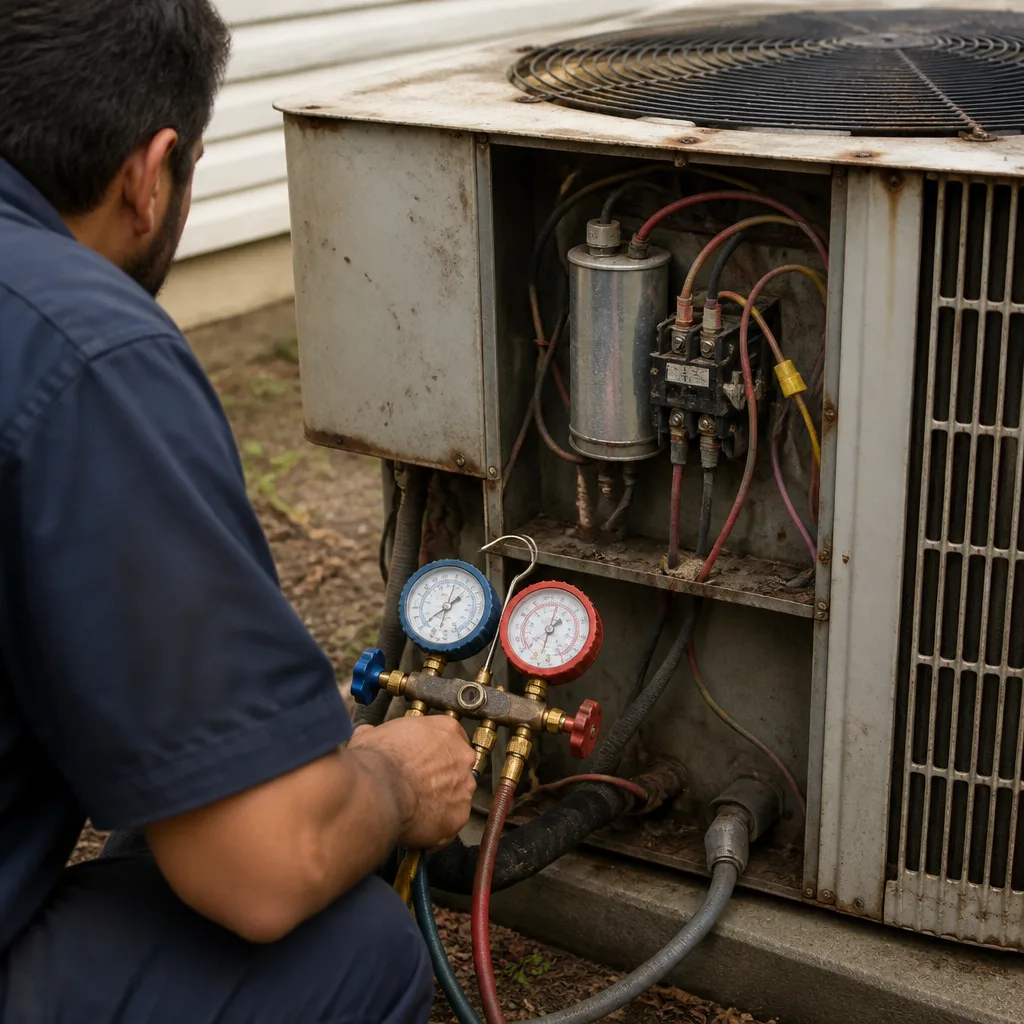 Before
 After
After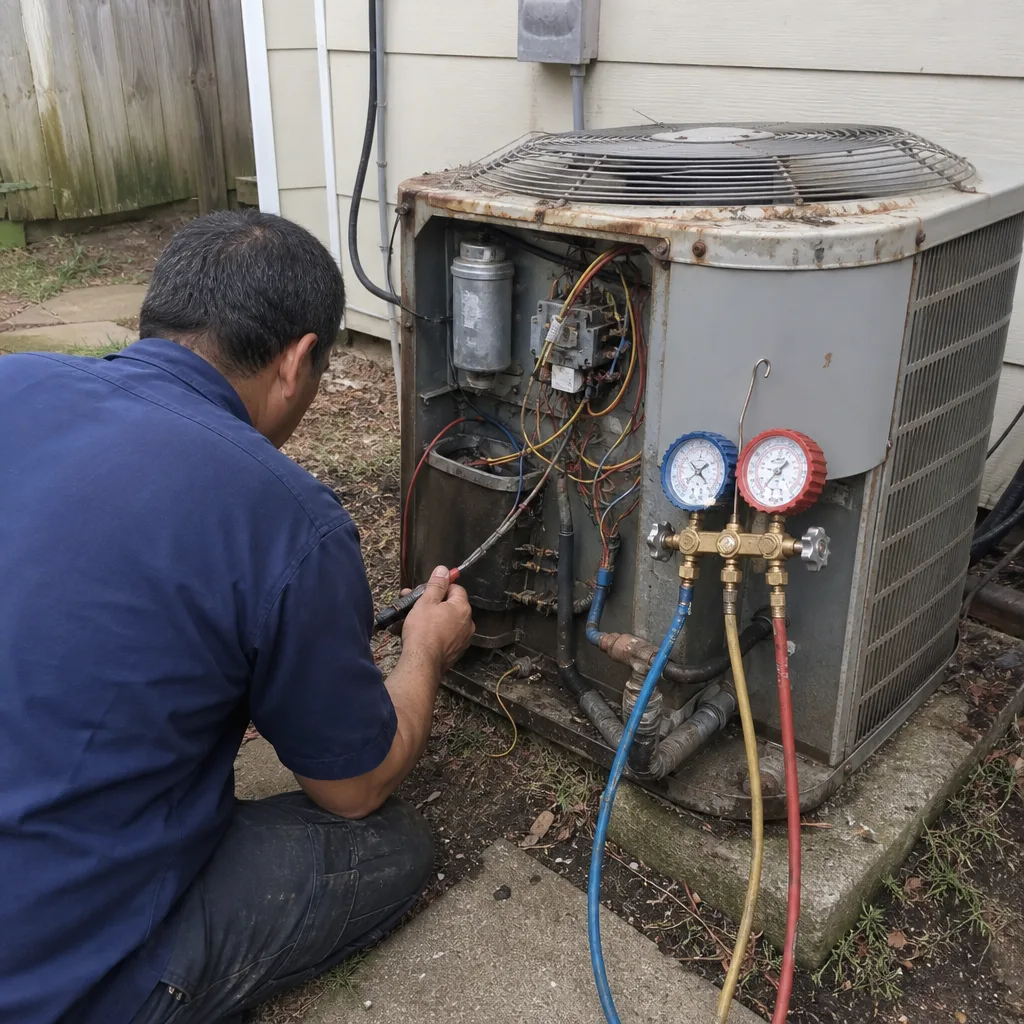 Before
 After
AfterWhen to Call a Professional
Call a licensed Houston technician if you see ice on the indoor coil or refrigerant lines (not the outdoor unit during a heat-pump defrost cycle – that’s normal), hear grinding or squealing from the outdoor unit, smell anything electrical or gas-related, or if the system runs constantly without reaching the thermostat setpoint. Also call if a breaker that serves the HVAC trips more than once, or if you find black streaks or moisture staining on attic insulation around ductwork. These are not tune-up items; they’re warning signs that a component is failing or a leak exists. Dalton Heating & Air Houston offers free estimates in Houston on all service calls, with a written price before any work begins and a written guarantee on every repair. Call (903) 494-7686 for a free estimate.
Frequently Asked Questions
Once a year, in early April, before the first 85°F day. In Houston’s climate, a single annual tune-up timed correctly is enough for the cooling system provided you also maintain the filter monthly and keep the outdoor coil reasonably clean. Some homeowners add a second check in October for the heating components, especially if they have a heat pump or gas furnace.
Yes, if the plan includes two visits per year timed to the Houston shoulder seasons, a written report of findings, and a written guarantee on any repair performed. Plans in the Houston market typically run $160 – $250 per year, and the savings from catching a problem in April instead of July usually covers several years of plan cost on the first avoided failure. The value is in the timing and the guarantee, not the discounts.
Yes. In northern climates, the heat pump runs in heating mode all winter and the concern is ice buildup and defrost-cycle performance. In Houston, the heat pump runs in cooling mode eight months a year and heating mode only a few, so the critical check is the reversing valve, which can stick after sitting idle. That’s a Houston-specific failure mode that northern HVAC guides don’t address.
You can replace filters, rinse the outdoor coil, keep clearance around the unit, pour vinegar down the drain line, and check visible duct connections. You cannot legally handle refrigerant, gas components, or electrical components under Texas licensing law. The line is between observation and repair, and crossing it without a license is both illegal and genuinely dangerous.
Expect $89 – $150 per visit for a standard tune-up, and $160 – $250 per year for a two-visit maintenance agreement. These are typical Houston rates, and some variation exists by neighborhood and equipment age. What matters more than the price is whether the visit includes a written report, a written price for any recommended work, and a written guarantee on any repair.
October, not December. Houston’s first cold snap can arrive with 36 hours of warning, and a reversing valve or ignitor that’s been idle all summer may fail on its first use. Run the system in heating mode for 30 minutes on a mild October day, confirm it’s blowing warm air, and check for unusual smells or sounds. This test costs nothing and prevents the classic “first cold night, no heat” call.
Refrigerant leaks that go undetected through the mild months and fail on the first sustained hot stretch. A system that’s low on refrigerant will still cool when it’s 75°F outside, because the load is small. When the outdoor temperature hits 95°F and the system is asked to maintain 72°F, that marginal refrigerant charge can’t do the job. The April check catches the slow leak before the summer load exposes it. Call (903) 494-7686 to schedule a tune-up before the season turns.
The Bottom Line
Houston doesn’t reward a generic schedule. It rewards a homeowner who preps for summer in early April, tests heating in October, handles freeze prep before the front arrives, and checks the attic when the attic is tolerable. None of this is expensive; most of it is habit. The costly part is the failure that happens because a $12 capacitor wasn’t tested in April or a reversing valve sat idle until the first cold snap. Dalton Heating & Air Houston serves the greater Houston area with written pricing, on-time arrivals, and The Garrison Standard on every job. Our AC repair team in Houston is available 24/7 by phone, and every repair is guaranteed in writing for a full year. Call (903) 494-7686 for a free estimate.
Written by Marco Benitez, Owner at Dalton Heating & Air Houston, serving Houston since 2003.