
Last updated October 16, 2026
 AC repair
 Furnace & heating
 Heat pumps
 Ductless mini splits
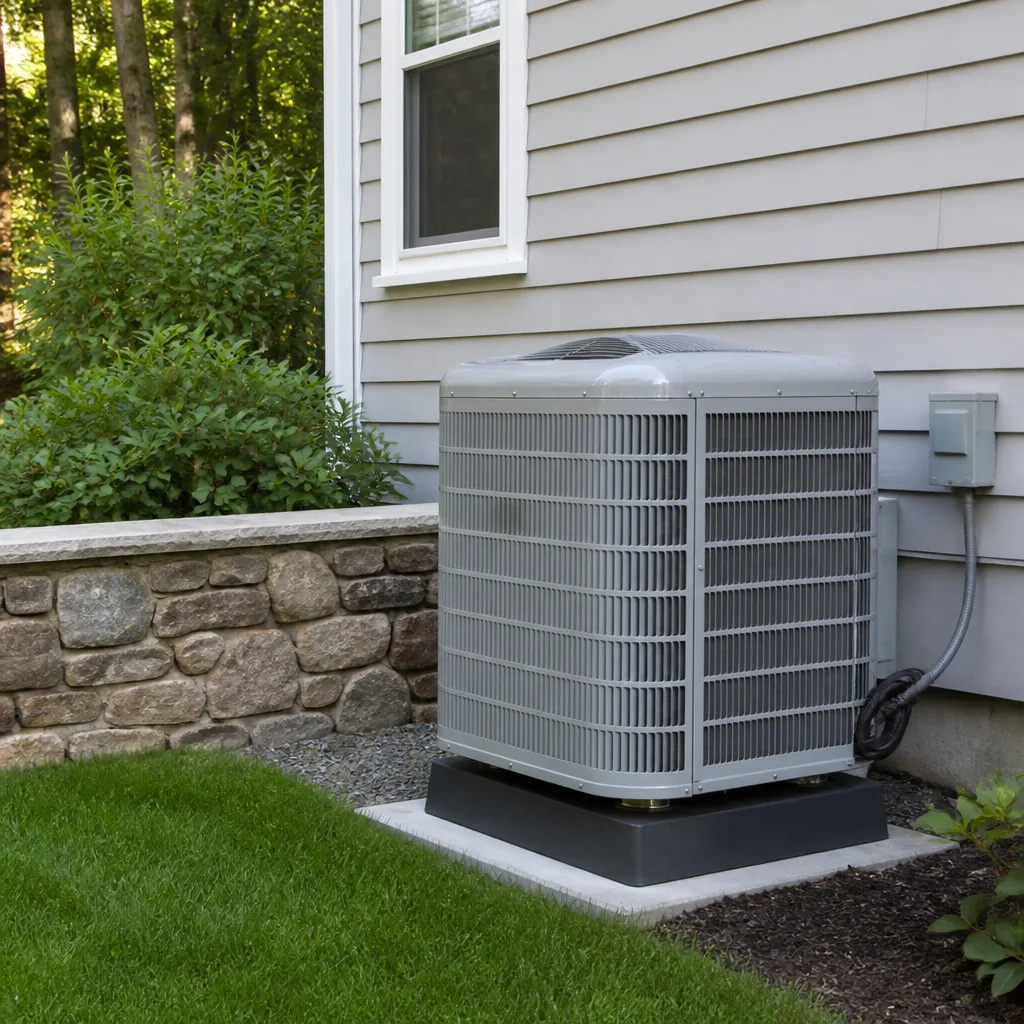 Carrier
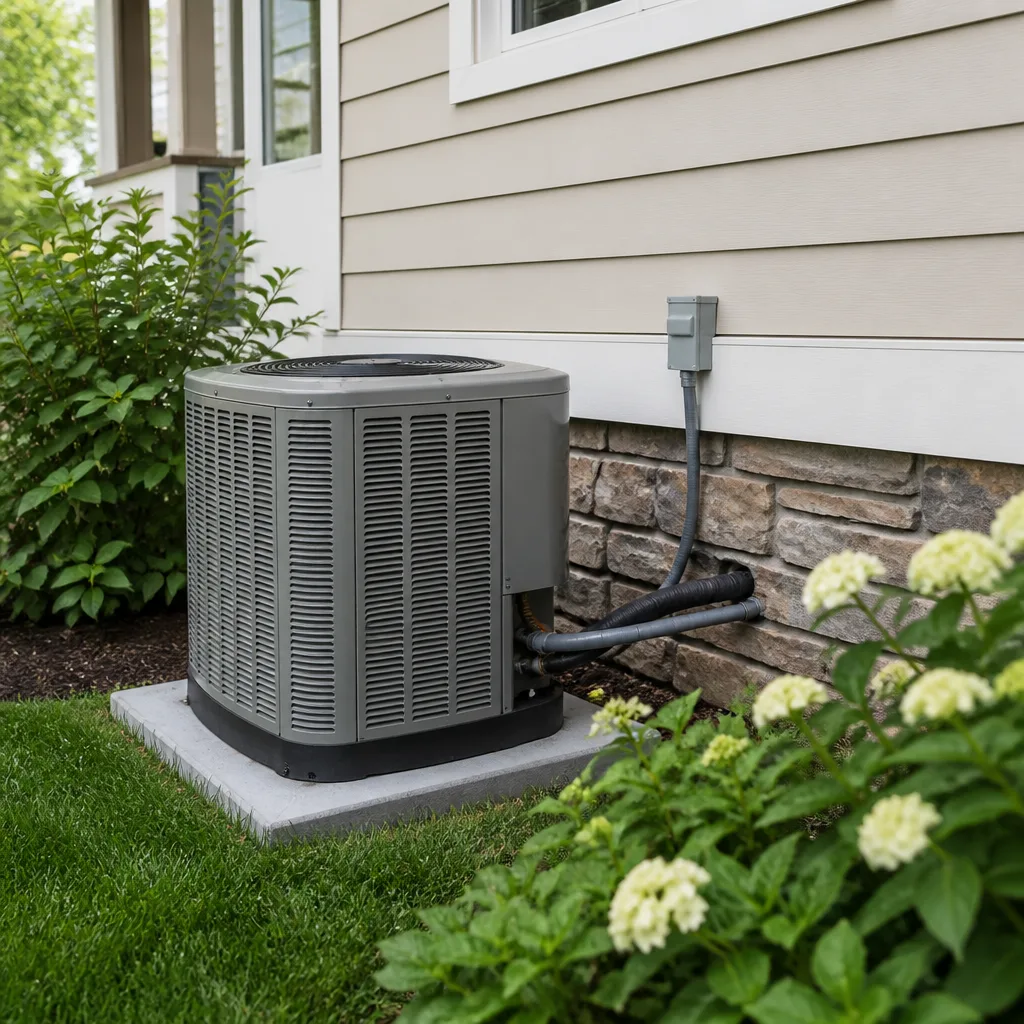 Trane
Trane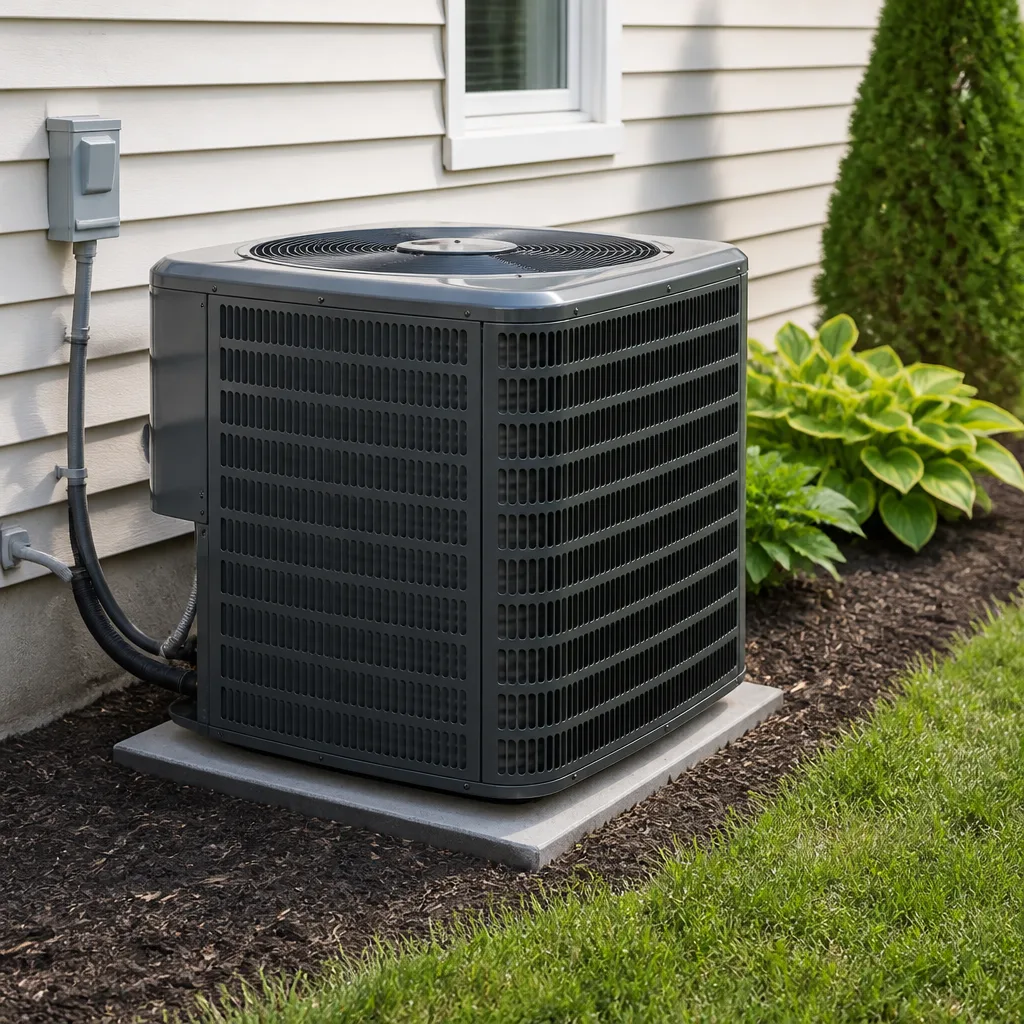 Goodman
Seasonal tune-up and full diagnostic on your Carrier, Trane, or Goodman system - readings shown to you before any repair is proposed
Diagnosis first, numbers second - you approve the repair price before a single part goes in.
Get your free estimateHVAC Cost Breakdown: The Houston Homeowner’s Reference for 2026
A 3-ton AC replacement in Houston is quoted anywhere from $5,800 to $12,400 depending on who you ask. That $6,600 spread isn’t fraud. It’s five or six real variables that most guides never name, which means homeowners can’t tell a fair quote from a padded one. This reference breaks down every line item, every labor factor, and every efficiency tier so you can price your own job before a single technician pulls into your driveway. For more guides & resources, see our full blog. By the time you finish reading, you’ll know more about HVAC pricing in Houston than most sales reps who quote it.
Quick Answer
In Houston, a full HVAC system replacement (furnace plus AC) runs $8,000 to $15,500 in 2026, while a standalone AC replacement runs $5,800 to $12,400. The spread comes down to tonnage, SEER2 rating, refrigerant type, compressor staging, and the condition of your existing ductwork and electrical. Repairs run $150 to $450 for most component failures, $600 to $1,800 for major parts like compressors or blower motors. Use the variable breakdowns below to estimate where your home falls before you start collecting quotes.
Styles & brands we work with
Table of Contents
- The Four System Variables That Set the Price
- Houston-Specific Labor Costs Most Guides Skip
- What a Real Line-Item Estimate Should Look Like
- Federal Tax Credits: What Qualifies in 2026
- How a Full-Year Written Guarantee Changes the Math
- Repair or Replace: A Decision Framework for Houston Homes
- Ductwork: The Hidden Budget Line Nobody Quotes
- When You Buy Matters: Houston’s Seasonal Pricing Reality
The Four System Variables That Set the Price
Before labor is even calculated, four equipment choices determine roughly 70% of your final number. If you understand these, you can look at any quote and know immediately whether it’s built on the right foundation.
1. Tonnage: The Size of Your System
Tonnage measures cooling capacity, not weight. One ton equals 12,000 BTUs of heat removal per hour. A 1,500-square-foot Houston ranch built in the 1980s typically needs 2.5 to 3 tons. A 3,000-square-foot two-story in Katy or Sugar Land might need 4 to 5 tons, split across two zones.
In Houston’s humidity, proper sizing matters more than in dry climates. An oversized unit cools the air too fast and never runs long enough to pull moisture out. That leaves you with a cold, clammy house and a higher electric bill. An undersized unit runs constantly and still can’t hold 74 degrees in August. Neither mistake is theoretical: we see both every summer on AC repair calls in Houston.
Each additional half-ton adds $400 to $800 to equipment cost. But the bigger variable is what tonnage forces you to buy. Jumping from 3 tons to 4 tons often requires a larger air handler, a bigger electrical circuit, and sometimes a new lineset. That’s not upselling. That’s physics.
2. SEER2 Rating: The Efficiency Tier
SEER2 is the efficiency standard that replaced SEER in 2023. It measures cooling output per watt of electricity consumed under updated testing conditions. The federal minimum for new equipment sold in Texas is 14.3 SEER2 for split-system ACs as of 2025.
Here’s what those numbers mean in real dollars. A 14.3 SEER2 3-ton unit from a builder-grade brand costs $5,800 to $7,200 installed in Houston. A 17 SEER2 unit from a mid-tier brand runs $8,000 to $10,500. A 20-plus SEER2 variable-speed unit from Carrier or American Standard runs $11,000 to $14,000.
The efficiency premium pays back fastest in Houston, where cooling season runs nine months. A household spending $250 a month on summer electricity might save $45 to $70 a month moving from 14.3 to 17 SEER2. Over a 12-year system life, that’s $6,500 to $10,000 in savings against a $2,500 to $3,300 premium. The math favors efficiency here more than almost anywhere in the country.
3. Refrigerant Type: R-410A vs. R-454B
This is the variable catching most Houston homeowners off guard in 2026. The HVAC industry is mid-transition from R-410A to R-454B, a lower-global-warming-potential refrigerant. New equipment manufactured after January 2025 ships with R-454B or similar A2L refrigerants. But distributors still have R-410A inventory, and many Houston contractors still install it because it’s cheaper and their crews know it.
Here’s why this matters to your wallet. An R-410A system installed in 2026 might save you $800 to $1,500 today. But R-410A is being phased down under the AIM Act. Production quotas are dropping every year through 2036. By 2030, a refrigerant recharge, which means topping off the cooling fluid your system needs to reach set temperature, could cost twice what it does now on an R-410A system. Meanwhile, R-454B equipment is slightly more expensive now but gets cheaper to service as the industry standardizes on it.
If you’re keeping the house five-plus years, R-454B is the better financial decision for Houston specifically, because our systems run hard enough to need a top-off or leak repair somewhere around year seven or eight. Ask your contractor which refrigerant the quoted unit uses, and whether they stock it. If they can’t answer, that’s a red flag.
4. Single-Stage vs. Two-Stage Compressor
A single-stage compressor is a light switch: on at 100% or off. A two-stage compressor is a dimmer switch: it can run at roughly 65% capacity on mild days and 100% on peak Houston afternoons. The technical term is staging, which controls how many capacity levels the compressor can operate at.
Two-stage equipment costs $1,500 to $2,500 more than single-stage equivalent. The benefit is humidity control and comfort consistency. On a mild 78-degree Houston evening in April, a single-stage system blasts cold air for 20 minutes, shuts off, and lets humidity creep back. A two-stage system runs longer at low speed, pulling moisture out the whole time, keeping the house at a steadier temperature and a lower dew point.
Is it worth it? If you have allergies, a two-story house with uneven temperatures, or rooms on the west side that bake in the afternoon sun, yes. If you’re on a tight budget replacing a rental property, single-stage with a good humidity-control thermostat gets you 80% of the way there.
Houston-Specific Labor Costs Most Guides Skip
National estimates don’t reflect what it actually costs to put equipment in a Houston house. Here are the local factors that move a quote by hundreds or thousands of dollars, and why some homes cost more than others that look identical on paper.
Permit Fees: City of Houston vs. Harris County Unincorporated
The City of Houston requires a mechanical permit for any HVAC system replacement. The permit fee for a residential AC or furnace swap runs $75 to $200 depending on the scope. In unincorporated Harris County, permitting requirements are looser but not nonexistent. Some neighborhoods fall under county fire code rather than city mechanical code.
Legitimate contractors include the permit line item. If a quote doesn’t mention permits at all, ask directly: “Is a permit included?” If the answer is no or unclear, that contractor is either cutting corners or planning to add the fee later. The Garrison Standard we operate under at Dalton Heating & Air Houston requires the permit line to appear in writing before any work starts. No exceptions.
Crane and Rooftop Unit Fees
Older homes in Montrose, the Heights, and parts of Garden Oaks have rooftop or second-story condenser platforms. Getting a 250-pound condenser up there isn’t a two-man lift over a railing. It’s a crane, and a crane in Houston costs $600 to $1,200 per day depending on reach and access.
Compounding factor: many of those older homes have narrow driveways or overhead power lines that limit crane positioning. The crane operator shows up, looks at the power drops, and sometimes has to reposition, which adds time. Any contractor who’s quoted rooftop work in the Heights knows this and should build crane fees into the estimate rather than adding them later. Ask explicitly: “Is crane time included in this price?” If it isn’t, get it in writing.
Attic Access Difficulty
Houston homes built before 1990 often have attic access through a 22-inch by 30-inch ceiling hatch in a closet. Getting a furnace or air handler through that opening means disassembling the unit, passing it piece by piece, and reassembling it in the attic. That’s an extra 2 to 4 hours of labor, at $75 to $150 per hour, depending on the contractor and the awkwardness of the chase.
The problem is worse in bungalow-style homes where the attic peaks at four feet. A technician working in those conditions is slower, hotter, and more likely to need adjustments. It’s not something a national cost guide can see from a spreadsheet. It’s something a Houston contractor sees the moment they open your attic hatch.
Drain Pan and Secondary Float Switch Codes
Houston’s humidity makes condensate drain lines a local code priority. The city requires a secondary drain pan under any attic air handler, with a float switch that shuts the system down if the primary drain clogs. That’s about $150 to $250 in parts and labor. In drier climates, those items are optional. In Houston, they’re part of a legal install. If a quote itemizes the primary drain but not the secondary pan and float switch, the contractor is either forgetting Houston code or planning to skip it. Neither is acceptable when a clogged drain line in an attic means water through your ceiling drywall.
What a Real Line-Item Estimate Should Look Like
A written estimate that breaks out the work is a tool you can verify. A lump-sum quote that says “complete HVAC replacement: $9,800” gives you nothing to negotiate with. Here’s what a proper Houston HVAC replacement estimate should itemize and what each line should cost.
- Equipment (condenser + evaporator coil or furnace): $3,800 to $8,500. This is the largest line item and should name the exact model number. If it doesn’t, you can’t compare bids.
- Refrigerant: $300 to $600. New R-454B equipment ships with refrigerant, but old R-410A systems need a full recharge when the condenser is replaced. Make sure the quote specifies how many pounds are included.
- Electrical disconnect and disconnect box: $150 to $300. This is the safety switch that lets a technician cut power to the outdoor unit without going inside. Code requires it and it’s often rusted out on Houston systems over ten years old.
- Pad and lineset: $250 to $500. The pad is the concrete or composite base the condenser sits on. The lineset is the copper tubing that carries refrigerant between outdoor and indoor units. If the old lineset is undersized or contaminated, replacing it is not optional.
- Labor: $1,500 to $3,000. Houston’s going rate for HVAC labor is $100 to $150 per hour for licensed technicians. A two-person crew on a full-day replacement is 12 to 16 labor hours total.
- Permit: $75 to $200. In the City of Houston, the permit is mandatory and should be its own line item.
- Haul-away and disposal: $100 to $250. Refrigerant must be recovered and the old unit disposed of properly. It’s a line item because it costs the contractor time and disposal fees.
When you see a lump-sum quote, ask the contractor to break it down. A legitimate company will do this in five minutes because they built the estimate from those numbers anyway. A contractor who won’t break it out is one who knows a line item won’t survive scrutiny. This is also why a written price before work begins matters: it locks the numbers in. The Garrison Code requires our technicians at Dalton Heating & Air to arrive inside the stated window, put the price in writing, and do the job by the book. If a competitor won’t do that, walk away.
Federal Tax Credits: What Qualifies in 2026
The Inflation Reduction Act created two incentives that are still available in 2026: the Energy Efficient Home Improvement Credit (25C) and, for some Houston homeowners, the HOMES rebate program if Texas rolls it out this year. Here’s the short version of what applies to HVAC equipment.
25C Tax Credit: What It Covers
Under Section 25C, you can claim a tax credit for 30% of qualified costs, up to $600 per year for qualifying AC and furnace equipment. Heat pumps, which in Houston serve both cooling in summer and heating in our brief winter, qualify for a bigger credit: 30% of cost, up to $2,000 per year.
But the equipment must meet specific efficiency thresholds. For a split-system AC to qualify for the $600 credit, it must be rated at least 16 SEER2. For a heat pump to qualify for the $2,000 credit, it must meet the highest CEE tier for your region. In Texas, that effectively means 18 SEER2 or better for cooling, with a minimum HSPF2 rating for heating. A Bryant Evolution series, a Carrier Infinity line, or an American Standard Platinum heat pump will typically clear these thresholds. Builder-grade 14.3 SEER2 equipment will not, and no amount of paperwork changes that.
What Documentation You Need
The IRS requires the contractor to provide a Manufacturer’s Certification Statement that lists the exact model installed and confirms it meets the applicable efficiency standard. Without that document, the credit can’t be claimed. A professional Houston contractor will include this automatically. A contractor who doesn’t know what you’re asking for is one who hasn’t been through a tax season since the credit went into effect in 2023.
One nuance for 2026: the credit applies to the cost of the equipment plus installation. If you’re replacing both the AC and the furnace in the same year, the AC may qualify for $600 while a qualifying heat pump may qualify for the full $2,000. Ask your tax preparer, but make sure the contractor gives you the Manufacturer’s Certification Statement for each qualifying component.
How a Full-Year Written Guarantee Changes the Math
Most Houston HVAC companies offer a 90-day labor warranty on repair work. If the same part fails again on day 120, you’re paying for the second visit. A full-year written guarantee changes the risk calculation.
Here’s how to assign a dollar value to the difference. A repair on a Houston AC system in July costs somewhere between $150 and $450 for the common failures: capacitors, contactors, condensate pumps, thermostats. If you’re unsure whether symptoms point to one of these, check our HVAC Warning Signs: A Houston Homeowner’s Reference Guide. If a company offers a 90-day warranty, and the same repair fails inside six months, which isn’t rare when a contractor skips the underlying cause, the homeowner eats the second bill. Multiply that $150 to $450 by the frequency of return visits in our summers and a one-year guarantee is realistically worth $150 to $900 over the life of the repair, before you account for the time lost in a hot house.
At Dalton Heating & Air, every furnace repair in Houston includes a written guarantee in the customer’s hand before the technician starts. If the same repair fails within one year, we return at no charge. That’s not a discount or a loyalty perk. It’s the 365-Day Done Right Promise, written into The Garrison Standard, and it applies to every repair call we run, from a capacitor swap to a compressor replacement.
When you compare bids, ask two questions: “What is your labor warranty period, and is it in writing?” A company that stumbles over either answer is telling you what their actual work quality is worth to them.
Repair or Replace: A Decision Framework for Houston Homes
You don’t need a formula. You need three pieces of information and the discipline to use them. Here’s how to decide whether to repair or replace an aging Houston HVAC system.
- Get the age of the system. The manufacturer’s date is on the outdoor unit’s data plate, usually in the format YYMM in the serial number or stamped as a small rectangle on the side of the cabinet. If the system is over 12 years old, it has already outlived the average Houston system life, which is 10 to 14 years because of our cooling load and humidity. At that age, any repair over $800 should trigger a replacement conversation.
- Get the repair cost as a dealer quote, not a guess. A technician who says “probably $600” is guessing. A technician who puts the exact part number, parts price, and labor on a written estimate is doing their job. The $600 guess turns into a $1,100 reality more often than not, so demand the written number before deciding.
- Apply the 50% rule. If the repair costs more than 50% of the depreciated value of the system, replace it. A 12-year-old 3-ton AC in Houston has a depreciated value of roughly $1,500 to $2,500. A $1,400 compressor replacement on that unit is throwing good money after a system that’s already on borrowed time.
- Factor the refrigerant transition. If your old system uses R-410A and the repair involves a leak or a recharge, the long-term cost of keeping that system running is climbing faster than any price guide from 2024 anticipated. The refrigerant phase-down is a real line-item risk for old equipment.
- Factor the guarantee on the repair. If the repair comes with a 90-day warranty and a probability of recurrence, multiply the expected second visit by the likelihood of that failure. If the repair is from a company that puts a full year in writing and returns free if it fails, the repair option gets more attractive. The guarantee changes the expected value, not the sticker price.
If the system is under eight years old and the repair is under $600, repair it. If the system is over 12 and the repair is over $1,200, replace it. Between those lines, use the steps above.
Ductwork: The Hidden Budget Line Nobody Quotes
Every HVAC system is only as good as the ducts connecting it to your rooms. Houston homes present a specific ductwork problem that cost guides ignore: humidity-driven degradation.
Ducts in Houston attics are exposed to 140-degree heat during summer afternoons and 90% humidity year-round. Over 15 to 20 years, fiberglass duct board absorbs moisture, loses its structural integrity, and starts leaking conditioned air into the attic. The Department of Energy estimates that typical homes lose 20 to 30% of conditioned air through leaky ducts. In Houston’s climate, that number skews higher because the thermal differential is so extreme.
Here’s where the budget line hits. A full duct replacement in a 1,800-square-foot Houston home costs $3,500 to $6,500, depending on the number of runs, the accessibility of the attic, and whether the return plenum needs work. That’s a 40 to 60% add-on to the cost of a new system. But if you skip it, your new $9,000 AC is blowing 25% of its cooling into the attic, and your electric bill only drops a fraction of what the efficiency upgrade promised.
Ask any contractor who quotes a replacement to inspect the ducts. Not to eyeball them from the hatch, but to open the attic, look at the runs, and tell you the condition. If they won’t do that before quoting, find another contractor. At Dalton Heating & Air, a duct condition assessment is part of every replacement estimate. We won’t sell you a new system that’s connected to failing ductwork without telling you what you’re getting into, in writing.
When You Buy Matters: Houston’s Seasonal Pricing Reality
Houston doesn’t have a true offseason, but it has a shoulder season. March through May and October through November are when install crews are slowest and distributors, who hold the equipment inventory, run the deepest discounts. In June, July, and August, demand spikes, crews run overtime, and distributors tighten availability on popular models.
What does that mean for your budget? A 17 SEER2 3-ton system that costs $8,500 installed in April might cost $9,400 in July. Not because the contractor is gouging, but because the supply chain is trying to keep up with demand and everyone along the chain raises their prices. The equipment wholesale cost shifts $200 to $400 per unit during peak season. Labor picks up overtime. The margin doesn’t change; the inputs do.
If your system is aging but still running, don’t wait for it to die in August. The most expensive HVAC purchase is the one made in an emergency, in Houston, in July. You’ll pay peak pricing, you’ll accept whatever unit is available, and you’ll take the first available install slot instead of the best one. If a spring tune-up reveals a problem, or if your system is over 14 years old, getting quotes before the heat drives the decision is the single biggest money-saving move you can make in HVAC.
And if your system has already failed, you still have options. Our team runs heat pump installations in Houston year-round, including on short notice when a system fails in peak summer. The price will be what it is based on the equipment and the house, and it will be in writing before any work starts. That’s the discipline that matters when you’re sweating in a Houston living room at 8 p.m. in July.
Common Mistakes to Avoid
- Buying on price alone. The cheapest quote is often from the contractor who didn’t include the permit, the secondary float switch, or the refrigerant top-off. You’ll pay for those eventually, usually in August.
- Ignoring the tonnage recommendation. Some contractors quote a bigger unit because it’s easier than doing a load calculation. An oversized AC in Houston humidity means a house that’s cold but wet, and a system that short-cycles its way to an early failure.
- Skipping the refrigerant question. An R-410A system installed in 2026 will cost more to service in five years than the same system with R-454B. Make sure you know which refrigerant you’re buying and why.
- Not getting the ductwork inspected. The best AC in the world can’t fix a leaky duct system. If the contractor doesn’t look at your ducts before quoting, get another contractor.
- Accepting a verbal estimate. In the City of Houston, a permit requires documentation. A verbal estimate is not documentation. If it isn’t in writing, it doesn’t exist.
- Deferring a spring failure until summer. A weak capacitor in April is a dead system in June. Houston’s shoulder season is your window to replace equipment without the emergency markup.
See the difference
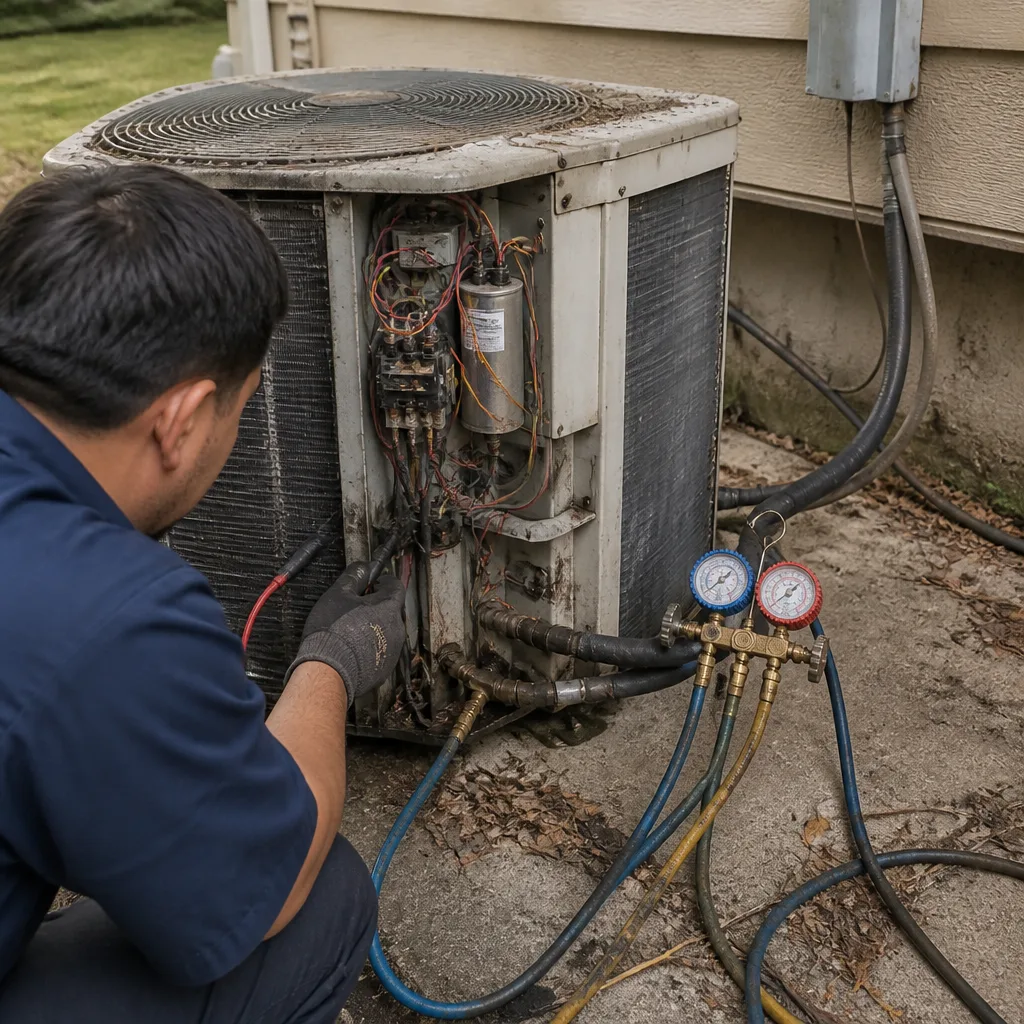 Before
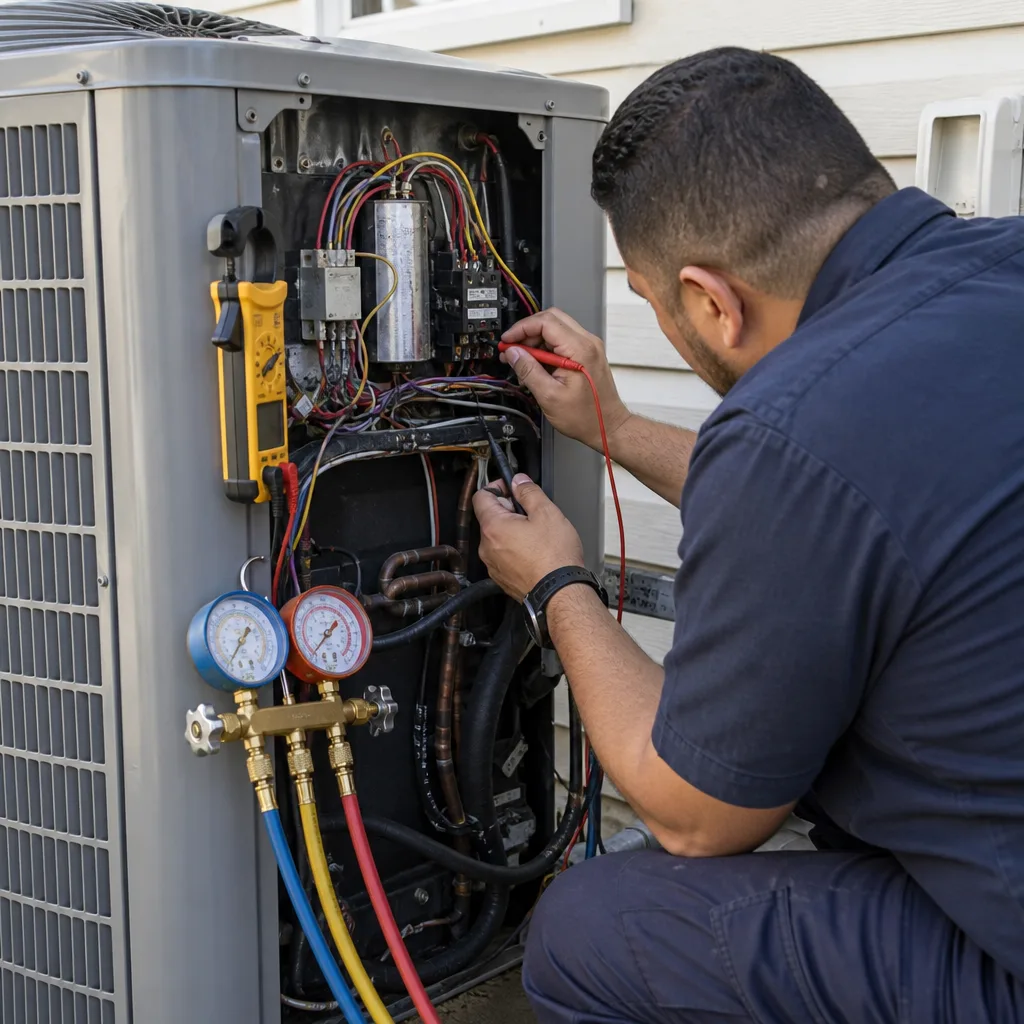 After
After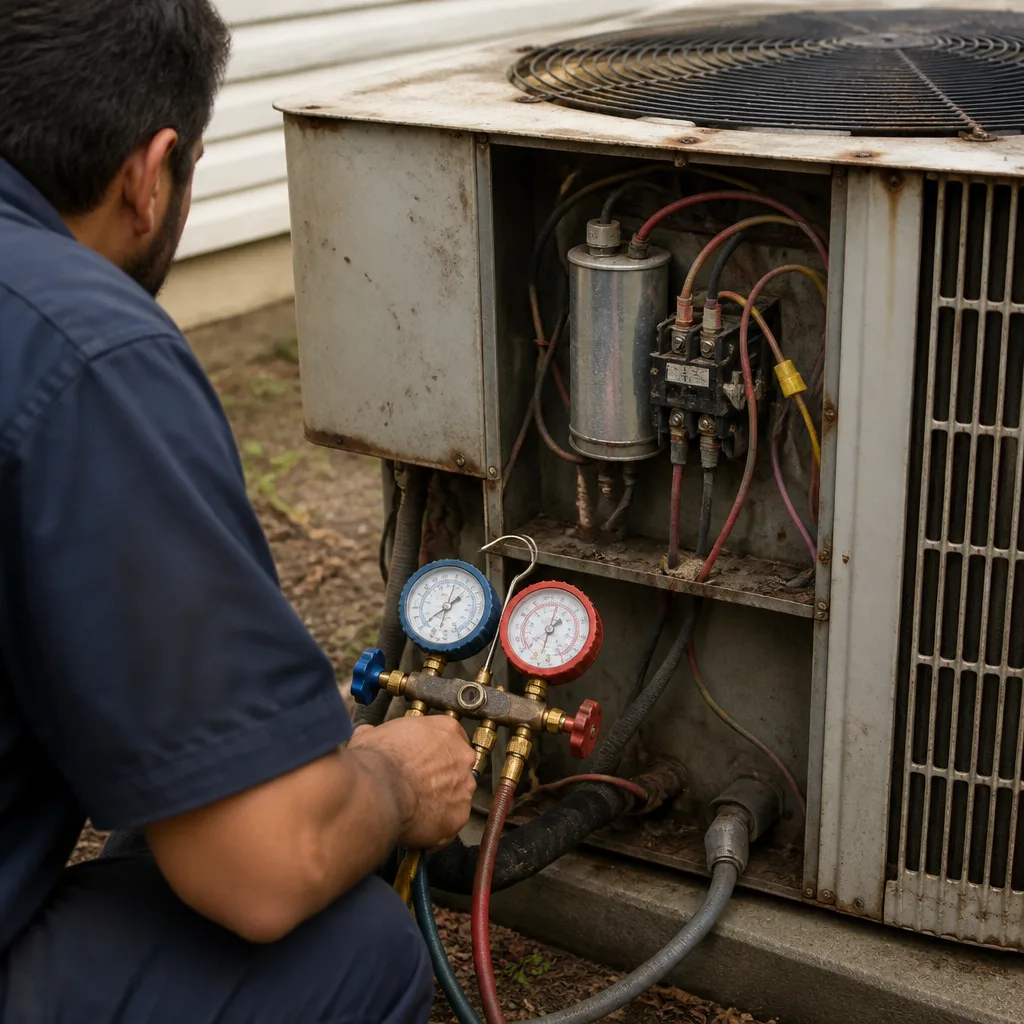 Before
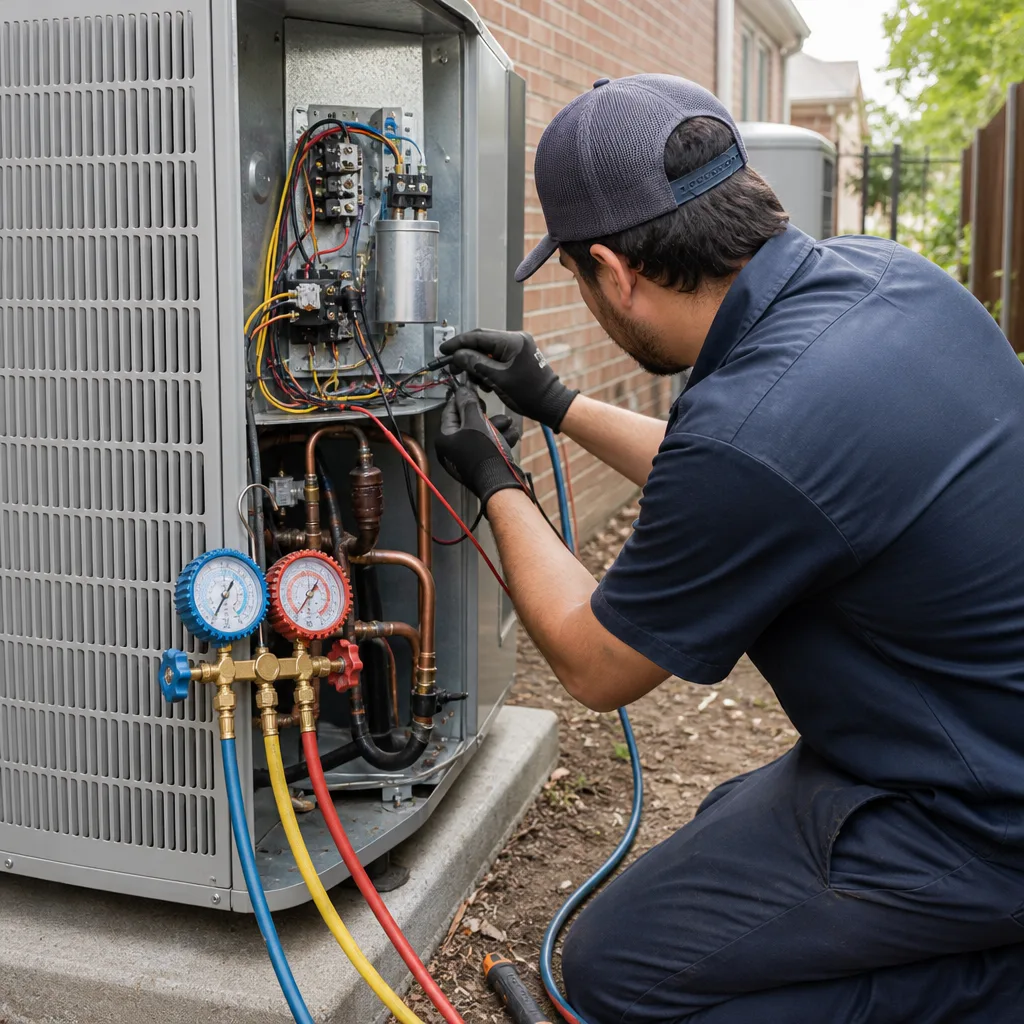 After
After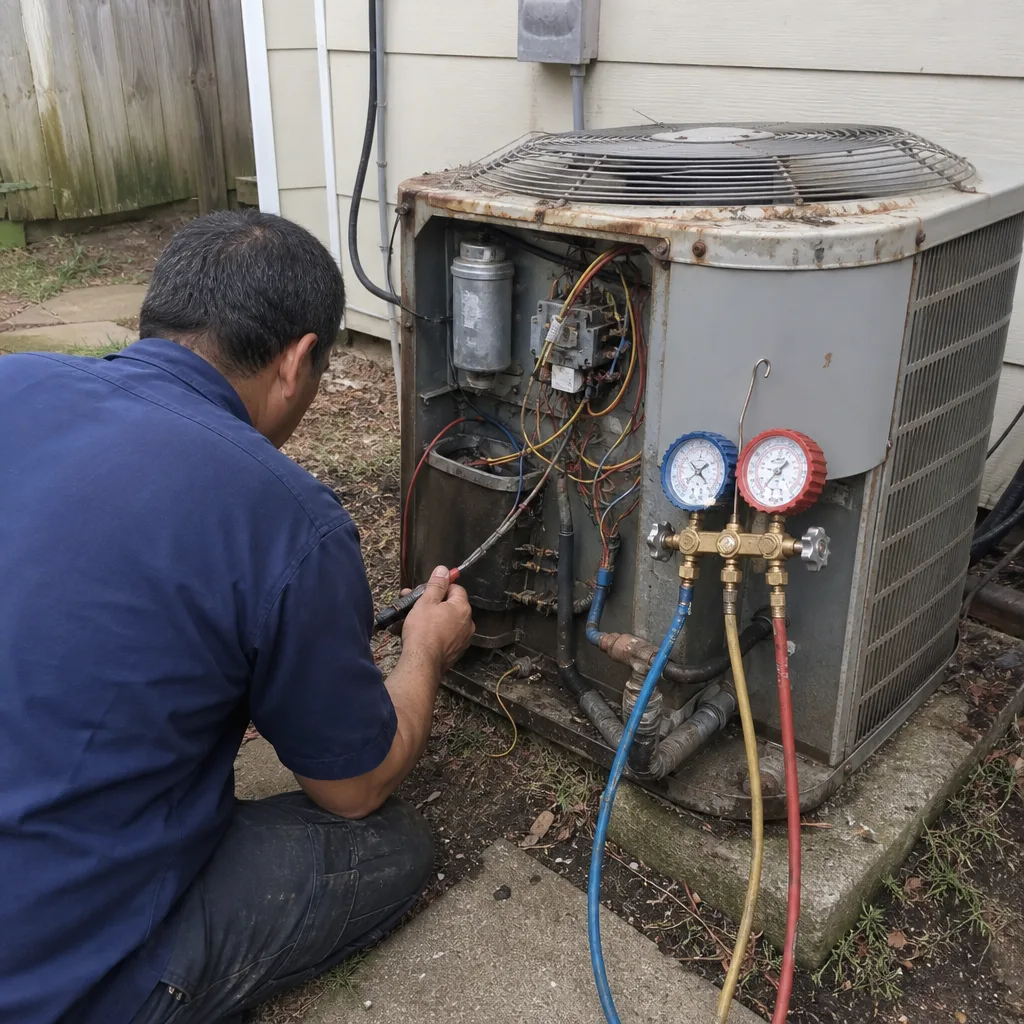 Before
 After
AfterWhen to Call a Professional
If your system is tripping its breaker, freezing up at the coil, leaking water from the air handler, making a grinding noise, or blowing warm air in cooling mode, call a professional. These symptoms rarely self-correct, and waiting usually turns a $200 repair into a $1,500 one. The same applies to any repair involving refrigerant: it requires specialized equipment and EPA certification, and DIY attempts usually result in a system that runs worse and costs more to fix afterward. The same applies to anything involving electrical. A Houston AC system runs on 240 volts, which can kill. Dalton Heating & Air Houston offers free estimates in Houston. Call (903) 494-7686 and a live person answers, 24 hours a day, 7 days a week. We’ll put the price in writing before any work starts, and every repair comes with our full-year written guarantee.
Frequently Asked Questions
In Houston, a full furnace and AC replacement runs $8,000 to $15,500 depending on tonnage, efficiency rating, and installation complexity. Most Houston homes land between $9,000 and $12,000 for a mid-tier system. Call (903) 494-7686 for an exact quote, with the price in writing before any work begins.
Yes. Houston contractors and distributors are slowest in March through May and October through November, which means better pricing and faster scheduling. Installing before peak summer can save $600 to $1,200 on a full system replacement compared to emergency-season pricing.
Repair it if the system is under eight years old and the repair cost is under $600. Replace it if the system is over 12 years old and the repair cost is more than 50% of the system’s depreciated value, which is typically $1,500 to $2,500 for a Houston system. The exact decision depends on your system’s age, the written repair estimate, and the condition of your ductwork. Call (903) 494-7686 and we’ll assess it in person at no charge.
For Houston’s long cooling season, a 16 to 17 SEER2 system is the current sweet spot for most homes. It costs $800 to $1,500 more than the 14.3 SEER2 minimum but saves enough summer electricity to pay back the difference in four to six years. For two-story homes or anyone with humidity issues, an 18-plus SEER2 two-stage or variable-speed unit is worth the premium.
Yes. The 25C tax credit remains available through 2032. Qualifying AC equipment earns 30% of cost up to $600, while qualifying heat pumps earn 30% up to $2,000. The contractor must provide a Manufacturer’s Certification Statement with your installation documents to claim the credit.
At Dalton Heating & Air, our written guarantee covers the specific repair made, in full, for one full year from the date of service. If the same repair fails inside that window, we return and fix it at no charge. That’s the 365-Day Done Right Promise, and it comes with every repair, no upgrade fees. Call (903) 494-7686 for details on your specific system.
The Bottom Line
Houston HVAC pricing is not mysterious. It’s the sum of equipment choices, house-specific access, code requirements, and the contractor’s willingness to put everything in writing. The variables that drive a quote from $5,800 to $12,400 are knowable, and now you know them. Tonnage, SEER2 rating, refrigerant type, compressor staging, permit fees, attic access, and duct condition: add them up and any quote either makes sense or doesn’t.
The contractor you choose matters as much as the equipment. A written price before any work starts, a full-year written guarantee on every repair, and a crew that shows up on time and leaves the place clean: that’s The Garrison Standard, and it’s how Dalton Heating & Air Houston has operated since 2003.
Written by Marco Benitez, Owner at Dalton Heating & Air Houston, serving Houston since 2003.
Call (903) 494-7686 for a free estimate. Live phone support is staffed by a real person 24 hours a day, 7 days a week, 365 days a year.